
1. Who is NATO’s Chief Scientist? Could you describe briefly your vision, core tasks and objectives, as well as your role in relation to the NATO Science & Technology Organization (STO)?
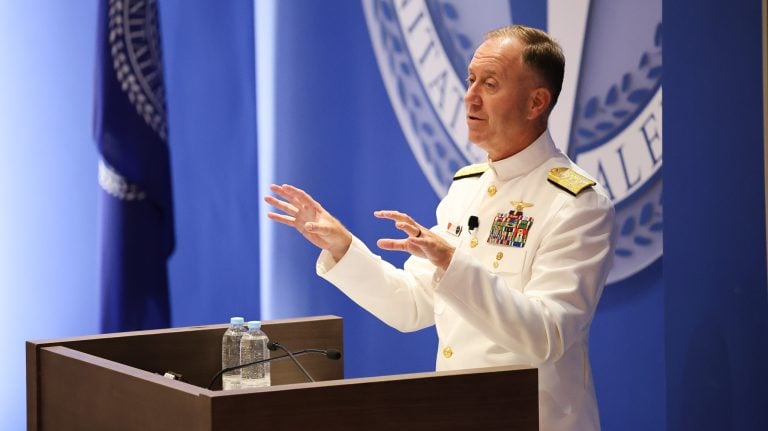
The NATO Chief Scientist is the Alliance’s top scientific adviser, providing expert guidance on Science and Technology (S&T) as related to security and defence.
In this capacity, I deliver relevant and timely strategic advice to NATO’s senior leadership to inform the Alliance’s defence planning, policy- and decision-making, while also supporting the identification of the most impactful scientific and technological areas.
Moreover, as Chair of the STO’s governance body, the NATO Science and Technology Board (STB), I help determine our strategic direction and priorities to ensure that the STO’s network of more than 5,000 scientists is laser-focused on supporting the needs of the broader NATO S&T Enterprise – which includes Allied nations, international organizations and partners.
As I reach my first hundred days in this role, my vision is set on ensuring that the Alliance continues to leverage technology to outperform adversaries, particularly by advising on the implementation of the recently endorsed NATO S&T Strategy. This includes enhancing the STO’s contribution to NATO’s innovation and capability development efforts, ensuring that Science and Technology directly supports operational needs, and embedding mechanisms that allow us to learn and adapt through feedback relationships with key stakeholders.
For me it is vital that the STO should be fit for purpose and deliver S&T with impact.
2. How does the STO contribute to the Alliance’s deterrence and defence posture? What are the STO’s main priorities?
Science and Technology is a central pillar for preserving NATO’s technological advantage, today and in the future. In an ever-changing security environment characterized by rising instability and the emergence of new security threats, Science and Technology can be exploited to derive decisive advantage over all Instruments of Power.
Within NATO, the STO – through its three executive bodies, i.e. the Office of the Chief Scientist, in Brussels, Belgium; the Collaborative Support Office, in Paris, France; and the Centre for Maritime Research and Experimentation (CMRE) in La Spezia, Italy, as well as through our eight valuable Scientific Technical Committees (STC) – conducts scientific efforts to anticipate threats, safeguard our knowledge base and orchestrate collaboration within NATO’s S&T Enterprise in order to remain one step ahead.
To guide us on this mission, the S&T Strategy identifies three strategic goals:
– Anticipate and Invest – Ensure that the S&T Enterprise is looking to the future to spot emerging technologies and fund the right areas.
– Safeguard and Protect – Shield our people, ideas and infrastructure from interference and protect sensitive research.
– Orchestrate and Energize – Nurture ties between all members of the S&T Enterprise to ensure that new scientific knowledge and technologies are rapidly adopted across NATO.
3. How did your experience as a Course Member at the NATO Defense College in 2020 help prepare you for this role?
I remember my time at the NDC fondly! Being part of a diverse class of senior civilian and military leaders who brought different perspectives to security and defence topics, I felt like I was learning something new every day.
Unlike other alumni, my Senior Course class was uniquely shaped by the challenges of the COVID-19 pandemic, occurring during a time when in-person activities were not possible. However, despite these limitations, the experience provided me with valuable skills that supported my success in my current role.
Through Committee exercises, for example, I gained a deeper understanding of various decision-making roles, which prepared me for my responsibilities as Chair of the NATO Science and Technology Board. Additionally, serving as the NATO Spokesperson during a crisis management exercise taught me valuable lessons, not least about business continuity.
Perhaps most importantly, as the first NATO Chief Scientist to attend this Course, I developed the necessary skills to translate complex high-tech concepts for use within the context of decision-making, which I now use in my everyday interactions.
4. Which technological development do you expect to be the most impactful for the future of warfare? How can NATO better prepare for it?
The future of warfare will be influenced by the convergence of multiple cutting-edge technologies, with artificial intelligence and biotechnology standing out as some of the most impactful.
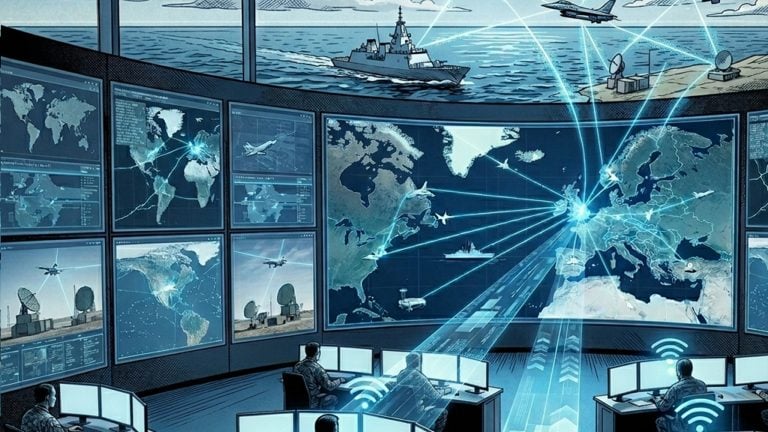
While artificial intelligence, and particularly generative AI, is already being used to assist in faster decision-making, to power electronic warfare, to counter digital disinformation and to facilitate intelligence analysis, expectations are that it will soon play a prominent role in combat models and simulation, as the brain behind autonomous systems and complex operations.
Biotechnology, on the other hand, has the potential to augment human capabilities at the physical, cognitive and social levels. The enhancement of sensory perception, strength, endurance and pain tolerance, for example, has been a long-standing military goal. This, combined with the integration of robotics or AI neural interfaces into humans with the aim of boosting their memory and focus, will allow them to make tactical decisions faster.
Now, how to prepare for it? Given the complexity and pace of development of these technologies, collaboration and the pooling of resources with national expertise at its core is fundamental for Allies and the STO to stay ahead in this race. That is quite natural to an organization that values partnership and dialogue such as NATO, but also to the world of science, where collaboration is essential to driving innovation and addressing complex research questions.
And collaboration goes hand in hand with decision-making. As an international organization, NATO cannot produce law, but on the basis of consensus, we have developed principles of responsible use for both AI and biotechnology with the goal of accelerating their ethical adoption in capability development and delivery.
5. Twenty years from now, what will the average soldier be using that exists only in a lab today?
I think I’ve already given you a hint in my answer to the previous question, but I want to take it one step further.
Imagine the following scenario: while crossing an ice shelf, a reconnaissance patrol agent falls into a shallow glacial crevasse hidden beneath a soft snow cover. Despite a fall of only 5 metres, the agent suffers from deep lacerations on one of his legs and is losing a lot of blood.
Luckily, the agent manages to climb out using his own strength and to send a message back to base asking for emergency medical support.
Minutes later, a small underwater drone emerges a few kilometres away from the shoreline and a small flying drone launches from it, carrying a bag of artificial blood to the coordinates of the distress signal. The agent restores normal blood levels and applies a plaster to cover the wound on his leg.
This is one example of how humans won’t be the only part of the team or of a platoon in the new operating environment. They will be working with technology at multi-domain level to better address challenges and increase overall performance. It is important to note that research is what underpins all these developments.
6. What is one message you have for the next generation of scientists and engineers about NATO?
Your work and your mindset have the power to positively shape the security and stability of the world we live in. NATO is a beacon of world order, cooperation and liberty – and science is at the heart of its strength.
Within our STO network of scientists, engineers and colleagues with technical backgrounds, you can find a safe research environment where you will be able to use your expertise, innovation and integrity to push the boundaries of knowledge and to develop cross-cutting technologies that will deter aggression, safeguard freedom and promote peace.
Not only is this a unique opportunity to collaborate with leading international scientists with similar interests, but it also offers you the chance to return home empowered to drive progress in your own country.
Your generation, in conjunction with the wealth of experts in the community, has the power to shape security and defence both today and tomorrow.
NDC Public Affairs Office
(Prepared by Ms Chloé Ketels, FRA C)
 Collège de Défense de l'OTAN