

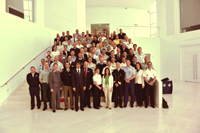
Following an intense day of institutional briefings at the Pentagon and Capitol Hill, on Saturday 4 May Senior Course 122 (SC 122) complemented its academic programme with visits to the site of the historic Battle of Gettysburg (1863) and to the Naval Academy at nearby Annapolis. A Professor from the War College offered the group a fascinating commentary on the fundamental strategic importance of Gettysburg, often described as the turning point in the American Civil War.
On Monday 6 May, the NDC delegation was hosted by the United States Institute of Peace (USIP). The President of the Institute, former Congressman Mr Jim Marshall, warmly welcomed Course Members before speaking about the role of the USIP in preventing, mitigating and resolving international conflict through non-violent means. He introduced the Institute’s main areas of work, in conflict zones around the world: saving lives, strengthening government capacity to manage conflicts before they escalate, reducing related costs to government, and enhancing national security.
The next speaker was Mr Tom
McNally, Executive Officer for the US President on Afghanistan and Pakistan. He presented the vision of the White House on the current campaign in Afghanistan, the different peace initiatives, the regional context and the future of the country after 2014. His candid answers to questions, not hiding the many challenges but leaving the door open for hope in a sustainable future for the Afghan people, were greatly appreciated.
Michael Lekson, Director of Gaming at the Academy for International Conflict Management and Peace Building, covered US/NATO nuclear and strategic issues, reminding the audience that “deterrence is what NATO, a political and military Alliance, is all about”. With his wealth of experience as a diplomat in European security and political affairs, as Deputy Assistant Secretary of State for Arms Control and at the OSCE, the speaker engaged Course Members in a wide-ranging discussion of current concerns.
The final briefing of the day, focusing on the strategic implications of advances in conventional capabilities, was given by USIP expert Brian Rose. He underlined the increasing variety of tools available to allow flexible response options to current crises, but also dwelt on a number of related challenges. As a fitting conclusion to a very informative session, Course Members then had the opportunity to ask the last two speakers for more detailed comments on a number of topics.
The Course is now flying back to Europe, for a series of briefings in Brussels at NATO Headquarters and the European Union.
More about the Field Study:

 Collège de Défense de l'OTAN

