Passer au contenu
juillet 22, 2026
  • Facebook
  • X
  • LinkedIn
  • Youtube
  • Instagram
  • Flickr
NATO Defense College

Collège de Défense de l'OTAN

Unitatem Alentes

NDC_103x103
  • Home
  • Courses
  • Publications
  • Emplois
  • NDC Foundation
  • FAQs
  • Education mail
Menu principal
  • Home
  • Organisation
    • About Us
      • Mission
      • Qui est qui?
      • Structure
      • Historique
      • Vox Collegii Magazine
    • News
    • Resources & Services
      • La bibliothèque
      • Locaux du Collège de Défense de l’OTAN (NDC)
      • Liens
      • Vision Link
      • FAQS
    • Opportunités
      • Possibilités d’emploi
      • Achats
    • Contact & Information
      • Pour nous contacter
      • Follow us
      • Avis Important
  • Enseignement
    • General Information
      • Cours au Collège
      • e-Learning
      • Calendriers académiques
      • Le projets d’étude
    • Long Courses
      • La Session principale
      • Cours OTAN de coopèration régionale (NRCC)
    • Short Courses
      • Stage pour Officiers généraux et Ambassadeurs (GFOAC)
      • Generals, Flag Officers and Ambassadors’ Course for Partners, GFOAC-P (former SERC)
      • Stages modulaires de brève durée (MSCs)
      • Modular Short Course Partners Integrated (MSC-PI)
    • Partnerships
      • Accord NDC Leicester
      • Accord NDC LUISS
      • Accord NDC Simon Fraser
    • Administration
      • Section des auditeurs
  • Recherche
    • À propos de la recherche
    • Les chercheurs
    • Publications
    • Opportunités
    • NATO NextGen Futures
  • Engagement
    • Conférence des Commandants
    • Semaine de Kiev
    • Anciens’ Seminar
    • Other Engagement
  • Portails
    • Portail académique
    • Anciens
    • Conseil académique consultatif
    • Conseil académique consultatif du NRCC
    • Conférence des Commandants
  • Newsletter
    • Vox Collegii Newsletter
  • fr_FRFrançais
    • en_USEnglish
  • Maison
  • News
  • Russia in NATO’s South: Expansionist Strategy or Defensive Posture?
  • News

Russia in NATO’s South: Expansionist Strategy or Defensive Posture?

Publié: février 1, 2021 | Mis à jour: janvier 15, 2026 5 minutes lues

  • NDC Research Paper 16: Russia in NATO’s South: Expansionist Strategy or Defensive Posture?, edited by Chloé Berger and Cynthia Salloum

Introduction

Russia’s presence in the Middle East and North Africa (MENA) is a significant component of contemporary Russian foreign and security policy. Moscow’s approach to NATO’s South1 has undoubtedly undergone considerable change since the collapse of the Soviet Union. During the Cold War, it had built a set of alliances with Egypt, Iraq, Syria, Yemen, Algeria and Libya, among others, which gave Moscow important leverage throughout the region. The Soviet invasion of Afghanistan stirred resistance and opposition in the Muslim world, marking a major turning point in its Middle Eastern foreign policy. With the demise of its empire, in addition to its economic and military weaknesses, Russia faced a series of new challenges: a further disintegration of its own south, notably in the South Caucasus, the rise of radical extremism in Chechnya and Dagestan and a NATO programme of partnerships and cooperation that threatened its influence. All of these constrained Moscow’s foreign policy at large, including its Middle Eastern arrangements.

In pursuing interests above values, Russia, in the last twenty years, developed channels of dialogue and cooperation with several Sunni Arab states traditionally close to the US, including Saudi Arabia, while deepening diplomatic and military ties with Iran and the Syrian regime. Russia maintained relations with Fatah and recognized Hamas after it won the Palestinian parliamentary elections in 2006, while successfully engaging pragmatically with Israel.2 Keeping contacts open with all relevant parties marks continuity between Soviet and Russian foreign policies.

Moreover, in the last decade, the increasing instability across the Middle East and North Africa after the Arab Spring, from which Moscow kept its distance, offered new opportunities for influence and power projection, most notably in Syria and Libya. Putin is tracking two main objectives there: one is building status as a regional actor; the other is enhancing his prestige domestically.3 From the Libyan power vacuum to the US retreat from Afghanistan, the Kremlin is making the most of strategic opportunities and may continue to do so. However, it remains to be seen whether its regained confidence will lead to a more permanent Russian presence and influence. In the South, Moscow has today a relative free rein. But an increasingly mature European Union and most importantly a powerful and more strategically oriented US under President Biden may seriously constrain Russia’s room for manoeuvre.

Several drivers, ranging from domestic and economic politics to regional and global geopolitics, could explain Russian involvement in the MENA. Firstly, Russia is building a defensive strategy aimed at reinforcing its front line against Western encroachment and Islamist terrorist attacks. Secondly, it is displaying an expansionist drive, aimed at controlling at least parts of the Eastern and Southern Mediterranean by consolidating old alliances and building new coalitions including with business and arms traders. Thirdly, Russia’s presence in the MENA can be seen as a classic zero-sum game of power politics with the US whereby Moscow is trying to fill the void left by Washington. Last, but certainly not least, it is also driven by domestic considerations that strengthen Putin’s grip on power, and Russia’s regional influence and international prestige.

While all these factors play a role, this edited volume shows that opportunism and contingency remain key variables to explain Russian behaviour in the MENA. All of these drivers were somehow on display in Syria, which became an ideal case-study to explain Russian policy in the South. Yet, beyond the specific rationale, some questions still remain about Russia’s future role and influence in the region. Is the MENA region significant enough to help Russia recover a status of global power beyond regional leadership? Do status and prestige suffice, and if so, at what cost? What are Russia’s current and future investments in the region and what are their consequences on trade, energy, and its military posture? What would the real benefits of a Russian return to the MENA region be for its economy and power? Most importantly, what would be the consequences of an assertive Russia for NATO and its partners in the South?


Download the publication
to keep reading.


1 (back)
NATO’s South is defined as encompassing a large periphery that stretches from Mauritania in the Sahel, to the Middle East, North Africa and the Gulf, up to Afghanistan and Pakistan in South Asia.

2 (back)
See L. Issaev L. and A.R. Shishkina, “Russia in the Middle East: in search of its place”, in W. Mühlberger and T. Alaranta (eds.), Political narratives in the Middle East and North Africa. Perspectives on development in the Middle East and North Africa (MENA) region, Springer, Cham, 2020, pp.95-114.

3 (back)
For an analysis of Russia’s renewed global presence, see M. Kaczmarski, W. Michnik, A. Monaghan, V. Rotaru, “Russia’s emerging global ambition”, NDC Research Paper, No.11, July 2020.
More Research Division Publications…

Navigation des publications

Précédent : Graduation of Senior Course 137
Suivant : Roman Banya 2021: The two Russian Flanks

CLOUD TAGS

East Europe and Russia Strategy Hindsight War Future Asia/Pacific NATO Middle East/North Africa

PUBLICATIONS BY REGION

  • NATO
  • Middle East/North Africa
  • Asia/Pacific
  • East Europe and Russia

PUBLICATIONS BY TOPICS

  • The War Series
  • The Strategy Series
  • The Future Series
  • The Hindsight Series

RESEARCH

  • À propos de la recherche
  • Les chercheurs
  • Publications
  • Opportunités
  • NATO NexGen Futures

Recent Posts

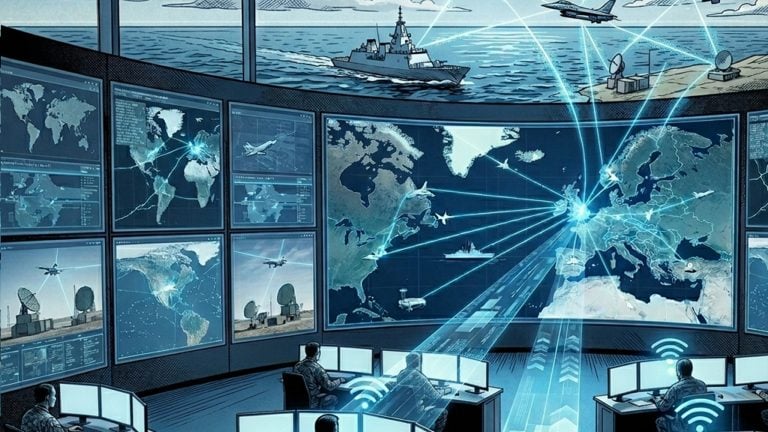
Tactical datalinks: why they matter to the future of war Outlook 2026-08
  • News
  • Publications
  • The War Series

Tactical datalinks: why they matter to the future of war

juillet 21, 2026
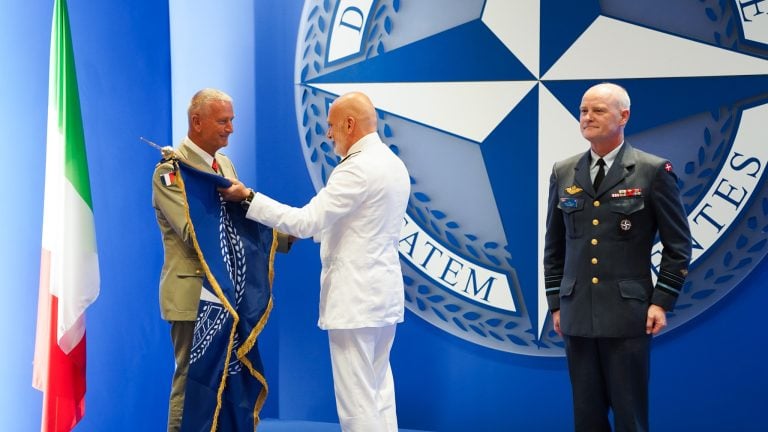
Lieutenant General Max A.L.T. Nielsen Hands Over NDC Command to Lieutenant General Jérôme Goisque Admiral Cavo Dragone hands over the NDC flag to the incoming NDC Commandant LGEN Goisque
  • Editor's Pick
  • News

Lieutenant General Max A.L.T. Nielsen Hands Over NDC Command to Lieutenant General Jérôme Goisque

juillet 18, 2026
Senior Course 148’s Graduation Marks 75 Years of Developing Future Leaders Course Member of Senior Course 148 saluting his flag
  • Courses
  • News

Senior Course 148’s Graduation Marks 75 Years of Developing Future Leaders

juillet 17, 2026
The NDC proudly celebrates its 75th anniversary & 60 years since its relocation to Rome The arrival of the Chairman of the Military Committee Admiral Guiseppe Cavo Dragone and NDC Commandant Lieutenant General Max A.L.T. Nielsen at the NDC's 75th Anniversary celebrations.
  • Courses
  • News

The NDC proudly celebrates its 75th anniversary & 60 years since its relocation to Rome

juillet 16, 2026
Video: The Mind as a Battlespace: Reshaping Education, Resilience and Decision-Making Video interview: CoC 2026
  • Editor's Pick
  • News

Video: The Mind as a Battlespace: Reshaping Education, Resilience and Decision-Making

juillet 7, 2026
Betting on blue: how to improve NATO military forecasting for acquisitions Outlook 07 2026
  • News
  • Publications
  • The War Series

Betting on blue: how to improve NATO military forecasting for acquisitions

juillet 6, 2026

CONTACT US

Central Registry
Collège de Défense de l'OTAN
Via Giorgio Pelosi 1, 00143, Rome - Italy
E-mail: [email protected]

Tu as peut-être manqué

Outlook 2026-08
1 minutes de lecture
  • News
  • Publications
  • The War Series

Tactical datalinks: why they matter to the future of war

juillet 21, 2026
Admiral Cavo Dragone hands over the NDC flag to the incoming NDC Commandant LGEN Goisque
4 minutes lues
  • Editor's Pick
  • News

Lieutenant General Max A.L.T. Nielsen Hands Over NDC Command to Lieutenant General Jérôme Goisque

juillet 18, 2026
Course Member of Senior Course 148 saluting his flag
5 minutes lues
  • Courses
  • News

Senior Course 148’s Graduation Marks 75 Years of Developing Future Leaders

juillet 17, 2026
CMDT-FRA-2
2 minutes lues
  • Qui est qui?

Le Commandant

juillet 17, 2026
Central Registry
Collège de Défense de l'OTAN
Via Giorgio Pelosi 1, 00143, Rome - Italy
Telephone: (+39) 06 50525 309 / 275
Fax: (+39) 06 50525 799
[email protected]
Public Information/media related matters:
[email protected]
Web related matters:
[email protected]
US Postal Address
U.S. National Support Element
Collège de Défense de l'OTAN
PSC 802 BOX 201
FPO AE 09608-0003

UK Postal Address
Name Rank Number
Dept
Collège de Défense de l'OTAN
BFPO 65

RELEVANT LINKS

NATO HQ
SHAPE
NATO ACT
NATO School
NATO Defense College Foundation
  • Organisation
  • Enseignement
  • Recherche
  • Engagement
  • Portails
  • Facebook
  • X
  • LinkedIn
  • Youtube
  • Instagram
  • Flickr
NATO Defense College © 2026 All rights reserved.
NATO Defense College Collège de Défense de l'OTAN
Heureux de vous revoir
Connexion
Connectez-vous pour accéder à vos téléchargements, gérer votre compte et continuer là où vous vous êtes arrêté.
Connexion au compte
Saisissez vos identifiants pour accéder à votre compte
Mot de passe oublié ?
We use cookies to ensure that we give you the best experience on our website. If you continue to use this site we will assume that you are happy with it.