Passer au contenu
juin 25, 2026
  • Facebook
  • X
  • LinkedIn
  • Youtube
  • Instagram
  • Flickr
NATO Defense College

Collège de Défense de l'OTAN

Unitatem Alentes

NDC_103x103
  • Home
  • Courses
  • Publications
  • Emplois
  • NDC Foundation
  • FAQs
  • Education mail
Menu principal
  • Home
  • Organisation
    • About Us
      • Mission
      • Qui est qui?
      • Structure
      • Historique
      • Vox Collegii Magazine
    • News
    • Resources & Services
      • La bibliothèque
      • Locaux du Collège de Défense de l’OTAN (NDC)
      • Liens
      • Vision Link
      • FAQS
    • Opportunités
      • Possibilités d’emploi
      • Achats
    • Contact & Information
      • Pour nous contacter
      • Follow us
      • Avis Important
  • Enseignement
    • General Information
      • Cours au Collège
      • e-Learning
      • Calendriers académiques
      • Le projets d’étude
    • Long Courses
      • La Session principale
      • Cours OTAN de coopèration régionale (NRCC)
    • Short Courses
      • Stage pour Officiers généraux et Ambassadeurs (GFOAC)
      • Generals, Flag Officers and Ambassadors’ Course for Partners, GFOAC-P (former SERC)
      • Stages modulaires de brève durée (MSCs)
      • Modular Short Course Partners Integrated (MSC-PI)
    • Partnerships
      • Accord NDC Leicester
      • Accord NDC LUISS
      • Accord NDC Simon Fraser
    • Administration
      • Section des auditeurs
  • Recherche
    • À propos de la recherche
    • Les chercheurs
    • Publications
    • Opportunités
    • NATO NextGen Futures
  • Engagement
    • Conférence des Commandants
    • Semaine de Kiev
    • Anciens’ Seminar
    • Other Engagement
  • Portails
    • Portail académique
    • Anciens
    • Conseil académique consultatif
    • Conseil académique consultatif du NRCC
    • Conférence des Commandants
  • Newsletter
    • Vox Collegii Newsletter
  • fr_FRFrançais
    • en_USEnglish
  • Maison
  • News
  • Field Study 3: Deterrence, Collective Defence & Resilience on NATO’s Eastern & Northern Flanks
  • Courses
  • News

Field Study 3: Deterrence, Collective Defence & Resilience on NATO’s Eastern & Northern Flanks

Publié: juin 25, 2026 | Mis à jour: juin 25, 2026 5 minutes lues

From 7 to 17 June 2026, Senior Course 148 conducted its final Field Study, exploring the security priorities of three Allied nations located on NATO’s eastern and northern flanks: Lithuania, Estonia and Norway.
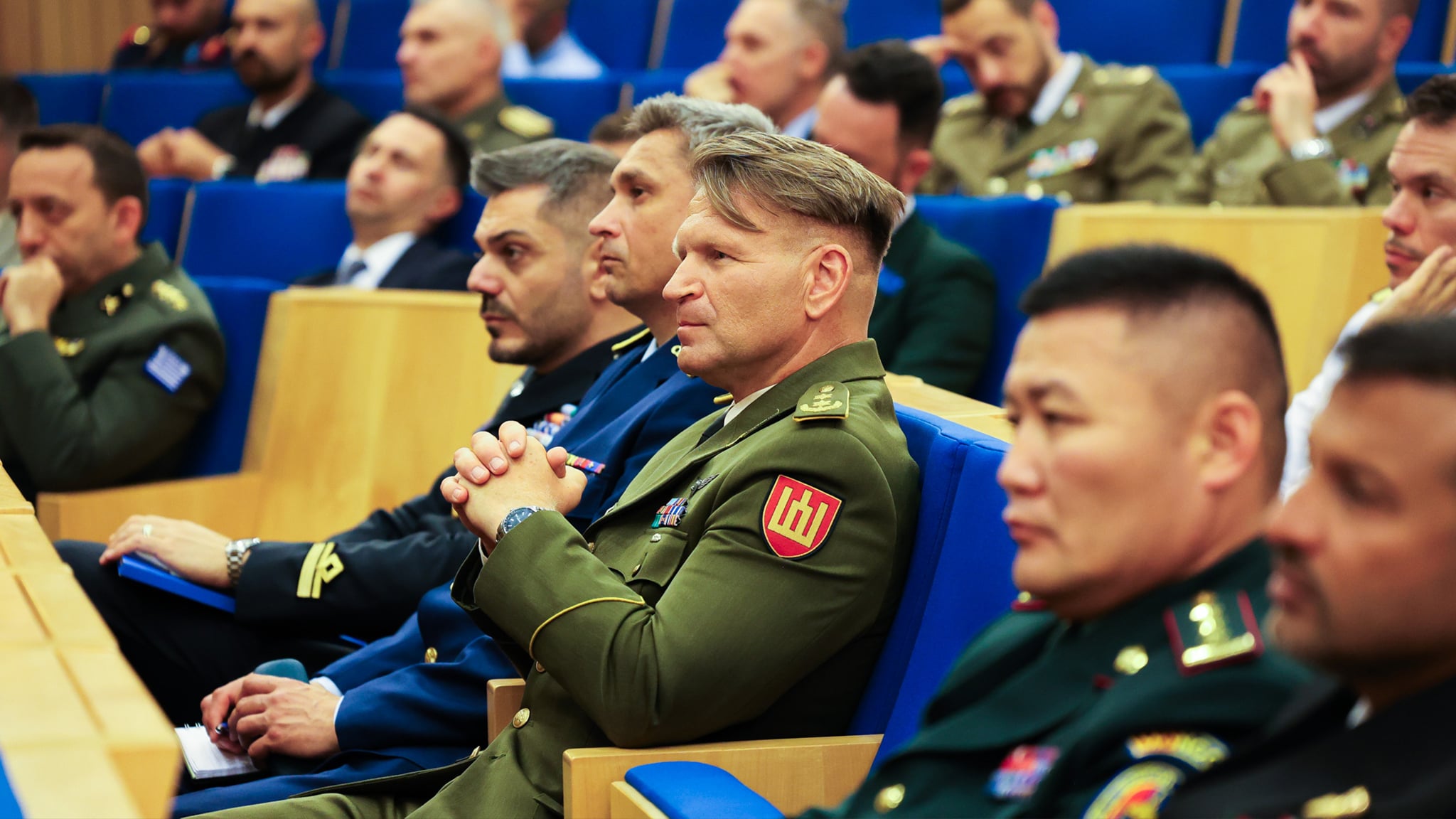
SC 148 delegation in Vilnius

Essential Blocks Slider Subtitle

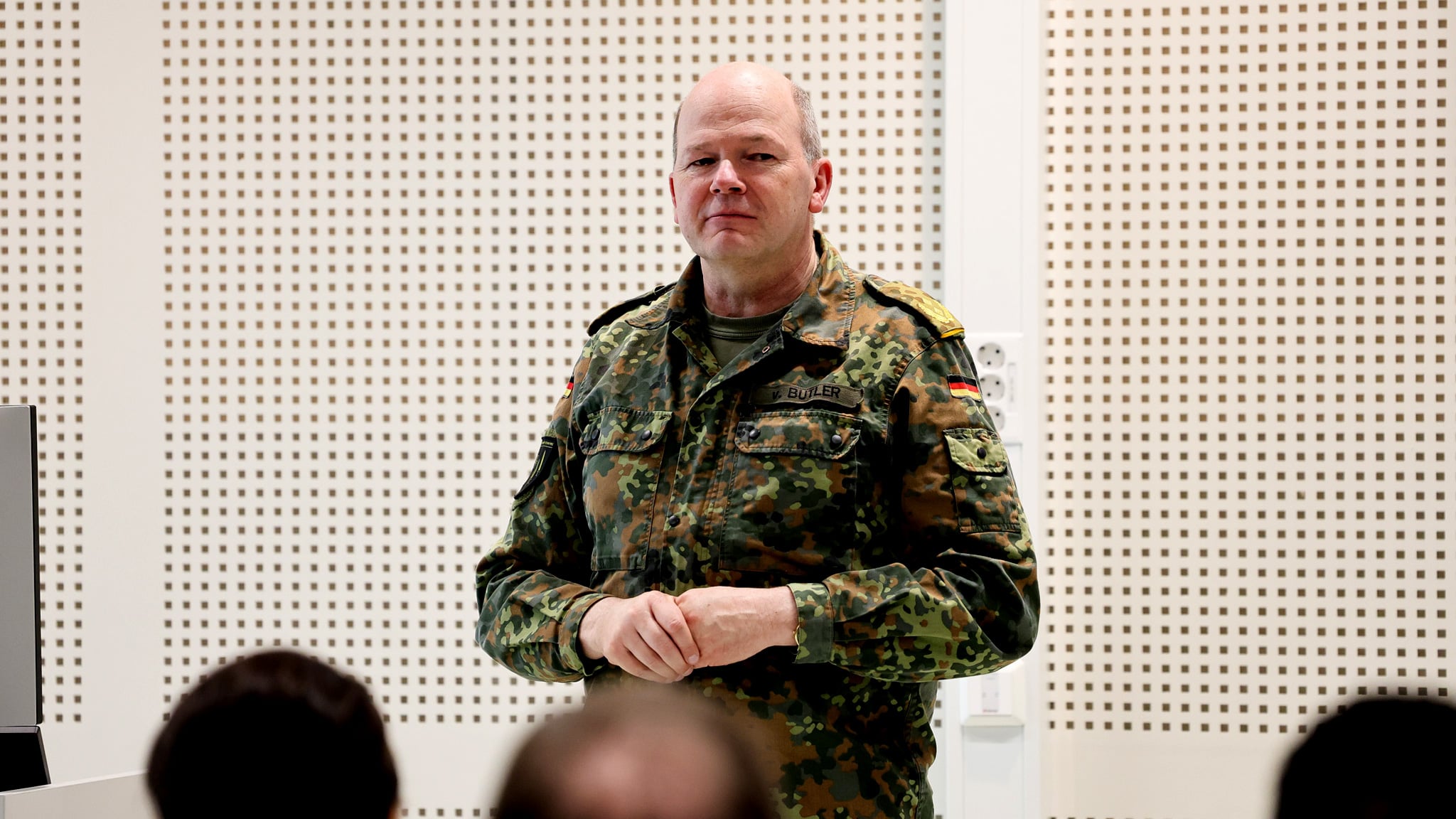
Commander Joint Warfare Centre Stavanger, Major General Ruprecht von Butler, addressing Senior Course 148

Essential Blocks Slider Subtitle

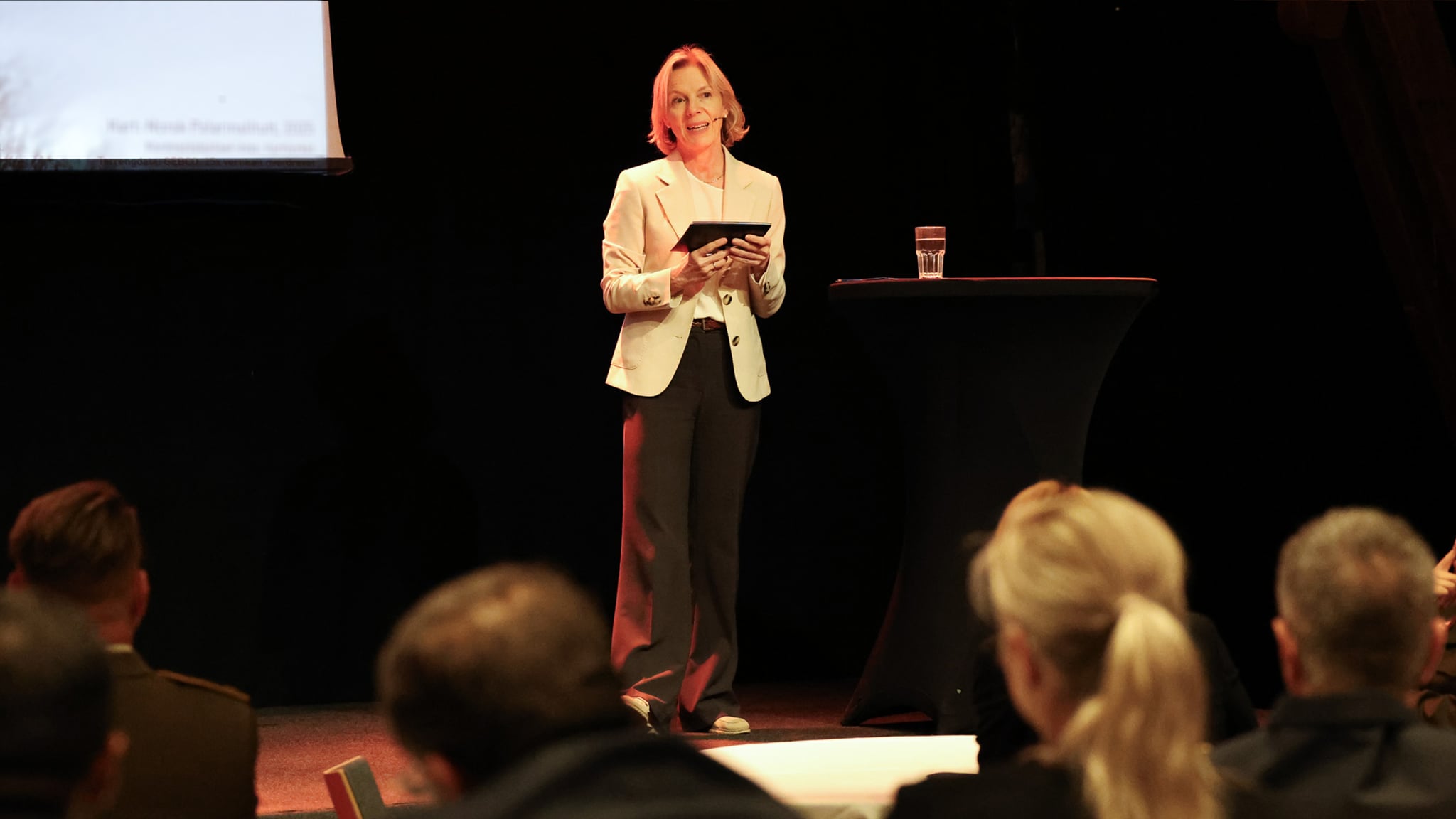
Norway’s State Secretary of Defence Ms Marte Gerhardsen engages with the delegation

Essential Blocks Slider Subtitle

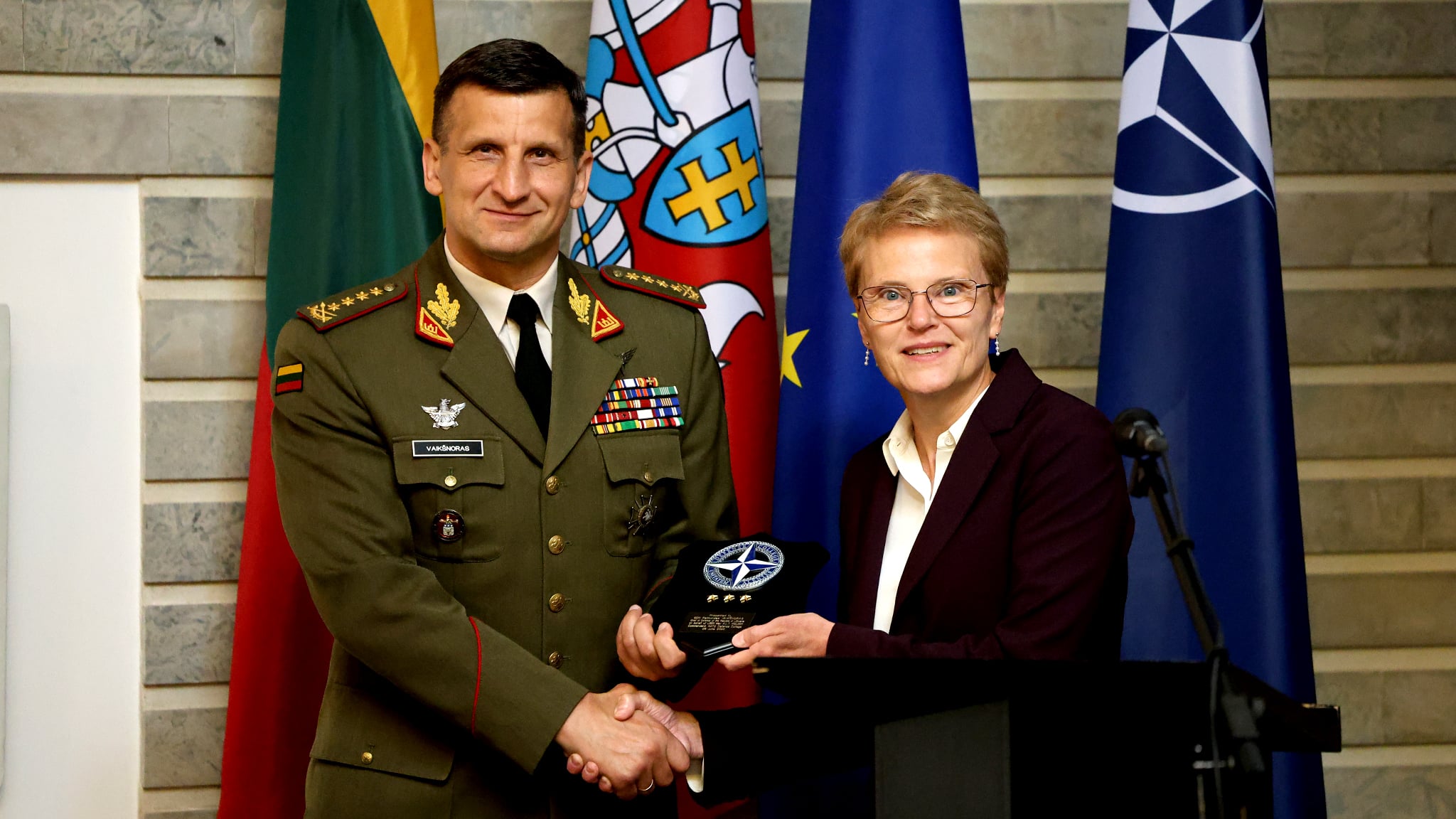
Gift exchange between NDC Dean Dr Suzanne Nielsen and Lithuanian Chief of Defence General Raimundas Vaikšnoras.

Essential Blocks Slider Subtitle

Senior Course 148 Course Member during a Q&A session

Essential Blocks Slider Subtitle

The Field Study began in Lithuania with a visit to the Ministry of National Defence, before continuing to Estonia. There, the delegation had the opportunity to visit CR14 and engage with a range of security and defence stakeholders. The final leg of the Field Study took place in Norway, beginning in Oslo and concluding with a visit to the Joint Warfare Centre in Stavanger.

Although each visited nation faces distinct geographic and strategic realities, discussions with government officials, military leaders, parliamentarians, defence industry representatives and academic experts revealed converging challenges and priorities in their assessment of the current global security environment.

A central theme throughout all three visits was the long-term challenge posed by Russia. Whether in the Baltic region or in the High North, speakers consistently identified Russia as the primary and enduring security threat, shaping defence planning, readiness requirements and deterrence strategies. Particular attention was given to Russia’s long-term military development, its increased integration with Belarus, and the growing risks associated with its use of non-conventional warfare, especially in the cyber and information domains.

In the current security environment shaped by Russia’s full-scale invasion of Ukraine, support for Ukraine is a key priority for all three countries. Norway emphasized that Ukraine’s security is directly linked to its own, and highlighted Ukraine as a long-term security partner whose battlefield experience offers invaluable lessons for Allies.

The war in Ukraine has demonstrated the importance of military readiness, societal resilience and defence-industrial capacity. It has also highlighted the enduring relevance of conventional military capabilities while underscoring the necessity of innovation, technological and military adaptation, as well as preparedness across all domains.

In this context, all three countries are significantly increasing defence spending, accelerating capability development and adapting their armed forces to operate effectively in a more contested and unpredictable security environment.

The briefings emphasized the strategic importance of strengthening national defence industries and deepening cooperation across the European defence-industrial base. The war in Ukraine has demonstrated the critical role of production capacity in sustaining military operations over time. For Norway, expanding defence production and enhancing European industrial cooperation are among the key lessons learned from the conflict. For Estonia, a stronger defence industry not only supports national defence objectives but also enables continued assistance to Ukraine.

Estonia notably showcased its growing defence technology sector and cyber expertise, including its contributions to NATO through its role in the NATO Cooperative Cyber Defence Centre of Excellence (CCDCOE). Across all three countries, the defence industry is increasingly viewed as a strategic asset that contributes both to national security and to NATO’s collective readiness.

Despite broad public support for defence, all three countries acknowledged the challenges of sustaining increased defence expenditure and the resulting pressure on national budgets and economies. Nevertheless, defence investment is widely regarded as an essential component of a broader whole-of-society approach to preparedness, deterrence and defence.

This theme was central throughout the Field Study. Lithuania’s Total Defence model integrates military preparedness, societal resilience, critical infrastructure protection and citizen engagement as key pillars of national security. Estonia’s comprehensive defence approach combines military readiness, civic participation and resilience. Supported by the Defence League and reinforced through efforts to strengthen its reserve forces, it complements the capabilities of the Defence Forces and contributes to national preparedness. In all three countries, discussions reflected a shared understanding that national defence extends far beyond military institutions. Governments, industry and citizens are increasingly seen as integral components and contributors to national security and credible deterrence.

Despite their differing national perspectives, Lithuania, Estonia and Norway all underscored the key role of NATO and collective defence. Lithuania highlighted the importance of Allied forward presence and rapid reinforcement on NATO’s eastern flank. Estonia stressed the need for credible deterrence, Alliance unity and collective defence. Norway emphasized the importance of greater European responsibility for its own security, while reaffirming the enduring value of the transatlantic relationship and US engagement.

Norway also highlighted the High North and the Arctic as increasingly contested strategic regions where military, economic and geopolitical interests overlap, making them areas of growing importance for the Alliance. Regional cooperation within Nordic-Baltic frameworks and through bilateral defence agreements was consistently presented as a force multiplier that enhances deterrence and defence.

Overall, the Field Study provided a comprehensive overview of how Baltic and Northern Allies are adapting to a rapidly evolving security environment shaped by the war in Ukraine and growing strategic competition, notably in the Arctic and the High North. Lithuania, Estonia and Norway each emphasized that preserving security across the Euro-Atlantic area will require credible deterrence, resilient societies, stronger defence-industrial capacity, continued support for Ukraine and close cooperation within NATO and among like-minded partners.

NDC Public Affairs Office

(Prepared by Ms Chloé Ketels, FRA C)

Navigation des publications

Précédent : The Human Mind as a Battlespace: Insights from the Conference of Commandants 2026

CLOUD TAGS

NATO Strategy Future Middle East/North Africa Hindsight East Europe and Russia War Asia/Pacific

PUBLICATIONS BY REGION

  • NATO
  • Middle East/North Africa
  • Asia/Pacific
  • East Europe and Russia

PUBLICATIONS BY TOPICS

  • The War Series
  • The Strategy Series
  • The Future Series
  • The Hindsight Series

RESEARCH

  • À propos de la recherche
  • Les chercheurs
  • Publications
  • Opportunités
  • NATO NexGen Futures

Recent Posts

Field Study 3: Deterrence, Collective Defence & Resilience on NATO’s Eastern & Northern Flanks SC 148 delegation in Vilnius
  • Courses
  • News

Field Study 3: Deterrence, Collective Defence & Resilience on NATO’s Eastern & Northern Flanks

juin 25, 2026
The Human Mind as a Battlespace: Insights from the Conference of Commandants 2026 NDC Commandant LGEN Max A.L.T. Nielsen delivering his welcome address during the 2026 Conference of Commandants.
  • Conference
  • News

The Human Mind as a Battlespace: Insights from the Conference of Commandants 2026

juin 24, 2026
The NDC Conducts its 2027 Field Study Planning Conference Field Study Conference participants during a briefing
  • Conference
  • News

The NDC Conducts its 2027 Field Study Planning Conference

juin 23, 2026
NATO Field School Cohort Explores Negotiation & Consensus-Building at the NDC NATO Field School participant during the NMDX
  • Courses
  • News

NATO Field School Cohort Explores Negotiation & Consensus-Building at the NDC

juin 22, 2026
Mind the minds – China’s education strategy and its implications for NATO outlook-2026-06
  • News
  • Publications
  • The Strategy Series

Mind the minds – China’s education strategy and its implications for NATO

juin 15, 2026
Navigating Multi-Domain Operations: NDC Concludes Modular Short Course 148-2 MSC 148-2 participants during a committee discussion
  • Courses
  • News

Navigating Multi-Domain Operations: NDC Concludes Modular Short Course 148-2

mai 29, 2026

CONTACT US

Central Registry
Collège de Défense de l'OTAN
Via Giorgio Pelosi 1, 00143, Rome - Italy
E-mail: [email protected]

Tu as peut-être manqué

SC 148 delegation in Vilnius
5 minutes lues
  • Courses
  • News

Field Study 3: Deterrence, Collective Defence & Resilience on NATO’s Eastern & Northern Flanks

juin 25, 2026
NDC Commandant LGEN Max A.L.T. Nielsen delivering his welcome address during the 2026 Conference of Commandants.
6 minutes lues
  • Conference
  • News

The Human Mind as a Battlespace: Insights from the Conference of Commandants 2026

juin 24, 2026
Field Study Conference participants during a briefing
3 minutes lues
  • Conference
  • News

The NDC Conducts its 2027 Field Study Planning Conference

juin 23, 2026
NATO Field School participant during the NMDX
2 minutes lues
  • Courses
  • News

NATO Field School Cohort Explores Negotiation & Consensus-Building at the NDC

juin 22, 2026
Central Registry
Collège de Défense de l'OTAN
Via Giorgio Pelosi 1, 00143, Rome - Italy
Telephone: (+39) 06 50525 309 / 275
Fax: (+39) 06 50525 799
[email protected]
Public Information/media related matters:
[email protected]
Web related matters:
[email protected]
US Postal Address
U.S. National Support Element
Collège de Défense de l'OTAN
PSC 802 BOX 201
FPO AE 09608-0003

UK Postal Address
Name Rank Number
Dept
Collège de Défense de l'OTAN
BFPO 65

RELEVANT LINKS

NATO HQ
SHAPE
NATO ACT
NATO School
NATO Defense College Foundation
  • Organisation
  • Enseignement
  • Recherche
  • Engagement
  • Portails
  • Facebook
  • X
  • LinkedIn
  • Youtube
  • Instagram
  • Flickr
NATO Defense College © 2026 All rights reserved.
NATO Defense College Collège de Défense de l'OTAN
Heureux de vous revoir
Connexion
Connectez-vous pour accéder à vos téléchargements, gérer votre compte et continuer là où vous vous êtes arrêté.
Connexion au compte
Saisissez vos identifiants pour accéder à votre compte
Mot de passe oublié ?
We use cookies to ensure that we give you the best experience on our website. If you continue to use this site we will assume that you are happy with it.