
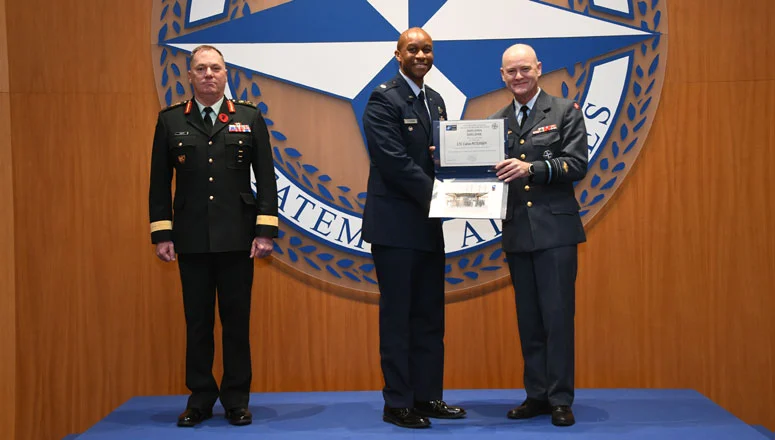
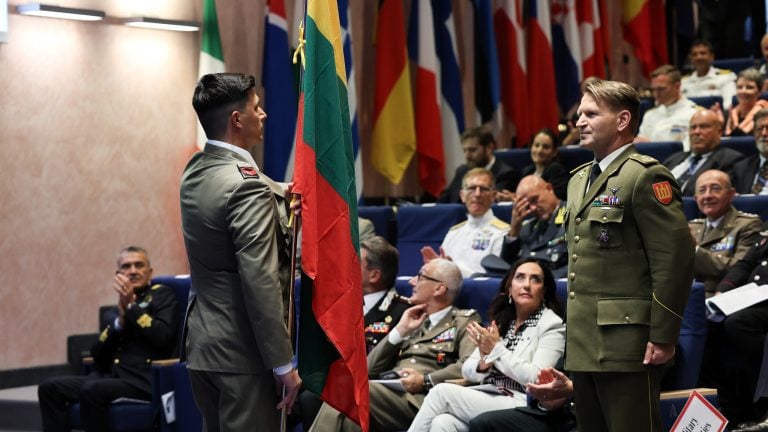
On 8 November 2024, the NATO Defense College (NDC) graduated the 32nd edition of the NATO Regional Cooperation Course (NRCC). The graduation ceremony marked the conclusion of the 10-week curriculum, bringing together Ambassadors to Italy, distinguished authorities, defence attachés, families of the Course Members, and NDC staff.
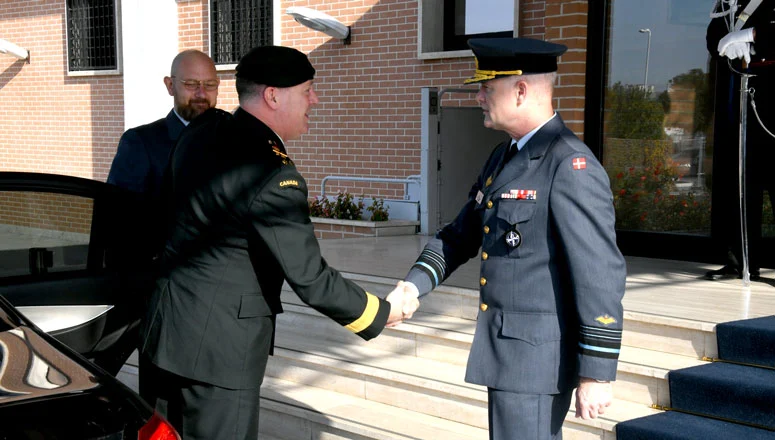
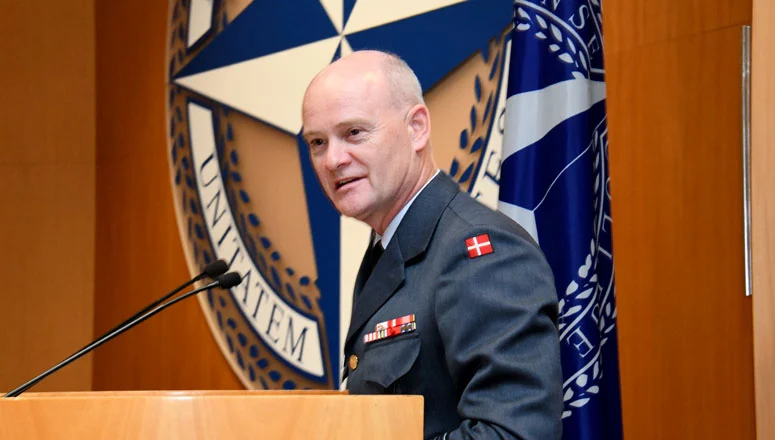
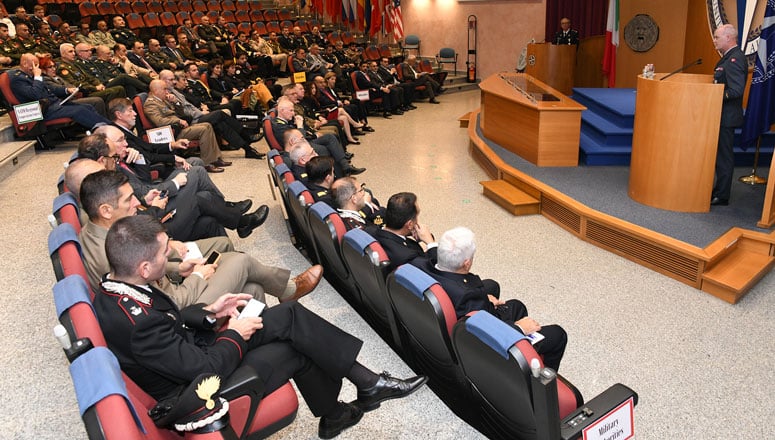
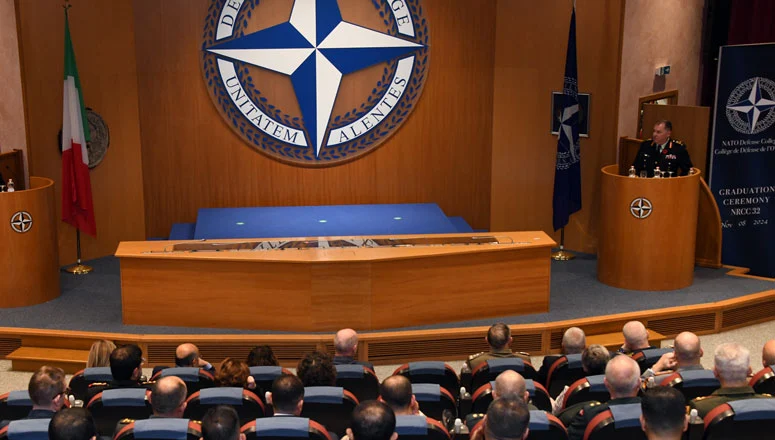
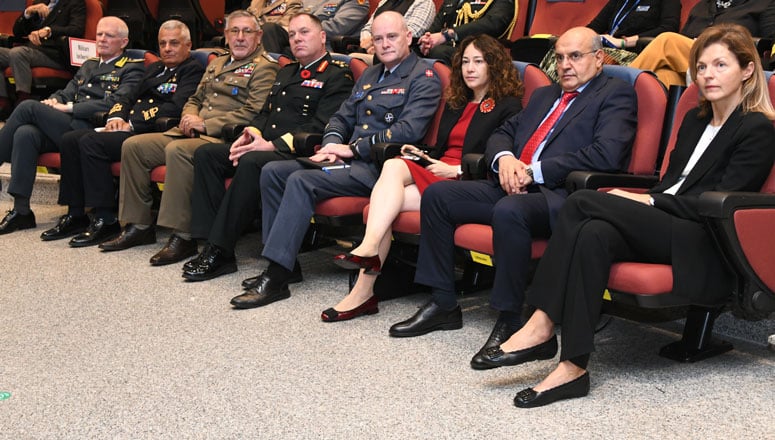
The NDC Commandant, Lieutenant General Max A.L.T. Nielsen, opened the ceremony by emphasizing the NRCC’s focus on critical 21st-century security challenges for NATO and its partners. He described the Course as a valuable platform for enhancing strategic thinking, broadening understanding of NATO and partner nations’ security environments, and fostering collaboration to address shared security challenges.
NRCC 32 brought together 36 Course Members, collectively representing 20 NATO and partner nations from across all of NATO’s Strategic Partnership Frameworks, highlighting the diversity of NATO’s partnership initiatives. In his address, the Commandant illustrated how this group exemplifies NATO’s commitment to fostering regional collaboration. He underscored that the connections formed among Course Members and faculty will be invaluable assets in their future roles, strengthening networks both within and beyond the NRCC. Moreover, the Course aims to “create synergies between officers and civilian officials from a variety of backgrounds”, encouraging knowledge sharing, meaningful engagement, and enduring solid relationships.
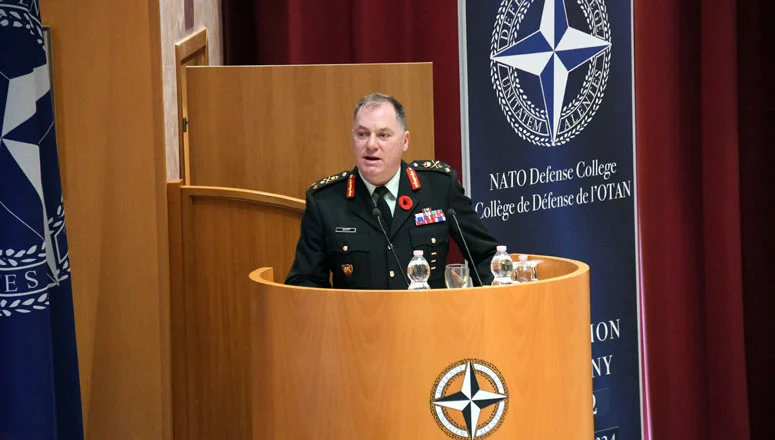
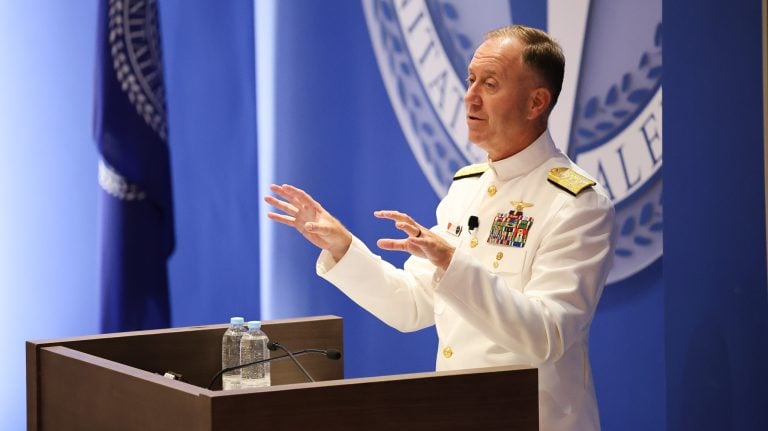
In his Graduation Address, special guest Lieutenant General Peter Scott, Deputy Commander of Allied Joint Force Command Naples, outlined the evolving dynamics in NATO’s southern region, addressing the growing complexities spanning from Middle Eastern tensions, the war in Ukraine, and NATO’s expanding role in the Mediterranean region. He also noted the group’s recent visit to Allied Joint Force Command Naples and the NATO Strategic Direction Southern Hub. According to LGN Scott, such interactions foster collaboration, understanding, and trust among our headquarters, the Course, and partner nations. He emphasized how NATO and its partners collaborate closely to tackle shared security challenges and uphold the rules-based international order. NATO’s deterrence and assurance efforts are essential across multiple levels, ensuring stability and resilience in an increasingly complex global landscape.
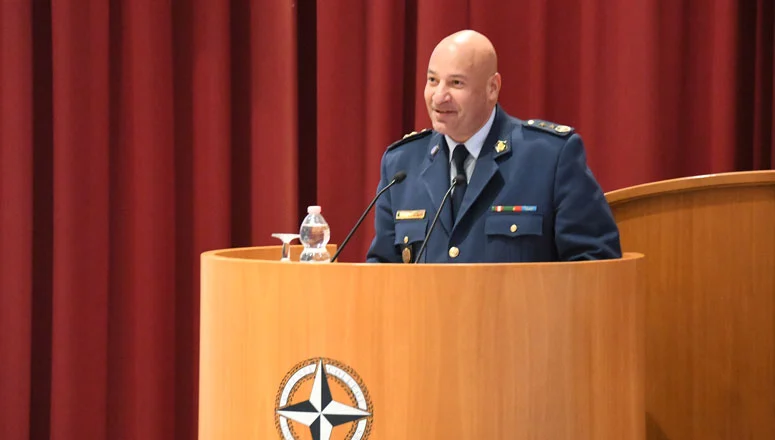
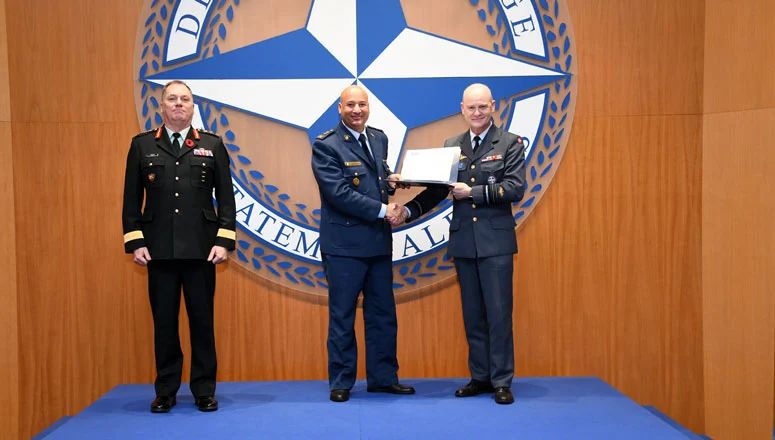
Ahead of the conferment of diplomas, NRCC 32 Course President Colonel Oualid Salem Bouziane reflected on the Course’s impact. He highlighted how Course Members had gained a deeper understanding of NATO’s operational and strategic objectives, the global and regional dynamics influencing the Alliance, and the security issues central to NATO’s deterrence and defence tasks. Colonel Bouziane stated: “All Course Members are going home with new skills: improved strategic thinking and critical analysis; improved decision-making and leadership; and a deeper understanding of each other’s differing perspectives.” He also noted that the bonds formed and the shared appreciation of history and culture in Rome strengthened partnerships, positioning Course Members to collaborate effectively in addressing current and future challenges. Finally, Commandant Nielsen affirmed this sentiment, by stating: “NDC graduates, Course Members, are now seen as ambassadors for the NATO Defense College.”
NDC Public Affairs Office
(Prepared by Ms Britt Melinga, NLD C)

 Collège de Défense de l'OTAN