
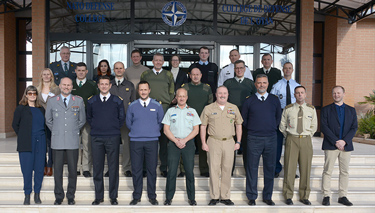
From 13 to 17 January 2019, Modular Short Course (MSC) 135-5 was run at the NATO Defense College (NDC). The Course, dedicated to “Global Security Challenges”, was attended by 25 senior officers from 12 NATO countries. The topics considered included cyber security, terrorism and organized crime, demographic trends and migration, weapons of mass destruction, proliferation and arms control, and energy security.
The aim of this Study Period is to analyse global security challenges and the possible implications for NATO. It examines a number of security challenges and risks which, by their very nature, transcend national boundaries and thus require collective action by nations. The topics examined are important for developing possible strategies, policies and instruments to influence and, if possible, control these global risks.
The attendees were welcomed, on Monday morning, by NDC Commandant LGEN Chris Whitecross. The first lectures on “Cyber Security” were given by Dr John Clark (USA) and Mr Christian-Marc Liflander (EST).
Lectures during the rest of week were as follows: “Current Challenges in Terrorism: Terrorism and Organized Crime”, by Mr Gabriele Cascone (ITA); “Security Perspectives of Demographic Trends and Migration Issues”, by Dr Gunnar Heinsohn (DEU) and Dr Roderick Parkes (GBR); “Weapons of Mass Destruction, Proliferation, Arms Control”, by Prof Dr Holger Mey (DEU) and Prof Dr Vicente Garrido Rebolledo (ESP); “Energy Security”, by Prof Theresa Sabonis-Helf (USA) and Mr Julijus Grubliauskas (LTU)-NATO.
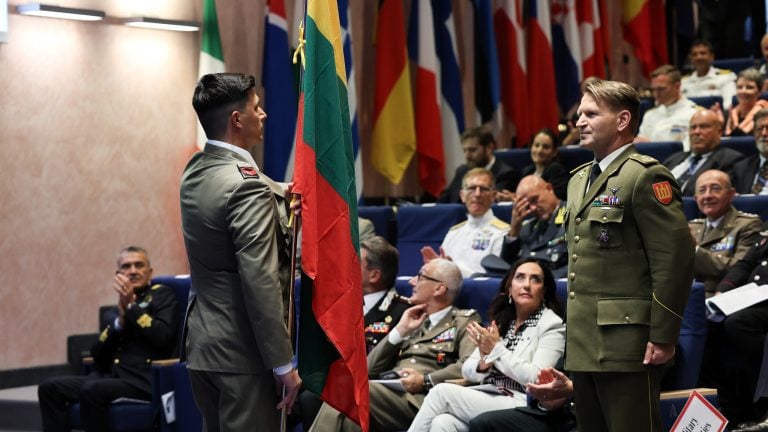
On Friday 17 January, a graduation ceremony concluded MSC 135-5.
The Modular Short Course is designed for military officers and civilian officials who may not be able to attend the NATO Defense College for the six month duration of a Senior Course (SC). The NDC organizes five MSC per Senior Course and each MSC is designed to both inform and stimulate.
NDC Public Affairs Office
(Prepared by Mr Matteo Acciaccarelli, ITA C)

 Collège de Défense de l'OTAN