
In the week beginning 6 Sep 2010 SC 117 lectures began in earnest with Study Period A pt 1 – The Global Security Environment. The aim of Study Period A is “To review the nature of the current International System in order to propose a possible future security environment, and the place of the military instrument within it”; SP A pt 1 forms the first week of studies. As a consolidation exercise later in the course, Course Members have the opportunity to propose, by consensus in Committees, a Vision of the World in 2025. SP A pt 1 helps set the scene for this work, as well as provide a foundation for the remainder of the course.
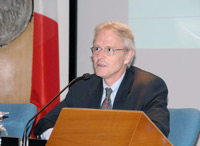
On Monday 6 Sep, Professor Neil MacFarlane provided a good introduction with his presentation “The International System and Schools of Thought”. Liberalism, Realism and Transformationalism were covered, and the professor was particularly clear in highlighting the limits of ‘Western’ thinking with regards to democracy and state organisation, and the increasingly diffuse and complex nature of the International System. The Q&A was good, as was the seminar, and Professor MacFarlane answered numerous challenging questions thoroughly and in a way which stimulated further thought.
On Tuesday 7 Sep, Professor Christopher Coker continued the Study period with “Strategic Thinking”. In his usual fashion, Prof Coker provided a broad appreciation of the concept of Strategy with numerous examples from military history. He was challenging, fairly realistic concerning the limits of strategy, and offered CMs food for thought. He covered the objectives well, and was quite clear concerning the need for political will to be at the heart of any NATO Strategic Concept. Q&A and seminar were great value. All in all, Professor Coker tailored his presentation perfectly to the political/strategic level of the NDC curriculum.
On Wednesday 8 Sep, Dr Mikkel Rasmussen presented on “Globalisation”, and helped Course Members appreciate the nature of globalisation and its effects on the world today, considering such key questions as what constitutes power in a globalised world, and how globalisation might inform Strategic thinking. Joining Dr Rasmussen was Dr Eric Germain who expanded discussions on Globalisation, specifically with respect to “National Identity and Pluralism”. Dr Germain delivered an excellent analysis of his subject, and offered particularly expert views on the interactions of religion and social dynamics. The combined morning finished with a lively Q&A session with plenty of opportunity to challenge speakers on their ideas in both Q&A and in subsequent seminar.
On Thursday 9 Sep, SC 117 enjoyed a stimulating and provocative day considering “The Changing Nature of Conflict”. Guest speakers were Dr Thomas Hammes and Professor Peter Jakobsen. The morning began with Dr Hammes who offered a captivating discourse on the changing nature vs the changing character of conflict, followed by Professor Jakobsen who delivered a frank and stimulating assessment of NATO, the future challenges it faces, particularly in Afghanistan, and the problems of implementing the Comprehensive Approach and Counter Insurgency strategies. The Q&A session was extremely lively, offering course members every opportunity to challenge speakers and develop ideas. All in all, a most valuable day from Dr Hammes and Prof Jakobsen.
The final day for SP A pt 1 was Friday 10 Sep 2010 with Professor Philippe Moreau Defarges and his lecture “Legal Framework and Norms”. Professor Moreau Defarges delivered a broad discourse on Law and its relationship to State sovereignty and legitimacy. The professor outlined the complexity and strong contradictions within law as it is applied globally, and offered numerous examples from history and contemporary events to illustrate his points, with a particular reference to UNSCRs. The Q&A session and seminar were lively and informative, and much appreciated by Course Members. All in all, Professor Moreau Defarges completed the week for SC 117 on a strong note, with many ideas for Course Members to consider further.
NDC Public Affairs Office
 Collège de Défense de l'OTAN