

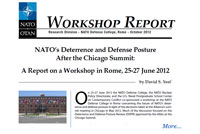
- Deterrence and Defense Posture
After the Chicago Summit: A Report on a Workshop in Rome, 25-27 June 2012, by David S. Yost
At its Chicago Summit in May 2012, NATO agreed on a document with the cumbersome title “Deterrence and Defense Posture Review” (DDPR). This paper, though hardly recognized by the public or the media, concluded an intense NATO debate on the relevance of nuclear deterrence, and ended a fierce dispute on whether US nuclear weapons need to be deployed on the territory of European Alliance members.
Though the Review leaves a number of questions unanswered, it marks a major step forward: for the first time since the end of the Cold War, NATO now has a consensus on the role of nuclear weapons in the 21st century. The Alliance agreed that US nuclear weapons in Europe remain necessary for NATO’s deterrence requirements – hence, they remain deployed in Germany, Italy and elsewhere. In addition, the statement that “all elements” of nuclear deterrence have to be kept efficient means that weapons need to be modernized when they become technically obsolete.
Still, this basic nuclear consensus raises a number of related questions. For example, how should the impact of NATO’s nuclear posture on conventional forces or missile defense capabilities be assessed? What is the relationship of nuclear deterrence to cyber challenges or space threats?
The NATO Defense College recently gathered a number of internationally renowned security experts to discuss the implications of the nuclear question – how to deter whom with what? – for NATO and for the transatlantic relationship.
The latest NDC workshop report describes the key findings which emerged.
More Research Division Publications…
NDC Public Affairs Office


 Collège de Défense de l'OTAN