
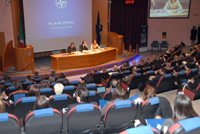
On 2 December 2013, the NATO Defense College hosted the Rome Atlantic Forum. Attended by delegations of prominent political, military, diplomatic and academic representatives from NATO and Partner countries, the event was jointly organized by the Italian Atlantic Committee (IAC) and the Atlantic Treaty Association (ATA), with the support of all NDC staff.
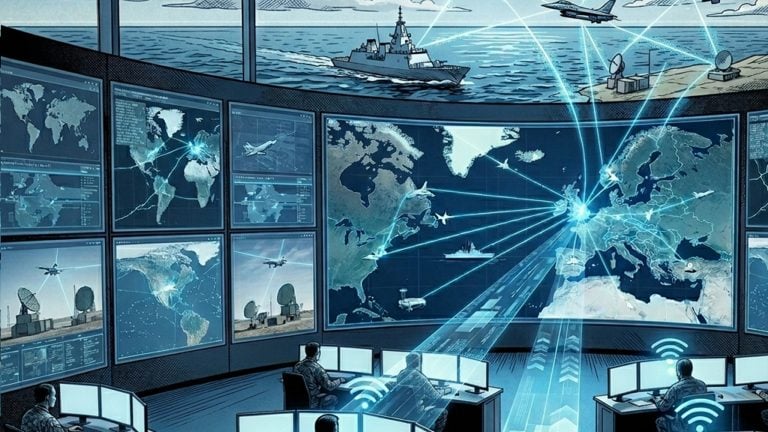
The aim of this event was to promote discussion and research on a security issue relevant not only to NATO, but to the international security community as a whole: cyber security, and NATO’s approach to dealing with cyber threats. As stressed by the IAC and the ATA: “Among the emerging threats to security, the cyber one has taken an increasing relevance due to its potential impact on government and institutional apparatuses, the industrial system and communications, as well as the welfare of the citizens of modern interconnected societies. While critical infrastructure protection is a national responsibility, NATO represents an added value in strengthening the prevention, resilience and response capabilities of the member States.” In this respect, the Rome Atlantic Forum marks an important step forward towards greater awareness of a particularly topical security concern.
Proceedings started with welcoming remarks by NDC Commandant LtGen Arne Bård Dalhaug, IAC Secretary General Mr Fabrizio W. Luciolli, ATA Vice President Amb Lazar Eleonovski, and the Political Adviser of the First Secretary – United States of America Embassy in Rome, Ms Kelly Hapka. The opening address was then given by the President of the Centre for Higher Defense Studies (CASD), VAdm Rinaldo Veri.
“NATO’S Role in Cyber Security”, the first session of the event, explored NATO programmes and mechanisms in cyber security. Dr Jeffrey Larsen, Director of the NDC Research Division, introduced the session by giving an overview of research activities at the NDC and stressing the growing importance of cyber security as a research topic for NATO. VAdm (ret) Ferdinando Sanfelice di Monteforte, Chairman of the IAC Military Committee, and Mr Detlef Puhl, Senior Advisor in the NATO Emerging Security Challenges Division, then investigated the current situation and prospects regarding preventive and defensive measures against cyber threats.
Continuing the session, different perspectives on the role of NATO in cyber security were presented by Lt Ludovica Glorioso, NATO Cooperative Cyber Defense Centre of Excellence Senior Analyst, Dr. Liviu Muresan, Executive President of the EURISC Foundation, and Ms Victorine Hage, ATA Research Fellow. Following their presentations, a lively question and answer period brought this first session to a fitting conclusion.
The topic of the second session was “Cyber Security: Threats and Countermeasures”. This eminently technical session, introduced and moderated by LtGen Giovanni Marizza of the IAC Board, featured a number of distinguished panelists: Mr Giuseppe Abbamonte, Head of Unit, DG Connect, European Commission; Mr Wolfgang Roehrig, Project Officer Cyber Defence, European Defence Agency; LtCol Antonio Colella, IAC Advisor on Cyber Security; Dr Paolo Lezzi, CEO, Maglan Europe; Mr John Higgins, Director General, Digital Europe; and Dr Alessandro Zanasi, CEO, Zanasi & Partners.
During the ensuing discussion period, the audience had further opportunity to better understand the complex challenges linked to cyber security.
The concluding remarks of this topical and timely meeting were given by the IAC President, the Honourable Prof Enrico La Loggia.
NDC Public Affairs Office
(Prepared by Ms Monica Fornari, ITA C)
 Collège de Défense de l'OTAN