Passer au contenu
juillet 23, 2026
  • Facebook
  • X
  • LinkedIn
  • Youtube
  • Instagram
  • Flickr
NATO Defense College

Collège de Défense de l'OTAN

Unitatem Alentes

NDC_103x103
  • Home
  • Courses
  • Publications
  • Emplois
  • NDC Foundation
  • FAQs
  • Education mail
Menu principal
  • Home
  • Organisation
    • About Us
      • Mission
      • Qui est qui?
      • Structure
      • Historique
      • Vox Collegii Magazine
    • News
    • Resources & Services
      • La bibliothèque
      • Locaux du Collège de Défense de l’OTAN (NDC)
      • Liens
      • Vision Link
      • FAQS
    • Opportunités
      • Possibilités d’emploi
      • Achats
    • Contact & Information
      • Pour nous contacter
      • Follow us
      • Avis Important
  • Enseignement
    • General Information
      • Cours au Collège
      • e-Learning
      • Calendriers académiques
      • Le projets d’étude
    • Long Courses
      • La Session principale
      • Cours OTAN de coopèration régionale (NRCC)
    • Short Courses
      • Stage pour Officiers généraux et Ambassadeurs (GFOAC)
      • Generals, Flag Officers and Ambassadors’ Course for Partners, GFOAC-P (former SERC)
      • Stages modulaires de brève durée (MSCs)
      • Modular Short Course Partners Integrated (MSC-PI)
    • Partnerships
      • Accord NDC Leicester
      • Accord NDC LUISS
      • Accord NDC Simon Fraser
    • Administration
      • Section des auditeurs
  • Recherche
    • À propos de la recherche
    • Les chercheurs
    • Publications
    • Opportunités
    • NATO NextGen Futures
  • Engagement
    • Conférence des Commandants
    • Semaine de Kiev
    • Anciens’ Seminar
    • Other Engagement
  • Portails
    • Portail académique
    • Anciens
    • Conseil académique consultatif
    • Conseil académique consultatif du NRCC
    • Conférence des Commandants
  • Newsletter
    • Vox Collegii Newsletter
  • fr_FRFrançais
    • en_USEnglish
  • Maison
  • News
  • SC 129 Transatlantic Link Field Study: 10th November 2016 @ European Union External Action Service
  • News

SC 129 Transatlantic Link Field Study: 10th November 2016 @ European Union External Action Service

Publié: novembre 11, 2016 | Mis à jour: janvier 15, 2026 4 minutes lues
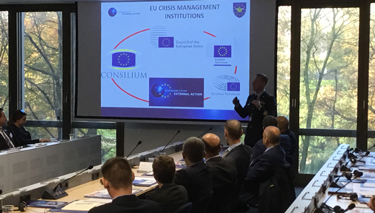
Col Bressan during his presentation

For the last stop of Field Study II, SC129 was invited to attend a session on the EU and its External Action Service at the Albert Borschette Conference Centre in Brussels. SC129 was received by RAdm Gluszco, Deputy Director General of the EU Military Staff (EUMS).

The session, moderated by Capt Gelly (FR N), Faculty Advisor at the NDC, began with a presentation on the role of the military within the EU by Col Bressan, Assistant Chief of Staff (ACOS) for External Relations. He first explained the differences and the roles of the various Institutions related to security and defence in the EU, and described how the decision making process works for Crisis Management. He also explained the policy framework for the European External Action Service (EEAS): the “Common Security and Defence Policy” (CSDP) and the strategy to implement it. The strategy, developed in 2016, is based on shared vision and common action of EU members. Col Bressan also explained the meaning of “Comprehensive approach” for the EU: beside CSDP, it includes diplomatic action, takes economic factors into consideration and also involves development activities. In short: most EU institutions are involved in Crisis Management. He then concentrated on the EUMS and explained the structure and capability development process for EU capabilities contributors. He observed that although the objectives of capability development are different in the EU and NATO, both have more or less the same shortfalls. He also mentioned the differences between NATO and the EU and underlined that the two institutions do not compete but are complementary and that NATO-EU cooperation is essential for the security of the European continent. He concluded in saying that the EU and NATO are partners of strategic importance. He then answered the questions from participants.

The second briefing was given by LtC Mari-Mateo from the Operations Division, who described the actual status of EU military missions and operations. In his presentation, he went well beyond a simple description of EU missions, explaining relations with NATO (for example ALTHEA in Bosnia-Herzegovina, which is based on the Berlin+ agreement, allowing NATO assets to be used by the EU), the future of each mission and the challenges related to these missions. This briefing gave a real taste of EU involvement in security. The example of EUTM in Mali is especially significant in the fight against terrorism. In his conclusion, LtC Mari-Mateo underlined the fact that all the missions are correlated to EU regional policies, and therefore really comprehensive in their setup. Interestingly, with regard to regional policies, during the question and answer period, he mentioned cooperation with the Strategic Commands of the US Armed Forces, in particular AFRICOM.

The third and last briefing was given by Mr Versmessen, Chief of Staff and Deputy Civilian Operations Commander. In his introduction, he stressed the two main differences with the military staff: the existence of a permanent command structure and the financing of the civilian missions which rely on the EU budget. He then described the Kosovo and Afghanistan missions and those in Mali and Somalia. Theses missions reveal the intrinsic cooperative nature of civilian missions, the first two missions are made in cooperation with NATO and the other two in cooperation with the EU military component. He then described the broad range of characteristics of the missions: policing (e.g. criminal investigation), judiciary (for example support to prosecutorial bodies), training missions (including training the trainers), monitoring missions, security sector reform etc. The EU makes the difference between executive and non-executive missions: in the first, the police for example is allowed to arrest people, in non-executive missions their role is only advisory. He also mentioned the political dimension of the missions and, like the military, the diplomatic activities related to the missions. In conclusion, he explained the procurement rules and the support to the missions with the new support platform and how missions are planned and implemented. This is very similar to the military CONOPS (Concept of Operations) and OPLAN (Operation Plan). He then answered the questions from participants.

For this last activity before flying back to Rome, SC129 Course Members got a really complete view of EU missions and how these missions interact with other actors. Participants were able to understand the underlying complexity of the different processes from decision making to the implementation of missions, including their support and financing. These briefings were of real added value and much appreciated by participants.

NDC Public Affairs Office
Navigation des publications

Précédent : SC 129 Transatlantic Link Field Study: Brussels
Suivant : Generals, Flag Officers & Ambassadors’ Course (GFOAC) 2016-2 “NATO following the Warsaw Summit”

CLOUD TAGS

NATO Asia/Pacific Strategy Middle East/North Africa War Future Hindsight East Europe and Russia

PUBLICATIONS BY REGION

  • NATO
  • Middle East/North Africa
  • Asia/Pacific
  • East Europe and Russia

PUBLICATIONS BY TOPICS

  • The War Series
  • The Strategy Series
  • The Future Series
  • The Hindsight Series

RESEARCH

  • À propos de la recherche
  • Les chercheurs
  • Publications
  • Opportunités
  • NATO NexGen Futures

Recent Posts

Tactical datalinks: why they matter to the future of war Outlook 2026-08
  • News
  • Publications
  • The War Series

Tactical datalinks: why they matter to the future of war

juillet 21, 2026
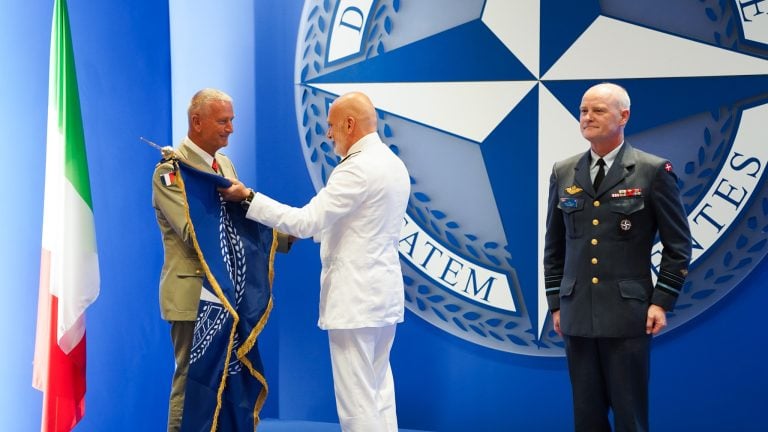
Lieutenant General Max A.L.T. Nielsen Hands Over NDC Command to Lieutenant General Jérôme Goisque Admiral Cavo Dragone hands over the NDC flag to the incoming NDC Commandant LGEN Goisque
  • Editor's Pick
  • News

Lieutenant General Max A.L.T. Nielsen Hands Over NDC Command to Lieutenant General Jérôme Goisque

juillet 18, 2026
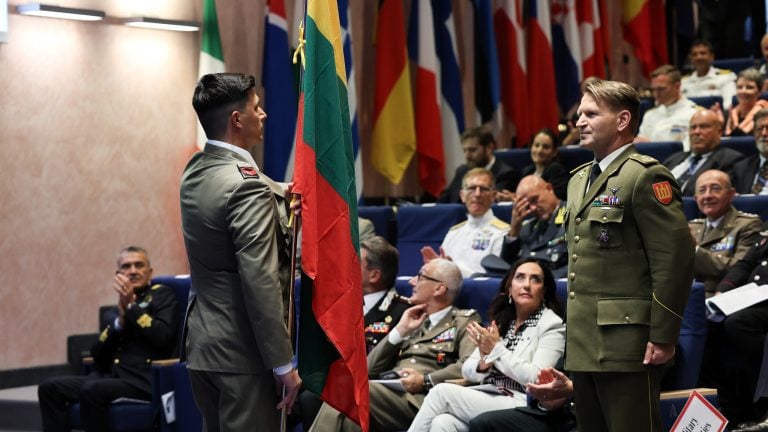
Senior Course 148’s Graduation Marks 75 Years of Developing Future Leaders Course Member of Senior Course 148 saluting his flag
  • Courses
  • News

Senior Course 148’s Graduation Marks 75 Years of Developing Future Leaders

juillet 17, 2026
The NDC proudly celebrates its 75th anniversary & 60 years since its relocation to Rome The arrival of the Chairman of the Military Committee Admiral Guiseppe Cavo Dragone and NDC Commandant Lieutenant General Max A.L.T. Nielsen at the NDC's 75th Anniversary celebrations.
  • Courses
  • News

The NDC proudly celebrates its 75th anniversary & 60 years since its relocation to Rome

juillet 16, 2026
Video: The Mind as a Battlespace: Reshaping Education, Resilience and Decision-Making Video interview: CoC 2026
  • Editor's Pick
  • News

Video: The Mind as a Battlespace: Reshaping Education, Resilience and Decision-Making

juillet 7, 2026
Betting on blue: how to improve NATO military forecasting for acquisitions Outlook 07 2026
  • News
  • Publications
  • The War Series

Betting on blue: how to improve NATO military forecasting for acquisitions

juillet 6, 2026

CONTACT US

Central Registry
Collège de Défense de l'OTAN
Via Giorgio Pelosi 1, 00143, Rome - Italy
E-mail: [email protected]

Tu as peut-être manqué

Outlook 2026-08
1 minutes de lecture
  • News
  • Publications
  • The War Series

Tactical datalinks: why they matter to the future of war

juillet 21, 2026
Admiral Cavo Dragone hands over the NDC flag to the incoming NDC Commandant LGEN Goisque
4 minutes lues
  • Editor's Pick
  • News

Lieutenant General Max A.L.T. Nielsen Hands Over NDC Command to Lieutenant General Jérôme Goisque

juillet 18, 2026
Course Member of Senior Course 148 saluting his flag
5 minutes lues
  • Courses
  • News

Senior Course 148’s Graduation Marks 75 Years of Developing Future Leaders

juillet 17, 2026
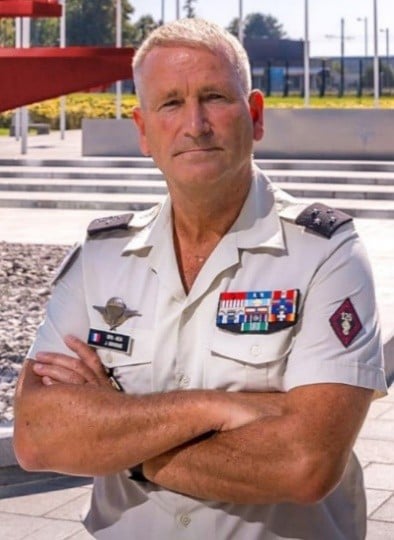
CMDT-FRA-2
2 minutes lues
  • Qui est qui?

Le Commandant

juillet 17, 2026
Central Registry
Collège de Défense de l'OTAN
Via Giorgio Pelosi 1, 00143, Rome - Italy
Telephone: (+39) 06 50525 309 / 275
Fax: (+39) 06 50525 799
[email protected]
Public Information/media related matters:
[email protected]
Web related matters:
[email protected]
US Postal Address
U.S. National Support Element
Collège de Défense de l'OTAN
PSC 802 BOX 201
FPO AE 09608-0003

UK Postal Address
Name Rank Number
Dept
Collège de Défense de l'OTAN
BFPO 65

RELEVANT LINKS

NATO HQ
SHAPE
NATO ACT
NATO School
NATO Defense College Foundation
  • Organisation
  • Enseignement
  • Recherche
  • Engagement
  • Portails
  • Facebook
  • X
  • LinkedIn
  • Youtube
  • Instagram
  • Flickr
NATO Defense College © 2026 All rights reserved.
NATO Defense College Collège de Défense de l'OTAN
Heureux de vous revoir
Connexion
Connectez-vous pour accéder à vos téléchargements, gérer votre compte et continuer là où vous vous êtes arrêté.
Connexion au compte
Saisissez vos identifiants pour accéder à votre compte
Mot de passe oublié ?
We use cookies to ensure that we give you the best experience on our website. If you continue to use this site we will assume that you are happy with it.