
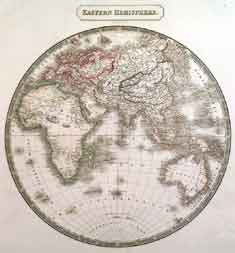
During the periods 3 -5 June and 30 June-3 July 2009, Senior Course 114 continued its in-depth studies of the important geographic regions within and beyond the North Atlantic Treaty Organization (NATO) territory from a general global perspective as well as from the NATO point of view. Particular emphasis was placed on their impact on regional (and global) stability or instability and what this means for the Alliance. During the academic program, a series of visiting experts offered their thoughts on the Middle East, South, East and Central Asia, and NATO contact countries: Japan, Korea, Australia and New Zealand.
Two of the Study Period lectures were devoted to the Middle East. Visiting lecturers were Prof.George Joffé from Great Britain, Mr Rami Khouri, a Jordanian/USA citizen of Palestinian origin, and Mr Yossi Mekelberg, an Israeli/British citizen. The Middle East is an area of global strategic importance that faces huge challenges, including modernization and reform, the development of basic democratic and human rights, education and literacy, the reduction of poverty and an upsurge of Islamic radicalism. Firstly, Prof. Joffé profoundly analyzed the Iranian crisis, discussed the aftermath of the war in Iraq and the future prospects of that country, and concluded with a synthesis of the region including Gulf and Levant countries. Mr Khouri and Mr Mekelberg examined more closely one of the most enduring and explosive of all the world’s conflicts – the ongoing tragic conflict between Israelis and Palestinians, and also touched upon the Israeli-Arab dispute.
Both lectures on East/Southeast Asia were delivered by Dr James Boutilier, special adviser to the Canadian Maritime Forces and an ‘Honorary Ancien’ of the NDC. He examined why the region is increasingly important and considered the changing political geometry of the area, the rise of China and the relationship between Beijing and Washington. The rise of China is a phenomenon that can be considered either an opportunity or a challenge. East Asia can no longer be seen as a distant realm: developments there impinge on the West in every way and therefore should be observed closely. In a separate lecture Dr Boutilier focused on two NATO Contact Countries, Japan and Korea, and also on Indonesia, Malaysia, the Philippines and Vietnam. The relationship between North and South Korea remains an unresolved legacy of the Cold War. Since their division, South Korea has developed into one of Asia’s most affluent countries, but the North has slipped into starvation and poverty, while maintaining a huge military and claiming the legitimacy of nuclear weapons. Meanwhile, Japan has seriously reviewed its current security policy, largely driven by the perceived military threat from North Korea, and is reviewing its so-called “peace constitution”, allowing for greater flexibility in the deployment and use of its military forces. Indonesia is perhaps the least known of the world’s great nations and its importance derives from several geopolitical factors. It has the fourth biggest population in the world, and is by far the largest Muslim-majority country. It is also the world’s largest archipelago, endowed with huge strategic significance. Dr Boutilier briefly discussed the Philippines, Vietnam and Malaysia and provided a strategic overview of the major political-military and security-related issues. Dr Boutilier’s lectures always give Course Members profound insight into the subject matter and an understanding of the region and beyond.
In recent years, the subject of security in the South Pacific has concerned strategic policy makers and political leaders in two NATO Contact Countries: Australia and New Zealand. The lecture on both countries was provided by dr. Craig Snyder, a professor at School of International and Political Studies at Deakons University in Melbourne. He gave the Senior Course members a strategic overview of the key security related issues confronting Australia and New Zealand, their strategic importance in the Pacific Area, the relations with China and US and its policies towards the Pacific as well as in South East Asia.
The lecture on "South Asia: India" was delivered by Commodore C. Uday Bashkar, Director of the National Maritime Foundation in New Delhi and D irector ofthe Institute for Defense Studies and Analyses in New Dehli. During the last decade India has continued to emerge as a major power and has experienced remarkable economic and development. India plays a key security role in South Asia. The Commodore provided a strategic and security profile of Southern Asia and discussed its implications for India. He also gave a historical perspective on the history of regional nuclear developments and the role of China and the US with regard to Pakistan.
The second lecture on South Asia, covering Pakistan, was given by Dr Samina Ahmed, Project Director for South Asia at the International Crisis Group, Islamabad, Pakistan. Within the region, sources of instability include bitter inter-state and intra-state conflict, nuclear and missile proliferation, terrorism, religious extremism, separatism, demographic pressures and drugs. Pakistan is close to the brink, perhaps not of meltdown of the government, but of a permanent state of anarchy, as the Islamist revolutionaries led by the Taliban and their many allies take over more territory, and state power shrinks. The international community should be concerned by the internal tensions in Pakistan that could arise from future developments and the security situation in Afghanistan. Dr Ahmed’s lectures were highly appreciated by SC 114.
During the Study Period an excellent lecture was provided by Dr Shirin Akiner, former professor of Central Asian Studies at the School of Oriental and African Studies of the University of London, and at present fellow of the Cambridge Central Asia Forum, University of Cambridge. She described the historical and Soviet legacy, discussed the challenges for independence, and presented the five Central Asian states in depth. The region’s main security challenges include organized crime and drug smuggling, border and resource disputes, corruption, religious extremism and the heavy-handed repression of opponents. Today there is a risk of further deterioration in both the economic and security climate in Central Asia and the growth of militant political and religious groups. Future unrest could have a huge impact on the wider region. Dr Akiner greatly enhanced Course Members’ understanding of the region.
At the conclusion of the very successful Study Period D1 and as part of the “consolidation” process, each Senior Course Committee was tasked to produce a short paper prioritizing the five regions that are considered to be potentially the greatest threat for future instability that could even escalate into a conflict. These papers listed the regions in priority order and included a short analysis of why the Committee came to their conclusions, why NATO should be concerned and what action the Alliance might take to promote peace and stability in the regions covered.
Overall, it was a rewarding week, full of thought-provoking and stimulating lectures which offered an introduction to some of the important issues at the regional level. Senior Course 114 had the opportunity not only to improve their understanding of the regions examined but also to consider contemporary security issues defined by global interdependence.
By Col. Daria Daniels Skodnik, SVN A

 Collège de Défense de l'OTAN