
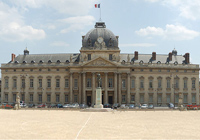
After the visit to Luxembourg, Senior Course 121 (SC 121) travelled to Paris. On September 26, Course Members were hosted at the École Militaire, the original home of the NATO Defense College (NDC), which was based in this historic military institution from 1951 until the move to Rome in 1966. At the École Militaire, SC 121 had the opportunity to explore and understand the concepts that underpin French security and defence policy.
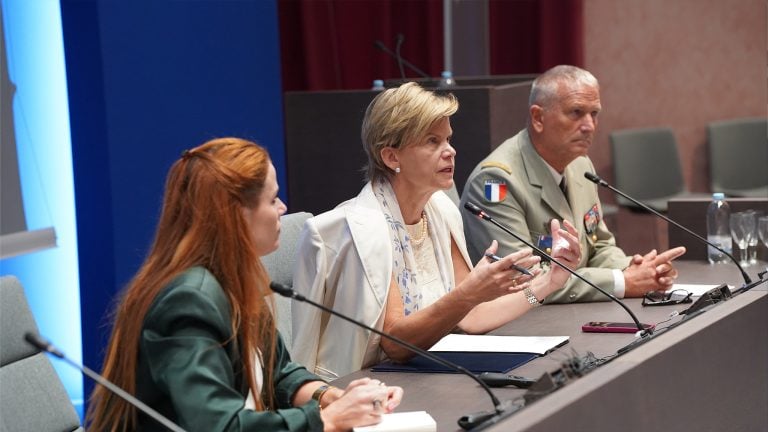
LtGen Gratien Maire, Deputy Chief of Staff responsible for International Relations, opened the session and welcomed the NDC delegation. He provided a comprehensive overview of the priorities that France is currently pursuing and of the challenges that the country is addressing. LtGen Maire also listed a number of cooperation programmes that France has established with key partners. What emerged from his presentation was the importance that France attributes to its relations with two crucial institutions, the European Union (EU) and NATO – vital partners from both a political and a military perspective, particularly with a view to ensuring awareness and management of possible new threats. Within this overall framework, LtGen Maire highlighted the need for further development of an efficient European Defence and Security Policy pillar, in order to strengthen the Alliance.
The second briefing was delivered by Rear-Admiral Chaperon, Director of the International Organizations and Euro-Atlantic Countries Branch. He explained the historical reasons for the French withdrawal from the integrated military structure of the Alliance and the underlying political concept. As an Ancien of the NDC (SC 115), the speaker also added his personal testimonial about the lasting professional value of participation in such a unique learning experience.
BrigGen Patrick Brethous, Deputy Chief of the Centre for Planning and Conduct of Operations (CPCO), then took the floor to speak about the current operational commitments of French forces. He not only underlined the importance of integration between military and civilian efforts, but also discussed the continuous need to adapt to new operational activities in an ever-changing international environment.
The last speaker of the day was Mr Maxime Lefebvre, Deputy Director of Forecasting at the Department of Foreign Affairs. He provided a concise historical overview of French foreign policy in the last sixty years, and continued with an appraisal of the more recent changes introduced by François Hollande since taking up office as President. Mr Lefebvre concluded his presentation by commenting on the full significance of France’s return into NATO’s integrated military structure and the key role that the country is currently playing in it.
Highlights of a most fruitful visit were aptly summed up in the closing remarks of BrigGen Maurin, Assistant to the Deputy Chief of Defence Staff.
More about the Field Study:

 NATO Defense College


