
Senior Course 118 made the next stop of its Transatlantic Field Study on 09 May 2011 at the Headquarters, Supreme Allied Commander Transformation (HQ SACT) in Norfolk, Virginia.
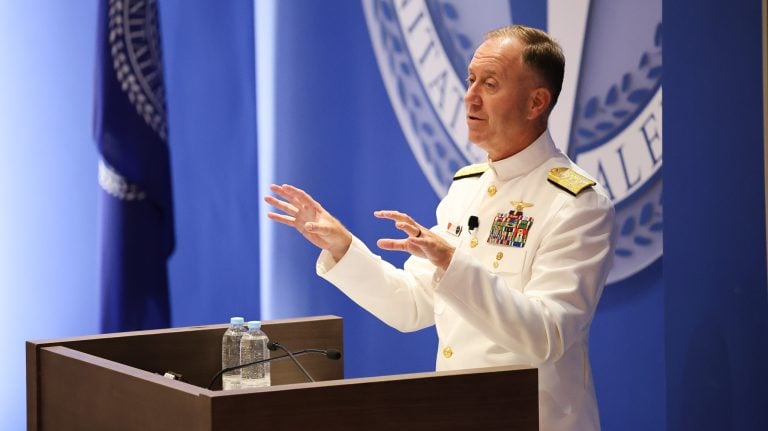
Vice Admiral Bob COOLING (GRB – N), ACT’s Chief of Staff (COS) welcomed the SC on behalf of SACT and opened the session with a wide and frank introduction on the role of the ACT. He also underlined the importance of a Strategic Command in the USA as a tangible example of the enduring importance of the Transatlantic Link.
LTC David NICHTING (USA –A) provided the Senior Course with the ACT Command and Policy briefing. He commented mainly on ACT’s role and functions: support to operations; lead on military transformation; active engagement with other non-NATO actors as part of a comprehensive approach to cooperative security.
The next briefer was Col BARBAS João, Chief of Staff of the Joint Analysis and Lessons Learned Centre (COS JALLC) in Portugal. He outlined in detail the mission, the organisation, the outputs of JALLC and the important role of the JALLC in defence planning and transformation.
The last briefer of the morning was Col PADGETT Stephen (GBR – A) of the Plans and Policy Division in ACT, who analysed the impact of the New Strategic Concept on the work plan of ACT. His main message was that the New Strategic Concept (NSC) is all about transformation. He stressed the very demanding set of requirements coming out of the NSC for the ACT.
The visit concluded with an unprecedented frank and open question and answer session with the General and Flag Officers of the Command Staff.
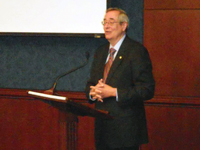
The next day, Tuesday 10 May, SC 118 visited the Capitol. The historian of the United States Senate, Donald Ritchie addressed Senior Course 118. Mr Ritchie gave an outstanding presentation on the Senate and its unique attributes vis-à-vis the House of Representatives in particular. In an inspiring briefing, he discussed the historical development and structure of the US political system, the philosophy behind the crafting of the Constitution, and the role of the Senate.
Brig Gen Stephen Stick RUDDER, Legislative Assistant to the Commandant of the Marine Corps, gave SC 118 an excellent explanation of the role of military personnel in Congress. He highlighted the importance of dialogue among the Senate, Operating Forces, HQMC and the House. He underscored the fundamental importance of Congressional oversight of the military in securing the resources needed for its long term well-being as a viable fighting force.
The two briefings that followed were given by Mr Bill MONAGHAM (working for a senator of the majority (Senator LEVEN)) together with Mr Chris BROSE (working for a senator of the minority (Senator Mc CAIN)), – both senators are member of the Senate Armed Service Committee – and by Mr Jimmy THOMAS, personal affairs assistant to Congressman Duncan HUNTER, Member of the House Armed Services Committee. After a brief description of their respective portfolios, the speakers engaged immediately the Q&A session with the Senior Course. This approach was very well received by the Course Members.
These briefings were followed by a very informative visit of the Capitol.
In the afternoon, the SC 118 moved to the White House. They were addressed by Mr John TIEN, the Senior Director for Afghanistan and Pakistan, responsible to the National Security Advisor and by Dr JONES, responsible for NATO and relations with Europe in the White House. Both described the content of their portfolio before transitioning into a Q&A session. Both sessions were characterised by the openness and frankness of the answers.
The day concluded with a reception in the Marine Barracks, hosted by Lt Gen Willie J. Williams, Director Marine Corps Staff. Course Members and staff had the opportunity to meet high ranking General Officers from the USMC, Attachés from various countries and Anciens of the NDC.
More about the Field Study:
First stop – NATO HQ, Brussels
Second leg – Belgian Defense Staff and to Supreme Allied Headquarters Europe (SHAPE)

 NATO Defense College