

On 17 July 2026, the NATO Defense College (NDC) celebrated the graduation of Senior Course 148, marking the successful completion of six months of intensive study and collaboration for 80 Course Members representing 34 nations.
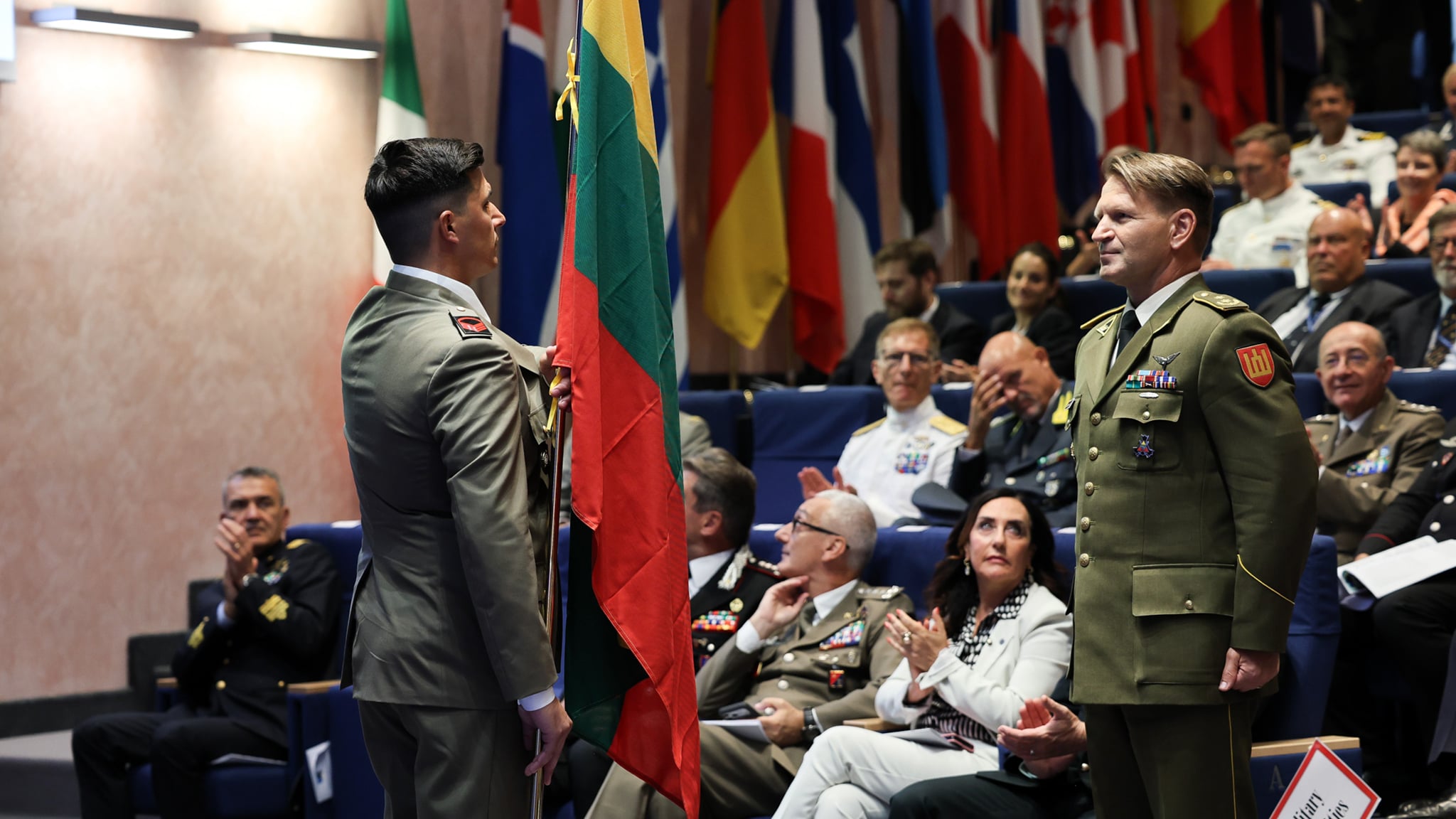
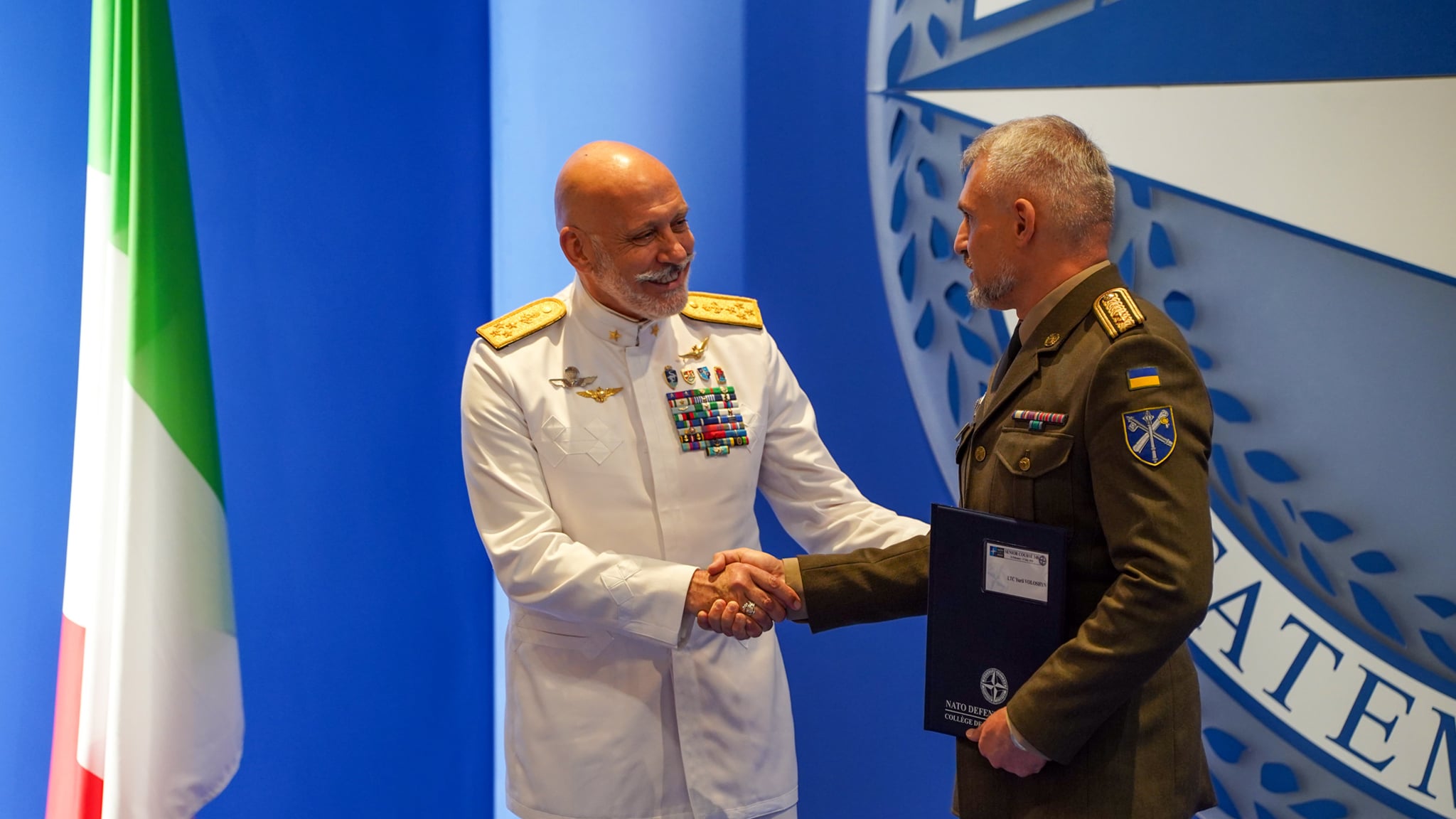
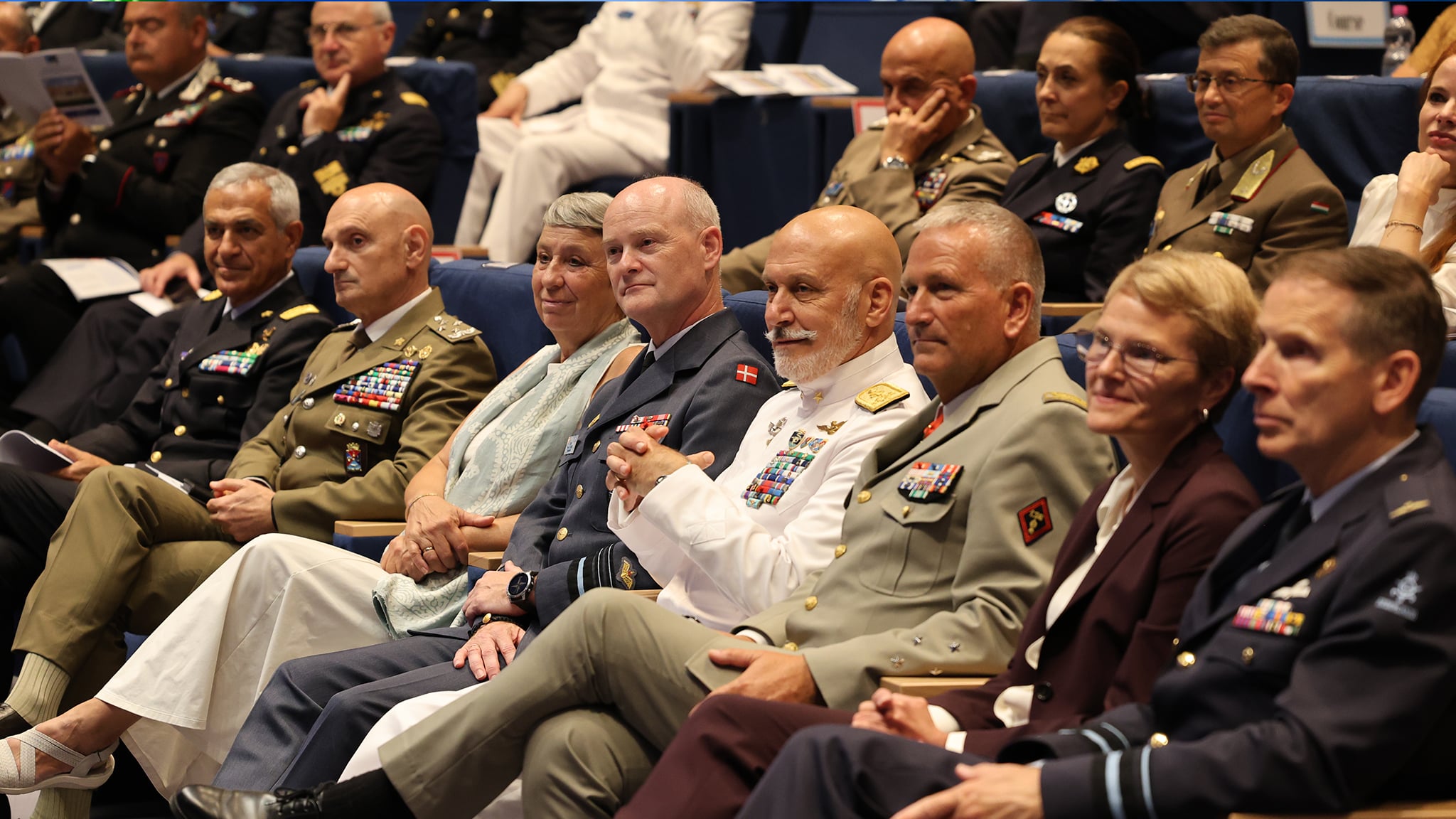
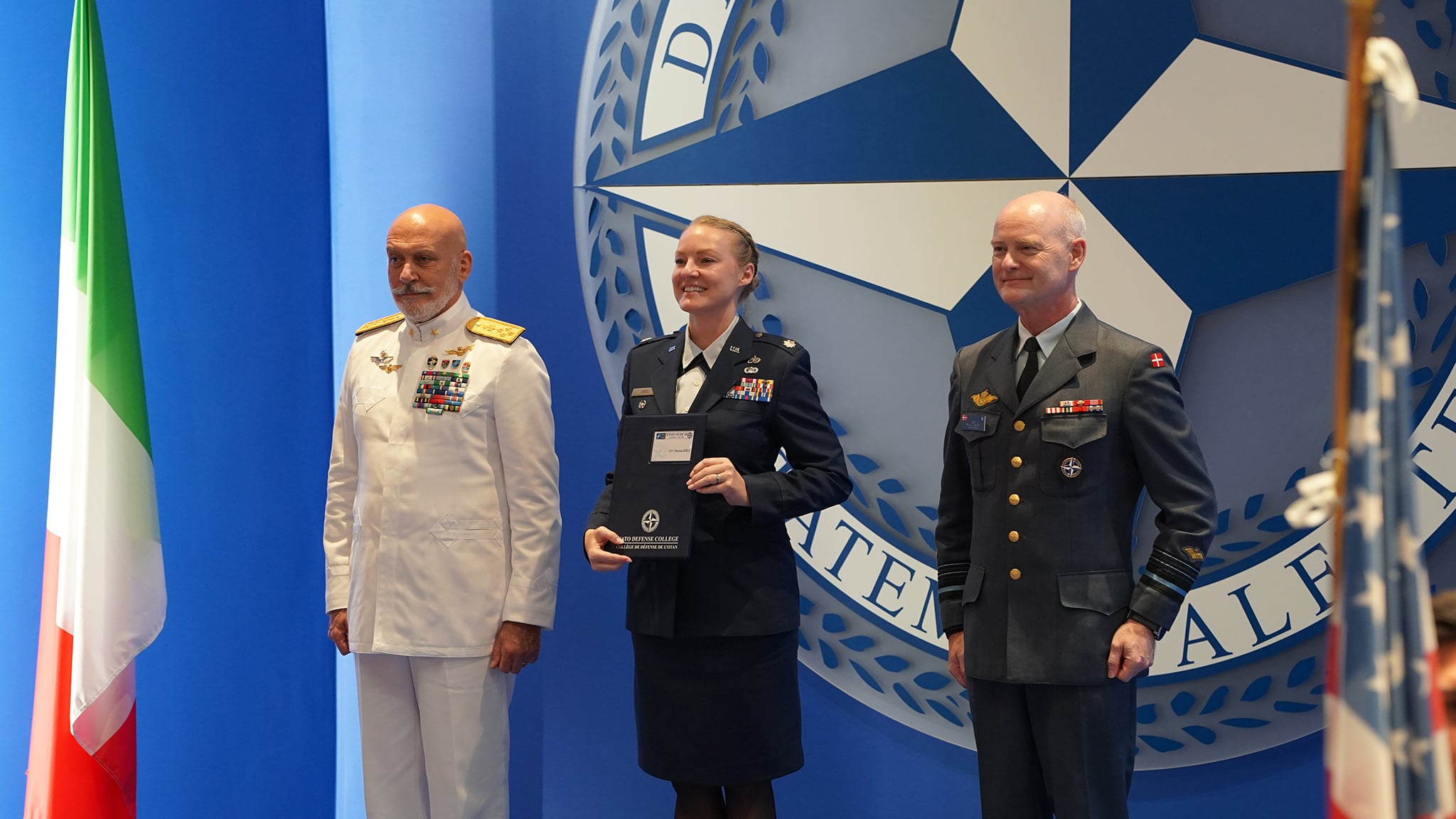
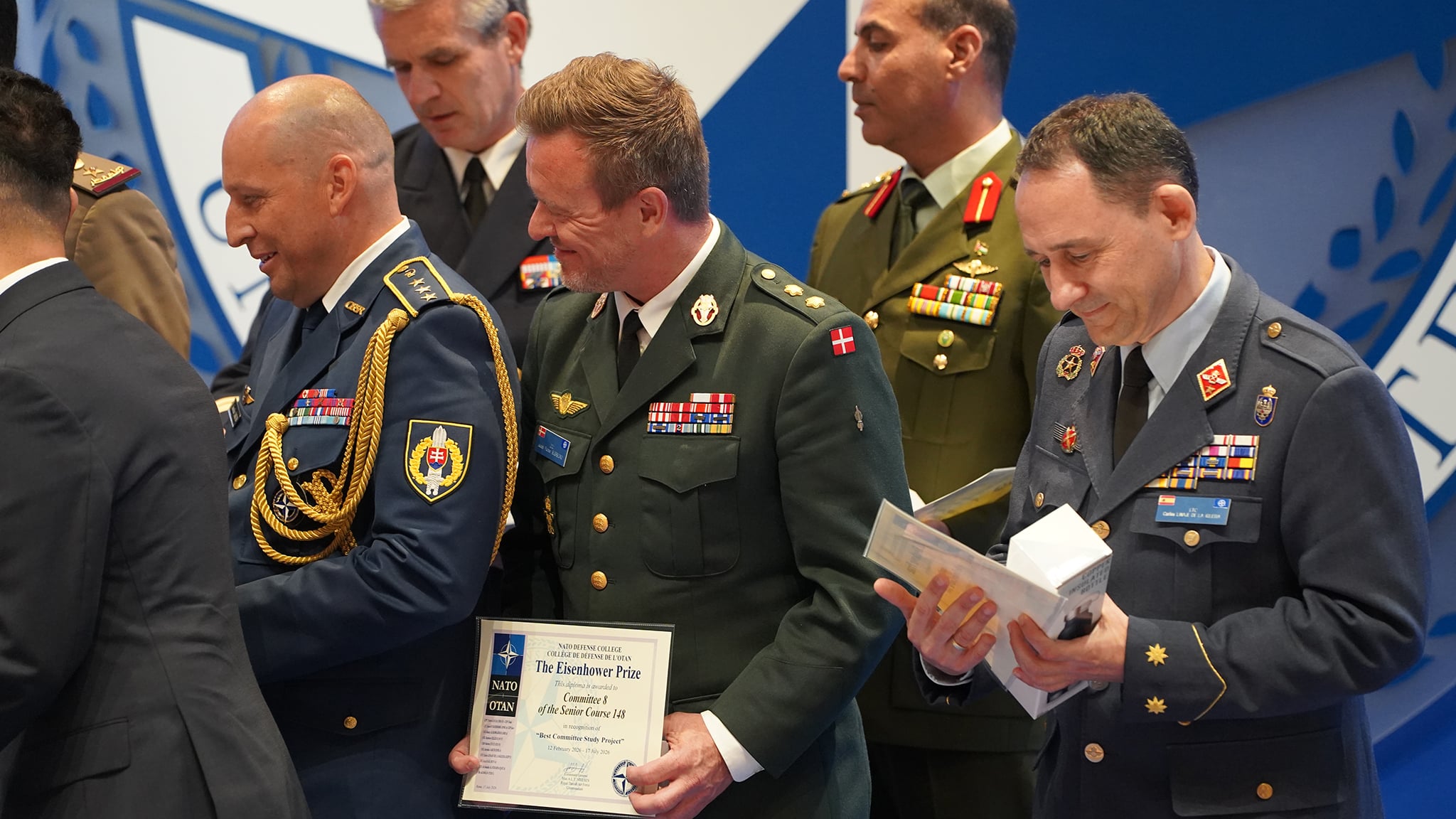
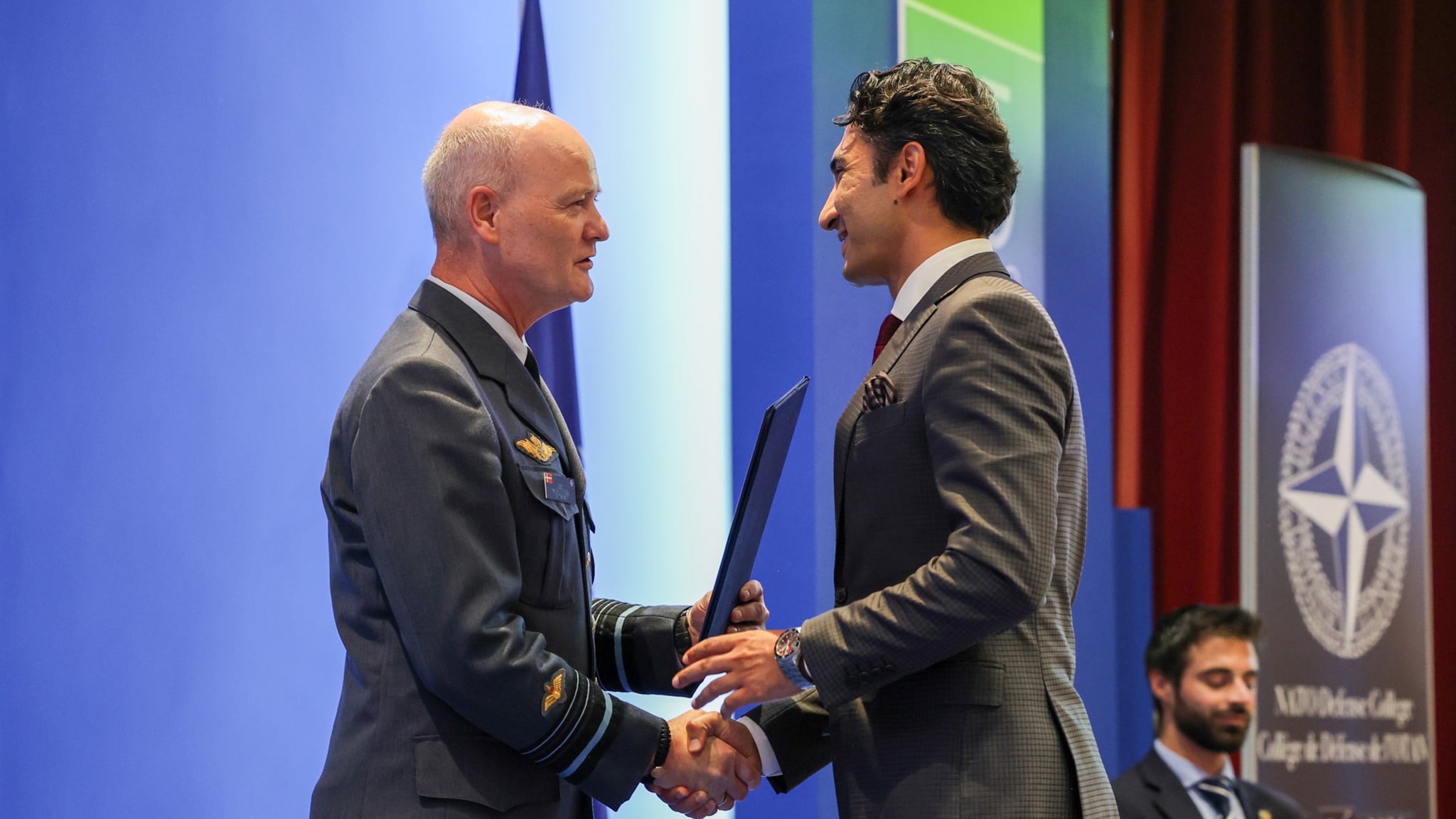
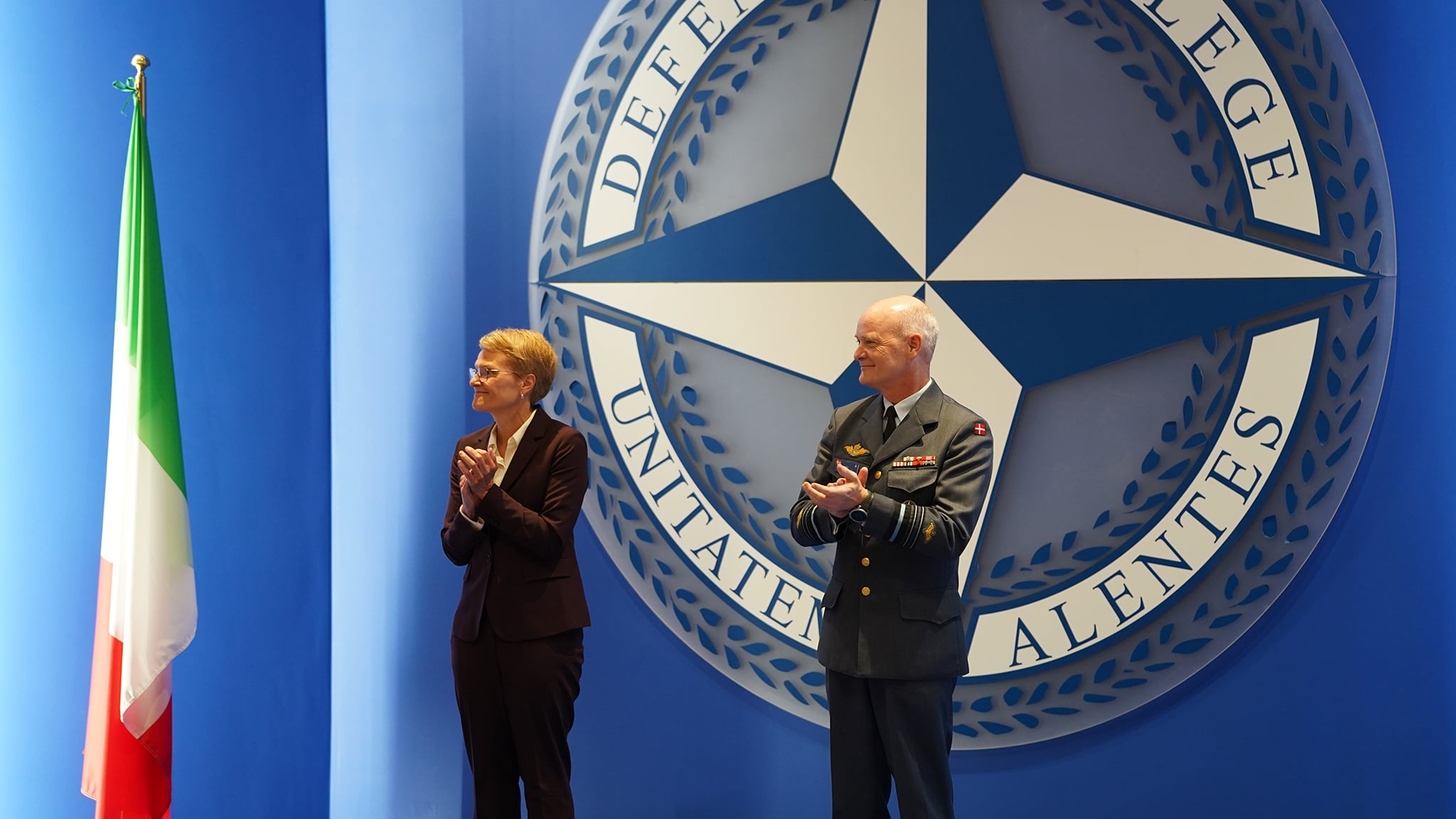
The graduation ceremony brought together senior military and civilian representatives, including Ambassadors, Defence Attachés, NDC staff, and the families of Course Members. Among the distinguished guests were the Chairman of the NATO Military Committee, Admiral Giuseppe Cavo Dragone, as the Guest of Honour, and the Italian Chief of Defence, General Luciano Portolano.
As the College’s flagship programme, the Senior Course prepares future leaders to address the complex security challenges facing the Alliance. Conducted twice a year, the Course assembles military and civilian professionals from across NATO and partner nations, creating a unique multinational and multicultural environment where participants develop their strategic thinking, strengthen consensus-building skills, and learn from one another’s perspectives.
Over the past six months, Course Members engaged in lectures, Committee work, exercises, and Field Studies, exploring NATO’s transatlantic link, regional security environments, and the Alliance’s partnerships around the world. Through this combination of academic study and practical engagement, the Course’s forward-looking curriculum prepares participants to address the challenges of today’s rapidly changing security landscape.
By examining NATO’s shared values, interests, policies, political-military framework, and working methods, the programme reinforces the principles that have guided the Alliance for more than seven decades: the defence of individual freedom, human rights, democracy and the rule of law.
Addressing the 148th cohort during his final Graduation Ceremony as Commandant of the College, Lieutenant General Max A.L.T. Nielsen highlighted not only the importance of the lasting professional networks forged during their time together, but the way the Course has enhanced their leadership capabilities:
“Throughout the Course, the NATO Defense College has challenged you to strengthen your strategic thinking, to ask the difficult questions and remember to question the answers, to analyse the complex global security environment and to develop creative, consensus-based solutions to difficult problems. These skills are indispensable today.”
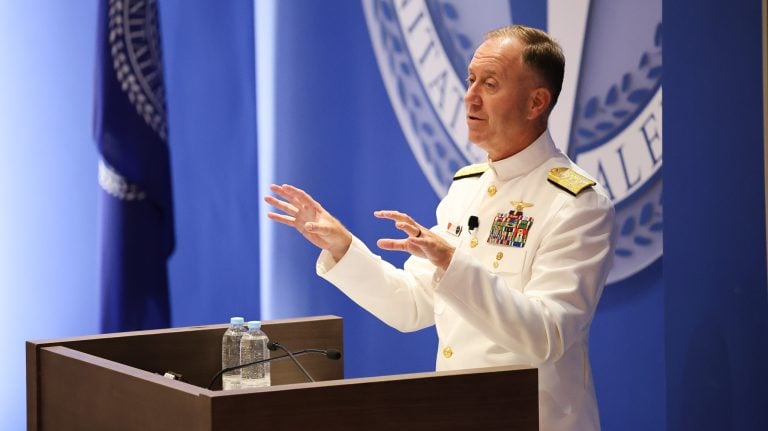
Prior to the conferment of diplomas, Admiral Giuseppe Cavo Dragone, Chairman of the NATO Military Committee, emphasized that the College’s value lies not only in what Course Members learn, but in how it prepares them to lead, build consensus and deliver for the Alliance:
“It made you question assumptions in the seminar room so that you will question them in the operations room. It forced you to negotiate, to mediate, to build consensus under time pressure, because NATO 3.0 will demand consensus at speed. It took you on Field Studies across the Atlantic and across Europe so that the transatlantic link is not an abstraction, but a set of faces and places you know personally.
Ankara set the direction; leaders like you are the transmission mechanism that turns summit decisions into reality in headquarters, ministries and capitals.”
The ceremony also acknowledged the dedication and achievements of Senior Course 148 through the presentation of the Eisenhower Prize. Lieutenant General Nielsen and NDC Dean Dr Suzanne Nielsen awarded this year’s prize to Committee 8 for its Committee Study Project (CSP) on ‘Supply-chain Sovereignty: Reframing Logistics as Grand Strategy’. The award recognizes the Committee’s analytical work, collaborative approach, and ability to develop consensus-based solutions to challenges relevant to NATO and its partners. The prize honours the intellectual achievement and collaborative spirit that define the College’s educational mission.
The graduation of Senior Course 148 took place during an important double milestone for the NATO Defense College, celebrating its 75th anniversary and 60 years since its relocation to Rome. The College’s origins date back to the vision of General Dwight D. Eisenhower, NATO’s first Supreme Allied Commander Europe, who proposed the creation of an institution dedicated to the training of individuals to be called upon to serve in key capacities within the NATO enterprise.
On 25 June 1951, that vision became reality with the establishment of the NATO Defense College. Since then, the NDC has continued to strengthen the Alliance’s effectiveness and cohesion through senior-level education, research, and engagement with Allies, partners and non-NATO entities.
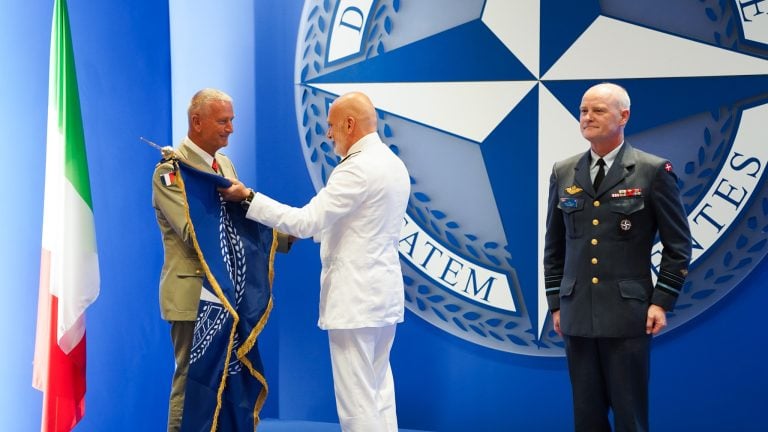
After the Graduation Ceremony, the day concluded with the Change-of-Command Ceremony, marking the appointment of Lieutenant General Jérôme Goisque as the new NDC Commandant.
NDC Public Affairs Office
(Prepared by Ms Britt Melinga, NLD C)

 NATO Defense College