Skip to content
September 9, 2026
  • Facebook
  • X
  • LinkedIn
  • Youtube
  • Instagram
  • Flickr
NATO Defense College

NATO Defense College

Unitatem Alentes

NDC_103x103
  • Home
  • Courses
  • Publications
  • Jobs
  • NDC Foundation
  • FAQs
  • Education mail
Primary Menu
  • Home
  • Organization
    • About Us
      • Mission
      • Who’s Who?
      • Structure
      • History
      • Vox Collegii Magazine
    • News
    • Resources & Services
      • Library
      • Facilities
      • Links
      • Vision Link
      • FAQS
    • Opportunities
      • Job Opportunities
      • Procurement
    • Contact & Information
      • Contacts, maps, visits
      • Follow us
      • Disclaimer
  • Education
    • General Information
      • On-site Courses
      • e-Learning
      • Academic Calendars
      • Study Projects
    • Long Courses
      • Senior Course
      • NATO Regional Cooperation course (NRCC)
    • Short Courses
      • Generals, Flag Officers & Ambassadors’ Course (GFOAC)
      • Modular Short Courses (MSCS)
      • Modular Short Course Partners Integrated (MSC-PI)
    • Partnerships
      • NDC Leicester Partnership
      • NDC LUISS Partnership
      • NDC Simon Fraser Partnership
    • Administration
      • Members’ Administration Section (MAS)
  • Research
    • About Research Division
    • Researchers
    • Publications
    • Opportunities
    • NATO NextGen Futures
  • Engagement
    • Conference of Commandants
    • International Week in Kyiv
    • Anciens’ Seminar
    • Other Engagement
  • Portals
    • Academic Portal
    • NDC Anciens’ Association
    • Academic Advisory Board
    • NRCC Academic Advisory Board
    • Conference of Commandants
  • Newsletter
    • Vox Collegii Newsletter
  • en_USEnglish
    • fr_FRFrançais
  • Home
  • News
  • Regional Powers and Post-NATO Afghanistan
  • News

Regional Powers and Post-NATO Afghanistan

Published: June 14, 2021 | Updated: January 15, 2026 3 minutes read

  • NDC Research Paper 20: Regional Powers and Post-NATO Afghanistan, edited by David G. Lewis and Aniseh Bassiri Tabrizi.

Foreword

The SHAPE-sponsored Resolute Support Strategic Assessment Capability (RS SAC) has, for over a decade, gathered together leading academics, practitioners and thought-leaders on Afghanistan. Supported by Operational Analysts from the NATO Communications and Information Agency, these experts – each an authority in their field – provided SACEUR with periodic, evidence-based and systematic independent assessments designed to challenge, complement or complete NATO’s existing in-house reporting. Such a simple idea, but the deep experience provided by the RS-SAC has been invaluable in providing the SHAPE Command Group with insights and an analysis of strategic risks and challenges facing NATO both in Afghanistan and across the region.

As DSACEUR I was often asked for advice by those deploying to, or working on Afghanistan. My response? First, you have two ears and one mouth for a reason, so listen. Second, do not be afraid to confess your ignorance. And last – and most importantly – read the RS-SAC Assessments, as the knowledge they contain will make you wise. As a devotee of the RS-SAC, I am therefore delighted to write this foreword and introduce this collection of papers on the future regional context for Afghanistan.

It should not be a surprise that the NATO experience in Afghanistan has much to teach us. After all, the situation in Afghanistan has occupied NATO for almost two decades and will have a lasting impact on how the Alliance thinks and acts as it faces new challenges and threats. Key to NATO’s constancy of purpose over time has been the ability to learn, evolve and adapt. Our experiences in Afghanistan provide an opportunity for NATO to do so again, given the valuable insights and important lessons identified. For example, this volume shows that even when neighbouring states and regional powers may have shared interests in countering terrorism, this is not the same as having shared values. This fact poses real challenges for coordinating an effective response. It also confirms the importance of the regional dimension in our analysis, and the imperative to develop and sustain an understanding of these regional aspects in order to act effectively with or alongside others.

In this collection, the RS-SAC experts, particularly the co-editors Dr David Lewis and Dr Aniseh Bassiri Tabrizi, identify the key factors influencing the large number of regional actors and how they now see Afghanistan. They also identify what may change as the US and NATO military presence transitions, and what lessons, risks and opportunities NATO should absorb. I therefore recommend this volume to anyone with an interest in Afghanistan, in critical reflection, and the ongoing strategic adaptation of the Alliance.

General (Retd) James Everard KCB CBE
DSACEUR 2017-2020
Allied Command Operations Lead Senior Mentor 2021


Download the publication
to keep reading.
More Research Division Publications…

Post navigation

Previous: Day 5 of Field Study 3 – SHAPE Day
Next: Towards New Transatlantic Relations?

CLOUD TAGS

East Europe and Russia War Strategy Hindsight Asia/Pacific Middle East/North Africa Future NATO

PUBLICATIONS BY REGION

  • NATO
  • Middle East/North Africa
  • Asia/Pacific
  • East Europe and Russia

PUBLICATIONS BY TOPICS

  • The War Series
  • The Strategy Series
  • The Future Series
  • The Hindsight Series

RESEARCH

  • About Research Division
  • Researchers
  • Publications
  • Opportunities
  • NATO NexGen Futures

Recent Posts

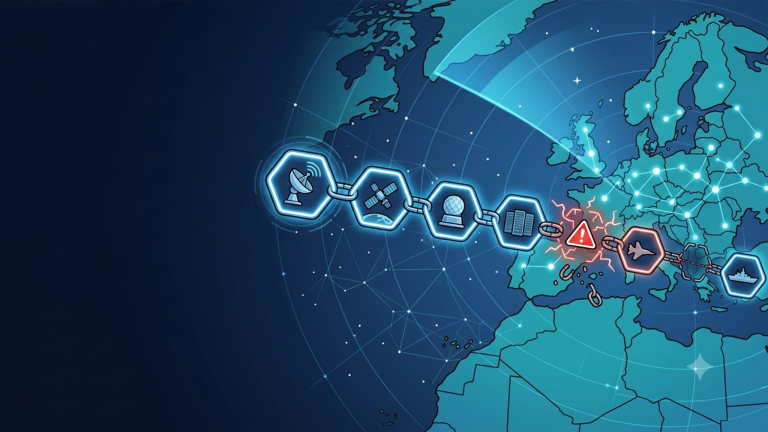
Heed the warning: how NATO can find and fill the gaps in its warning systems outlook-2026-09
  • News
  • Publications
  • The Strategy Series

Heed the warning: how NATO can find and fill the gaps in its warning systems

September 7, 2026
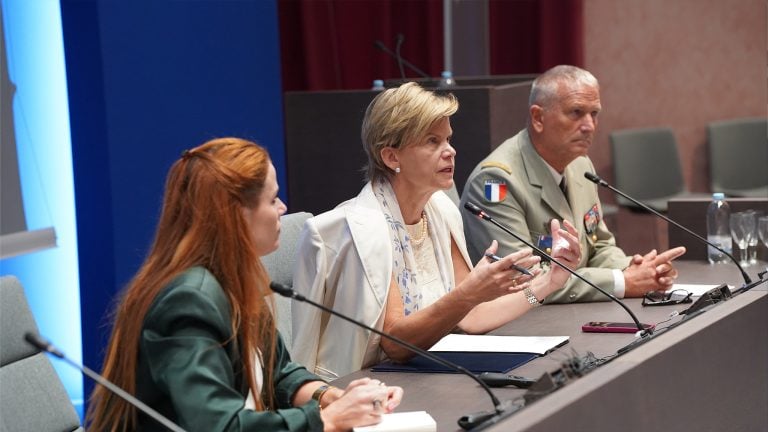
Latvian Minister of Foreign Affairs H.E. Ms Baiba Braže Delivers Lecture on NATO’s Future to NDC’s Flagship Courses 1. From left to right: Director of the NDC Research Division Dr Florence Gaub, Latvian Minister of Foreign Affairs H.E. Ms Baiba Braže and NDC Commandant Lieutenant General Jérôme Goisque.
  • Courses
  • Editor's Pick
  • News

Latvian Minister of Foreign Affairs H.E. Ms Baiba Braže Delivers Lecture on NATO’s Future to NDC’s Flagship Courses

September 3, 2026
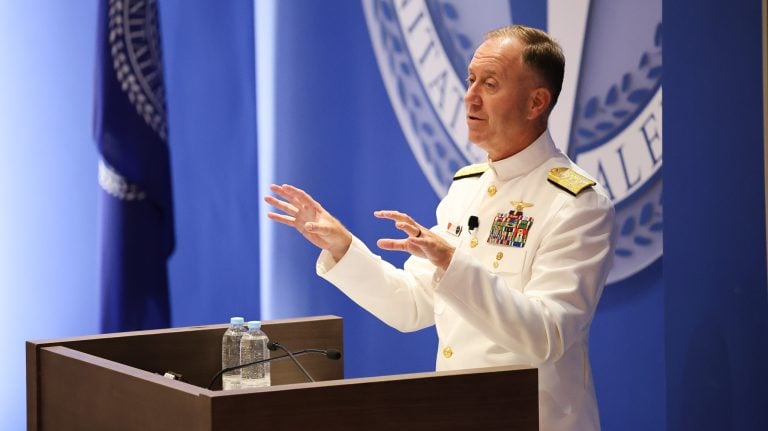
The NDC Inaugurates Senior Course 149 and NATO Regional Cooperation Course 36 Admiral George M. Wikoff addresses the new cohorts
  • Courses
  • Editor's Pick
  • News

The NDC Inaugurates Senior Course 149 and NATO Regional Cooperation Course 36

August 31, 2026
Tactical datalinks: why they matter to the future of war Outlook 2026-08
  • News
  • Publications
  • The War Series

Tactical datalinks: why they matter to the future of war

July 21, 2026
Lieutenant General Max A.L.T. Nielsen Hands Over NDC Command to Lieutenant General Jérôme Goisque Admiral Cavo Dragone hands over the NDC flag to the incoming NDC Commandant LGEN Goisque
  • Editor's Pick
  • News

Lieutenant General Max A.L.T. Nielsen Hands Over NDC Command to Lieutenant General Jérôme Goisque

July 18, 2026
Senior Course 148’s Graduation Marks 75 Years of Developing Future Leaders Course Member of Senior Course 148 saluting his flag
  • Courses
  • News

Senior Course 148’s Graduation Marks 75 Years of Developing Future Leaders

July 17, 2026

CONTACT US

Central Registry
NATO Defense College
Via Giorgio Pelosi 1, 00143, Rome - Italy
E-mail: [email protected]

You may have missed

outlook-2026-09
1 minute read
  • News
  • Publications
  • The Strategy Series

Heed the warning: how NATO can find and fill the gaps in its warning systems

September 7, 2026
1. From left to right: Director of the NDC Research Division Dr Florence Gaub, Latvian Minister of Foreign Affairs H.E. Ms Baiba Braže and NDC Commandant Lieutenant General Jérôme Goisque.
3 minutes read
  • Courses
  • Editor's Pick
  • News

Latvian Minister of Foreign Affairs H.E. Ms Baiba Braže Delivers Lecture on NATO’s Future to NDC’s Flagship Courses

September 3, 2026
Admiral George M. Wikoff addresses the new cohorts
3 minutes read
  • Courses
  • Editor's Pick
  • News

The NDC Inaugurates Senior Course 149 and NATO Regional Cooperation Course 36

August 31, 2026
Outlook 2026-08
1 minute read
  • News
  • Publications
  • The War Series

Tactical datalinks: why they matter to the future of war

July 21, 2026
Central Registry
NATO Defense College
Via Giorgio Pelosi 1, 00143, Rome - Italy
Telephone: (+39) 06 50525 309 / 275
Fax: (+39) 06 50525 799
[email protected]
Public Information/media related matters:
[email protected]
Web related matters:
[email protected]
US Postal Address
U.S. National Support Element
NATO Defense College
PSC 802 BOX 201
FPO AE 09608-0003

UK Postal Address
Name Rank Number
Dept
NATO Defense College
BFPO 65

RELEVANT LINKS

NATO HQ
SHAPE
NATO ACT
NATO School
NATO Defense College Foundation
  • Organization
  • Education
  • Research
  • Engagement
  • Portals
  • Facebook
  • X
  • LinkedIn
  • Youtube
  • Instagram
  • Flickr
NATO Defense College © 2026 All rights reserved.
NATO Defense College NATO Defense College
Welcome back
Sign In
Sign in to access your downloads, manage your account, and continue where you left off.
Login Account
Enter your credentials to access your account
Forgot Password?
We use cookies to ensure that we give you the best experience on our website. If you continue to use this site we will assume that you are happy with it.