Passer au contenu
juillet 20, 2026
  • Facebook
  • X
  • LinkedIn
  • Youtube
  • Instagram
  • Flickr
NATO Defense College

Collège de Défense de l'OTAN

Unitatem Alentes

NDC_103x103
  • Home
  • Courses
  • Publications
  • Emplois
  • NDC Foundation
  • FAQs
  • Education mail
Menu principal
  • Home
  • Organisation
    • About Us
      • Mission
      • Qui est qui?
      • Structure
      • Historique
      • Vox Collegii Magazine
    • News
    • Resources & Services
      • La bibliothèque
      • Locaux du Collège de Défense de l’OTAN (NDC)
      • Liens
      • Vision Link
      • FAQS
    • Opportunités
      • Possibilités d’emploi
      • Achats
    • Contact & Information
      • Pour nous contacter
      • Follow us
      • Avis Important
  • Enseignement
    • General Information
      • Cours au Collège
      • e-Learning
      • Calendriers académiques
      • Le projets d’étude
    • Long Courses
      • La Session principale
      • Cours OTAN de coopèration régionale (NRCC)
    • Short Courses
      • Stage pour Officiers généraux et Ambassadeurs (GFOAC)
      • Generals, Flag Officers and Ambassadors’ Course for Partners, GFOAC-P (former SERC)
      • Stages modulaires de brève durée (MSCs)
      • Modular Short Course Partners Integrated (MSC-PI)
    • Partnerships
      • Accord NDC Leicester
      • Accord NDC LUISS
      • Accord NDC Simon Fraser
    • Administration
      • Section des auditeurs
  • Recherche
    • À propos de la recherche
    • Les chercheurs
    • Publications
    • Opportunités
    • NATO NextGen Futures
  • Engagement
    • Conférence des Commandants
    • Semaine de Kiev
    • Anciens’ Seminar
    • Other Engagement
  • Portails
    • Portail académique
    • Anciens
    • Conseil académique consultatif
    • Conseil académique consultatif du NRCC
    • Conférence des Commandants
  • Newsletter
    • Vox Collegii Newsletter
  • fr_FRFrançais
    • en_USEnglish
  • Maison
  • News
  • Senior Course 117 – Study Period B – International Organizations
  • News

Senior Course 117 – Study Period B – International Organizations

Publié: octobre 15, 2010 | Mis à jour: janvier 15, 2026 5 minutes lues
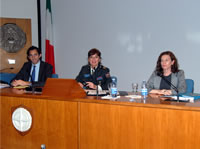
Study Period B - International Organizations - Panel
Study Period B – International Organizations – Panel

Following Module A of the academic curriculum, which reviews the fundamental processes and conceptual issues underlying the 21st century security environment and discusses specific trends in the evolution of the security environment and their significance for NATO, Module B considers the international security framework within which NATO operates.

Study Period B on International Organizations, held during the week from 11 October until 15 October 2010, covered the key actors who play a role in Euro-Atlantic Security Architecture and globally, and examined the “Comprehensive Approach” to planning and cooperation among the actors. It focused not only on two key international organizations in the Euro-Atlantic security community, the United Nations and the European Union, with the emphasis on Common Security and Defence Policy, but also on non-state actors such as Civil Society, Non-Governmental Organizations (NGOs), Multinational Corporations (MNCs) and Private Security Contractors (PSCs). These entities have evolved slowly, and there are still important questions to be answered in pursuit of effective cooperation among them in dealing with threats to security.

It was only natural that the academic week should start with a lecture on the United Nations: the embodiment of cooperation among States in safeguarding peace, the stronghold of shared values and commitments to security, freedom and prosperity for all, preventing war among states, providing order and justice – the list goes on. This lecture, the first in the Study Period, was delivered by Dr Mats Berdal, Professor of Security and Development at King’s College, London. Among other topics, he focused on the issue of UN reform, the pros and cons of its existence, and its future prospects. Despite its imperfections and the frequent criticisms levelled at it, the UN is still the most important and most comprehensive International Organization and is clearly indispensable. Dr Berdal described the organization as a strange amalgam between idealism and realism that would surely have to be invented if it did not already exist.

Today’s European Union (EU), as a supranational organization of 27 sovereign states across the European continent, stands as an unprecedented phenomenon in the annals of history. It is true that a zone of peace in the Kantian sense has been achieved among EU members since its establishment by the Treaty of Rome in 1957. But even as the EU grows in size and prosperity, there appears to be a limit to how closely Europeans want to embrace centralized European integration. Dr Peter Van Ham, Director of the Global Governance Research Program at the Clingendael Institute, explored all the aspects of the European Union -its past, its priorities and its prospects, as well as contemporary challenges.

he separate lecture, on the European Union’s Defence and Security Policy (CSDP) as a major element of the Common Foreign and Security Policy pillar of the European Union, was delivered by Prof. Dr Julian Lindley-French, Professor of Strategic Studies at Leiden University and Head, Commander’s Initiative Group (CIG), Allied Rapid Reaction Corps. He focused on the development of a Common Foreign and Security Policy (CFSP) and a Common Security and Defence Policy (CSDP) to deal with current realities and future prospects, the EU’s role in crisis management and the military component, and EU-NATO cooperation in the framework of a Comprehensive Approach.

The Study Period continued with a lecture on Civil Society and Non-Governmental Organizations, which are playing an increasingly important part throughout the world, tackling issues that individual states alone either cannot address or choose to ignore. They are characterized by their great diversity and comprise a mass of different-sized organizations with various management structures and diverse missions. To introduce us to Civil Society and NGOs, we welcomed Dr Rama Mani, a Senior Research Associate at the University of Oxford’s Centre for International Studies, Mr Konstantinos Moschochoritis, General Director of Médecins Sans Frontières, Rome, and Dr Alain Deletroz, Vice-President (Europe) of the International Crisis Group. It is a fact that NGOs have become increasingly important global actors. They now compete with states and international organizations and can have an important influence on those who actually formulate policy. But are they the first step towards an “international civil society”, or do they represent a dangerous shift of power towards unelected and unaccountable special-interest groups? How do they fit into NATO’s efforts for a Comprehensive Approach to crisis response operations? The panel succeeded in bringing about another thought provoking academic day at the NATO Defense College.

Given the great importance of economic globalization and the role of Multinational Corporations and Private Security Contractors as a part of it, it is crucial to evaluate their influence on security and stability and to discuss the significant ways in which those actors shape the zones of conflict. To discuss the topic, Ms Diana Klein, a Project Manager, Peace Building Issues Programme, International Alert, London, and Mr Rem Korteweg, Policy Analyst at The Hague Centre for Strategic Studies, joined Senior Course 117. During the Question and Answer session different aspects were discussed, from the implications of enhanced international commerce on the promotion of peace to the implications of the involvement of MNCs and PSCs in the conflict zones and their cooperation with other actors, and many more.

The key International Organizations were born in the aftermath of the Second World War and were all designed, in one way or another, to ensure that no such global conflagration occurred again. The international security environment has changed significantly since then. We now confront complex threats that are sometimes inter-related, making common efforts and common action against them essential. The need for adaptation through reform is constant, a theme that Senior Course 117 discussed and developed successfully and with great interest.

NDC Public Affairs Office

(Prepared by Col. Daria DANIELS ŠKODNIK, SVN A)
Navigation des publications

Précédent : Italian Defense General Staff 5th Joint Logistic Course visits the NDC
Suivant : International Research Symposium: “The UN and NATO: Forward from the Joint Declaration”

CLOUD TAGS

Future Hindsight Strategy War NATO East Europe and Russia Middle East/North Africa Asia/Pacific

PUBLICATIONS BY REGION

  • NATO
  • Middle East/North Africa
  • Asia/Pacific
  • East Europe and Russia

PUBLICATIONS BY TOPICS

  • The War Series
  • The Strategy Series
  • The Future Series
  • The Hindsight Series

RESEARCH

  • À propos de la recherche
  • Les chercheurs
  • Publications
  • Opportunités
  • NATO NexGen Futures

Recent Posts

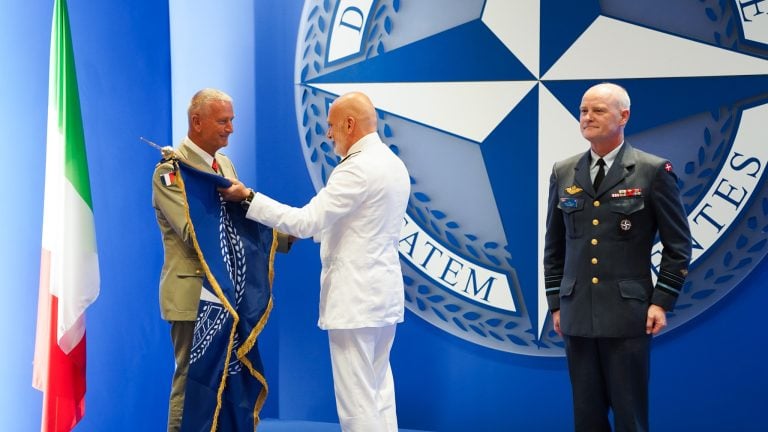
Lieutenant General Max A.L.T. Nielsen Hands Over NDC Command to Lieutenant General Jérôme Goisque Admiral Cavo Dragone hands over the NDC flag to the incoming NDC Commandant LGEN Goisque
  • Editor's Pick
  • News

Lieutenant General Max A.L.T. Nielsen Hands Over NDC Command to Lieutenant General Jérôme Goisque

juillet 18, 2026
Senior Course 148’s Graduation Marks 75 Years of Developing Future Leaders Course Member of Senior Course 148 saluting his flag
  • Courses
  • News

Senior Course 148’s Graduation Marks 75 Years of Developing Future Leaders

juillet 17, 2026
The NDC proudly celebrates its 75th anniversary & 60 years since its relocation to Rome The arrival of the Chairman of the Military Committee Admiral Guiseppe Cavo Dragone and NDC Commandant Lieutenant General Max A.L.T. Nielsen at the NDC's 75th Anniversary celebrations.
  • Courses
  • News

The NDC proudly celebrates its 75th anniversary & 60 years since its relocation to Rome

juillet 16, 2026
Video: The Mind as a Battlespace: Reshaping Education, Resilience and Decision-Making Video interview: CoC 2026
  • Editor's Pick
  • News

Video: The Mind as a Battlespace: Reshaping Education, Resilience and Decision-Making

juillet 7, 2026
Betting on blue: how to improve NATO military forecasting for acquisitions Outlook 07 2026
  • News
  • Publications
  • The War Series

Betting on blue: how to improve NATO military forecasting for acquisitions

juillet 6, 2026
Building Consensus: Senior Course 148 Simulates NATO Crisis Decision-Making Senior Course 148 participant discussing during the Negotiation, Mediation and Decision-making Exercise
  • Courses
  • News

Building Consensus: Senior Course 148 Simulates NATO Crisis Decision-Making

juin 26, 2026

CONTACT US

Central Registry
Collège de Défense de l'OTAN
Via Giorgio Pelosi 1, 00143, Rome - Italy
E-mail: [email protected]

Tu as peut-être manqué

Admiral Cavo Dragone hands over the NDC flag to the incoming NDC Commandant LGEN Goisque
4 minutes lues
  • Editor's Pick
  • News

Lieutenant General Max A.L.T. Nielsen Hands Over NDC Command to Lieutenant General Jérôme Goisque

juillet 18, 2026
Course Member of Senior Course 148 saluting his flag
5 minutes lues
  • Courses
  • News

Senior Course 148’s Graduation Marks 75 Years of Developing Future Leaders

juillet 17, 2026
CMDT-FRA-2
2 minutes lues
  • Qui est qui?

Le Commandant

juillet 17, 2026
The arrival of the Chairman of the Military Committee Admiral Guiseppe Cavo Dragone and NDC Commandant Lieutenant General Max A.L.T. Nielsen at the NDC's 75th Anniversary celebrations.
6 minutes lues
  • Courses
  • News

The NDC proudly celebrates its 75th anniversary & 60 years since its relocation to Rome

juillet 16, 2026
Central Registry
Collège de Défense de l'OTAN
Via Giorgio Pelosi 1, 00143, Rome - Italy
Telephone: (+39) 06 50525 309 / 275
Fax: (+39) 06 50525 799
[email protected]
Public Information/media related matters:
[email protected]
Web related matters:
[email protected]
US Postal Address
U.S. National Support Element
Collège de Défense de l'OTAN
PSC 802 BOX 201
FPO AE 09608-0003

UK Postal Address
Name Rank Number
Dept
Collège de Défense de l'OTAN
BFPO 65

RELEVANT LINKS

NATO HQ
SHAPE
NATO ACT
NATO School
NATO Defense College Foundation
  • Organisation
  • Enseignement
  • Recherche
  • Engagement
  • Portails
  • Facebook
  • X
  • LinkedIn
  • Youtube
  • Instagram
  • Flickr
NATO Defense College © 2026 All rights reserved.
NATO Defense College Collège de Défense de l'OTAN
Heureux de vous revoir
Connexion
Connectez-vous pour accéder à vos téléchargements, gérer votre compte et continuer là où vous vous êtes arrêté.
Connexion au compte
Saisissez vos identifiants pour accéder à votre compte
Mot de passe oublié ?
We use cookies to ensure that we give you the best experience on our website. If you continue to use this site we will assume that you are happy with it.