Skip to content
July 23, 2026
  • Facebook
  • X
  • LinkedIn
  • Youtube
  • Instagram
  • Flickr
NATO Defense College

NATO Defense College

Unitatem Alentes

NDC_103x103
  • Home
  • Courses
  • Publications
  • Jobs
  • NDC Foundation
  • FAQs
  • Education mail
Primary Menu
  • Home
  • Organization
    • About Us
      • Mission
      • Who’s Who?
      • Structure
      • History
      • Vox Collegii Magazine
    • News
    • Resources & Services
      • Library
      • Facilities
      • Links
      • Vision Link
      • FAQS
    • Opportunities
      • Job Opportunities
      • Procurement
    • Contact & Information
      • Contacts, maps, visits
      • Follow us
      • Disclaimer
  • Education
    • General Information
      • On-site Courses
      • e-Learning
      • Academic Calendars
      • Study Projects
    • Long Courses
      • Senior Course
      • NATO Regional Cooperation course (NRCC)
    • Short Courses
      • Generals, Flag Officers & Ambassadors’ Course (GFOAC)
      • Generals, Flag Officers and Ambassadors’ Course for Partners, GFOAC-P (former SERC)
      • Modular Short Courses (MSCS)
      • Modular Short Course Partners Integrated (MSC-PI)
    • Partnerships
      • NDC Leicester Partnership
      • NDC LUISS Partnership
      • NDC Simon Fraser Partnership
    • Administration
      • Members’ Administration Section (MAS)
  • Research
    • About Research Division
    • Researchers
    • Publications
    • Opportunities
    • NATO NextGen Futures
  • Engagement
    • Conference of Commandants
    • International Week in Kyiv
    • Anciens’ Seminar
    • Other Engagement
  • Portals
    • Academic Portal
    • NDC Anciens’ Association
    • Academic Advisory Board
    • NRCC Academic Advisory Board
    • Conference of Commandants
  • Newsletter
    • Vox Collegii Newsletter
  • en_USEnglish
    • fr_FRFrançais
  • Home
  • News
  • New Research Division Publication – Towards Self Sufficiency? Economics as a Dimension of Russian Security and the National Security Strategy of the Russian Federation to 2020
  • News

New Research Division Publication – Towards Self Sufficiency?
Economics as a Dimension of Russian Security and the National Security Strategy of the Russian Federation to 2020

Published: July 18, 2016 | Updated: January 15, 2026 4 minutes read

  • Russian Studies 01/16:
    &quotTowards Self Sufficiency?
    Economics as a Dimension of Russian Security and the National Security Strategy of the Russian Federation to 2020&quot
    , by Richard Connolly.

Dear Reader,

Welcome to Russian Studies, a new publication series that we are pleased to announce. Russian Studies will review key documents produced by the Russians government in order to better understand NATO’s important and increasingly challenging neighbour to the East. The series will be edited by Dr. Andrew Monaghan, a former member of the NDC Research Division staff and currently associated with Chatham House in London. Andrew will select the topics and authors for this series from his large base of experts on Russia and Eastern Europe, and will do the bulk of the editing work. We are pleased to be collaborating with Dr. Monaghan in this effort.


In fact, this series is in some ways a rejuvenation of the series formerly called Russian Review that Andrew and his colleagues at the NDC published from 2008-2012, but which was suspended for several years. We hope the new series will find an equal number of interested readers, and that its slightly broadened focus will cover even more issues.

The first issue in Russian Studies was prepared by Dr. Richard Connolly of the University of Birmingham. Richard addresses the economic aspects of national security policy as seen by the Kremlin. As he puts it, Russia’s economic policy debate is increasingly characterized by an emphasis on self-reliance, and its economic policy is becoming subordinated to concerns of a broader national security nature. The reason, he argues, is because economic pressure, including the restrictive economic measures imposed on Russia by the US and its allies, is understood in Moscow to be one of a number of instruments being used by foreign powers to contain Russia. As a result, economic matters have become an important dimension of geopolitical conflict.

Connolly’s essay reviews Russian official state strategy documents, particularly the National Security Strategy of the Russian Federation published in 2015 and the Food Doctrine published in 2010, incorporating economic policy developments to show how economic securitization is underway and is gathering momentum. The economic securitization described here refers to an increasingly obvious tendency among Russian policy-makers towards using national security concerns to justify new and qualitatively different approaches to economic policy. The scope and impact of a securitized approach to economic policy has evolved considerably in recent years. Thinking in terms of securitization allows an analysis of the changing nature and extent of debate, even disagreement in policy-making, the obstacles to the implementation of the agenda, and, ultimately, the identity and relative political power of countervailing forces in Russia’s political economy. As such, it moves beyond simplistic suggestions that Russia is remilitarizing, or the binary position that if Russia is not making steady and even progress towards a market economy then it is regressing to an authoritarian form of state capitalism at best, and a centrally planned economy at worst. Instead, the focus is on the nature of the qualitatively new system.

The result, therefore, is a more nuanced picture of the economic situation in Russia and the policy priorities of the Russian leadership, one that permits a focus on which sectors are, or are becoming, securitized, and which are not. The implicit emphasis on identifying instances of ‘sectoral securitization’ tells us more about what is changing in Russia’s political economy, but also what remains the same, such as relative economic freedom in other areas of the economy unaffected by the securitization discourse.

As Richard summarizes, official thinking about economic policy in Russia is evolving significantly and is becoming increasingly shaped by national security concerns. These concerns are part of a wider effort to mobilize the state’s resources in response to what Moscow sees as an increasingly unstable and threatening international environment. While some of these tendencies were previously evident, the trend has visibly accelerated during the last five years. Reducing Russia’s dependence on imported products and services is now considered a key component of Russia’s national security.

We hope you enjoy learning more about the Russian economy and its role in shaping Moscow thinks about security.

Regards,

Jeff

Jeffrey A. Larsen, PhD, Division Head Research

More Research Division Publications…

NDC Public Affairs Office
Post navigation

Previous: LtGen Mark O. Schissler attends Study Project Presentations
Next: New Research Division Publication –
The Framework Nations’ Concept and NATO: Game-Changer for a New Strategic Era or Missed Opportunity?

CLOUD TAGS

Asia/Pacific Hindsight NATO East Europe and Russia Strategy Middle East/North Africa Future War

PUBLICATIONS BY REGION

  • NATO
  • Middle East/North Africa
  • Asia/Pacific
  • East Europe and Russia

PUBLICATIONS BY TOPICS

  • The War Series
  • The Strategy Series
  • The Future Series
  • The Hindsight Series

RESEARCH

  • About Research Division
  • Researchers
  • Publications
  • Opportunities
  • NATO NexGen Futures

Recent Posts

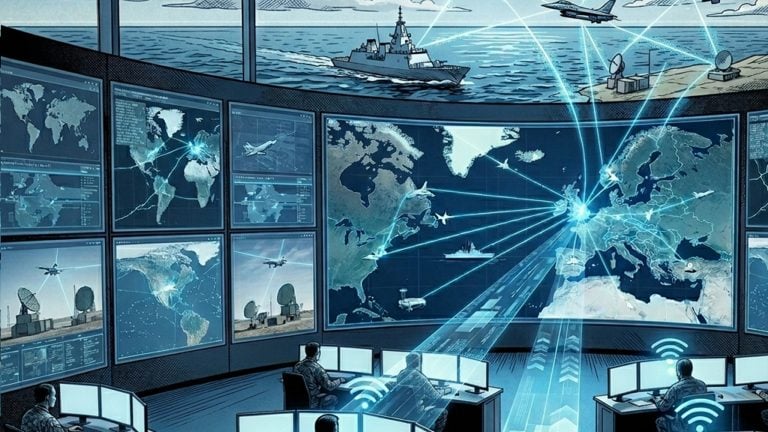
Tactical datalinks: why they matter to the future of war Outlook 2026-08
  • News
  • Publications
  • The War Series

Tactical datalinks: why they matter to the future of war

July 21, 2026
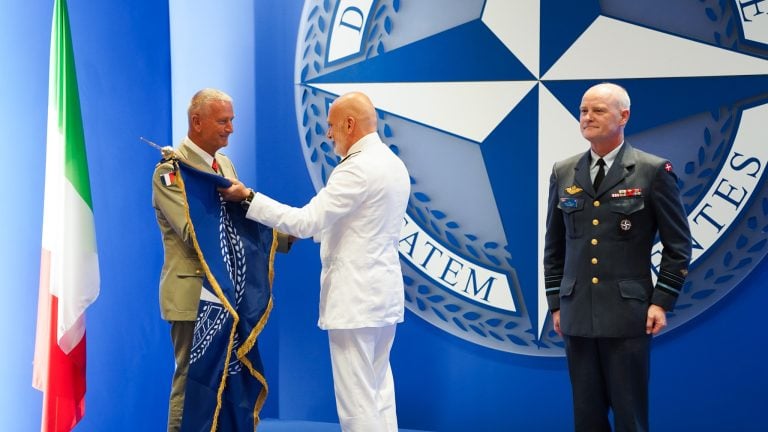
Lieutenant General Max A.L.T. Nielsen Hands Over NDC Command to Lieutenant General Jérôme Goisque Admiral Cavo Dragone hands over the NDC flag to the incoming NDC Commandant LGEN Goisque
  • Editor's Pick
  • News

Lieutenant General Max A.L.T. Nielsen Hands Over NDC Command to Lieutenant General Jérôme Goisque

July 18, 2026
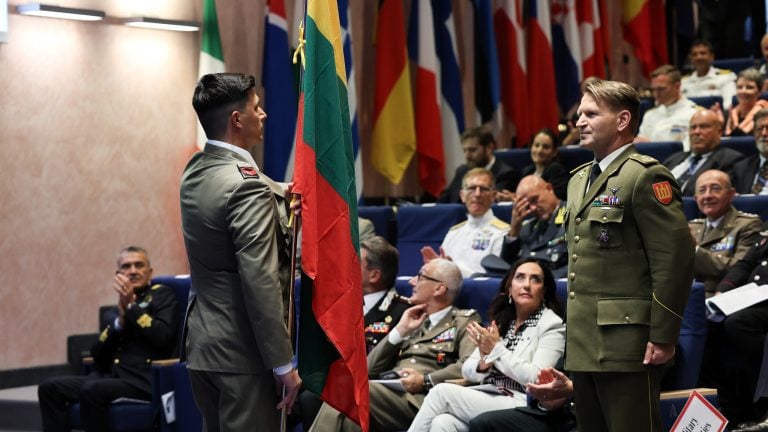
Senior Course 148’s Graduation Marks 75 Years of Developing Future Leaders Course Member of Senior Course 148 saluting his flag
  • Courses
  • News

Senior Course 148’s Graduation Marks 75 Years of Developing Future Leaders

July 17, 2026
The NDC proudly celebrates its 75th anniversary & 60 years since its relocation to Rome The arrival of the Chairman of the Military Committee Admiral Guiseppe Cavo Dragone and NDC Commandant Lieutenant General Max A.L.T. Nielsen at the NDC's 75th Anniversary celebrations.
  • Courses
  • News

The NDC proudly celebrates its 75th anniversary & 60 years since its relocation to Rome

July 16, 2026
Video: The Mind as a Battlespace: Reshaping Education, Resilience and Decision-Making Video interview: CoC 2026
  • Editor's Pick
  • News

Video: The Mind as a Battlespace: Reshaping Education, Resilience and Decision-Making

July 7, 2026
Betting on blue: how to improve NATO military forecasting for acquisitions Outlook 07 2026
  • News
  • Publications
  • The War Series

Betting on blue: how to improve NATO military forecasting for acquisitions

July 6, 2026

CONTACT US

Central Registry
NATO Defense College
Via Giorgio Pelosi 1, 00143, Rome - Italy
E-mail: [email protected]

You may have missed

Outlook 2026-08
1 minute read
  • News
  • Publications
  • The War Series

Tactical datalinks: why they matter to the future of war

July 21, 2026
Admiral Cavo Dragone hands over the NDC flag to the incoming NDC Commandant LGEN Goisque
4 minutes read
  • Editor's Pick
  • News

Lieutenant General Max A.L.T. Nielsen Hands Over NDC Command to Lieutenant General Jérôme Goisque

July 18, 2026
Course Member of Senior Course 148 saluting his flag
5 minutes read
  • Courses
  • News

Senior Course 148’s Graduation Marks 75 Years of Developing Future Leaders

July 17, 2026
CMDT-FRA-2
2 minutes read
  • Who's Who

The Commandant

July 17, 2026
Central Registry
NATO Defense College
Via Giorgio Pelosi 1, 00143, Rome - Italy
Telephone: (+39) 06 50525 309 / 275
Fax: (+39) 06 50525 799
[email protected]
Public Information/media related matters:
[email protected]
Web related matters:
[email protected]
US Postal Address
U.S. National Support Element
NATO Defense College
PSC 802 BOX 201
FPO AE 09608-0003

UK Postal Address
Name Rank Number
Dept
NATO Defense College
BFPO 65

RELEVANT LINKS

NATO HQ
SHAPE
NATO ACT
NATO School
NATO Defense College Foundation
  • Organization
  • Education
  • Research
  • Engagement
  • Portals
  • Facebook
  • X
  • LinkedIn
  • Youtube
  • Instagram
  • Flickr
NATO Defense College © 2026 All rights reserved.
NATO Defense College NATO Defense College
Welcome back
Sign In
Sign in to access your downloads, manage your account, and continue where you left off.
Login Account
Enter your credentials to access your account
Forgot Password?
We use cookies to ensure that we give you the best experience on our website. If you continue to use this site we will assume that you are happy with it.