

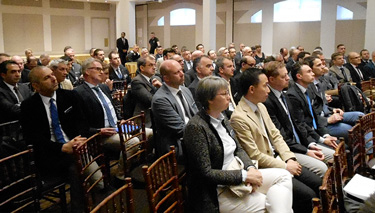
Senior Course 132’s second Field Study ended with an excellent visit to the United Nations in New York City, where Course Members visited the UN Headquarters, were briefed by very senior UN officials, and were given a tour of the 9/11 memorial.
The first briefing, in the UN main building, was dedicated to UN Peacekeeping. BrigGen El Hadji Babacar Faye, Chief of Staff, Office of Military Affairs, took the floor and spoke about the challenges of today’s peacekeeping operations (PKO). He gave some interesting facts about operations and commented on the overall Command and Control structure. He also spoke about the challenging context within which PKO occurs today, with asymmetric threats made all the more relevant by cross-border flows of ideas, weapons, funds, fighters and illicit trade exacerbating intra-state conflicts. He ended his briefing by speaking about UN cooperation with international organizations, especially NATO.
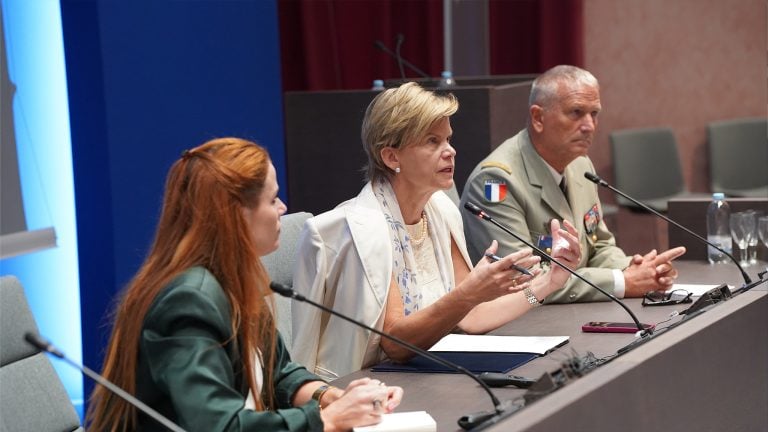
The second speaker was Ambassador Jean-Pierre Lacroix, Under-Secretary-General for Peacekeeping Operations (Head of the Department for PKO): he talked about the same topic, but from a civilian/political point of view. He described the multidimensional approach of the UN, which is in fact similar to NATO’s Comprehensive Approach. He spoke about the value of peacekeeping as a support to the peace process, the prevention of escalation and the protection of civilians. He underlined the key role of the UN in peacekeeping, the role of the troop-contributing countries in UN missions/operations and the partnerships the UN has established with international organizations, in particular the African Union. He went through some of the current PKOs to give concrete examples of these aspects. But he also mentioned the need for better integration between operations and political structures and talked at the end of his presentation about the current reforms to further improve peacekeeping, especially in the domain of prevention and of ensuring peacekeepers’ safety.
Following these first briefings, the participants had a tour of the UN building, during which they visited the impressive General Assembly Hall. After the tour the group moved to the Council on Foreign Relations, where they were briefed on its activities. Mr Albert Grigsby, Assistant Director of the Digital and Cyberspace Programme, welcomed participants before speaking about the history and content of the Programme and explaining how new rules about cyberspace are defined. Time was also dedicated to a Q&A with Course Members.
In summary, SC 132 is now much more aware of how the UN works, and the visit was greatly appreciated. In the afternoon, the Senior Course moved to the 9/11 memorial where they received a briefing and had the opportunity to visit the museum.
The NATO Defense College organizes Field Studies so that Course Members can gain first-hand knowledge of security policies, enabling them to understand the working and functions of national defence establishments, governments and international organizations by meeting national, regional and global decision-makers in their respective capitals and headquarters.
NDC Public Affairs Office


 NATO Defense College