
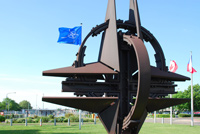
On Monday 02 May 2011 Senior Course (SC) 118 set off on the second of the three programmed Field Studies, entitled “The Transatlantic Link”. The Field Studies are an integral part of the SC curriculum and aims to develop a wider appreciation of key political, economic and security issues from the national perspective of the countries visited and to become more familiar with the structure, work and functioning of NATO, the UN and the EU.
On Tuesday 03 May the CMs visited the NATO HQ. LtGen Walter GASKIN, USA MC, Deputy Chairman of the Military Committee, welcomed the SC and set the stage for the morning briefings by discussing the key aspects of the New Strategic Concept and the follow-up work after the Lisbon Summit.
The second speaker of the day was MajGen Carlo BRANCO, PRT AR. He is the Director Cooperation and Regional Security in the International Military Staff. He provided a detailed analysis of the military cooperation in the post Lisbon environment discussing the military aspects. He also dwelled upon the decisions related to the subject taken by the Ministers of Foreign Affairs during their meeting some weeks ago in Berlin. This dynamic and enthusiastic presentation was followed by an interesting Q&A session.
Then Mr Heinz FERKINGHOFF, Deputy Director Nuclear Policy Directorate of the Emergency Security Challenges Division of the International Staff addressed NATO’s Nuclear Policy and Nuclear Deterrence. One of his main messages was that the New Strategic Concept did not significantly change NATO nuclear strategy. In the Q&A session, a lot of questions on missile defence generated a detailed and comprehensive discussion.
The last speaker of the morning was Brig Gen P. WOUTERS, BEL AF, Deputy Assistant Director, Plans & Policy, International Military Staff (IMS). He addressed the NATO Military Transformation, the issue of the development of the necessary capabilities, NATO-EU collaboration and the relations between NATO and UN. The presentation concluded with a very stimulating Q & A session.
After the lunch in NATO HQ, the Senior Course moved to the European Union building to receive briefings on the EU foreign and security policy.
Ambassador Walter STEVENS, Head of the Crisis Management and Planning Directorate and previous Belgian permanent representative to the EU Political and Security Committee, elaborated on the changing nature of threats, the demand for crisis management operations and the impact of the economic crisis on EU operations. He emphasized that the Lisbon Treaty will allow an improved comprehensive approach to crisis management by better leveraging both civilian and military capabilities available to the EU. The lecture was followed by a Q&A period with a broad range of issues.
BrigGen Herman GEENS, Director Operations in the European Union Military Staff (EUMS), briefed the SC on the place of the military in the EU. He described the structure and role of the EUMS and also focused even deeper attention on the EU-NATO relationship in crisis operations.
The third briefer in the afternoon was Dr. Alison WESTON Head of Operations in the Civilian Planning and Conduct Capability (CPCC). She explained in a very dynamic way the challenges for the civilian security. In this context, she outlined the role of the CPCC and described the main civilian missions and crisis management instruments o the EU.
Col Paul SHEWRY was the last speaker of the afternoon. As Chief of the Military Assessment & Planning Branch in the Operations Directorate of the EUMS, he spoke about EU Crisis Response Planning and the role of his Branch in this respect. He in particular outlined the differences in planning between NATO and EU.
After this long and challenging day, SC 118 continues the Field Study with a visit to the Belgian Defense Staff and to SHAPE on 04 May.
NDC Public Affairs Office
 NATO Defense College