
On 8th November Senior Course 121 (SC 121) visited the German House in New York, the seat of the Permanent Mission of Germany to the United Nations, which customarily hosts the SC when it is briefed by UN officials.
The first briefing was delivered by NATO liaison officers, who described the overall operational involvement of the UN and the way it is structured. Sixteen operations are currently in progress, mainly in Africa, involving around 120,000 personnel from 160 different countries. Attention was also drawn to levels of national contribution to UN missions, both financially and in terms of troops. Recent developments in UN-NATO relations were then discussed, with a particular focus on the 2008 UN-NATO declaration on cooperation. Finally, the developing operational experience of the UN in peacekeeping operations (PKOs) was illustrated: UN participation in NATO-led operations such as those in the Balkans, Afghanistan and Libya was highlighted in this respect.
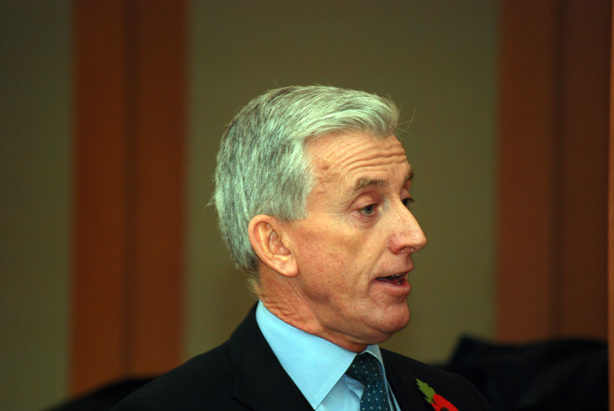
Mr Ian Sinclair then provided a detailed overview of the UN Mission in South Sudan (UNMISS), covering the specific mandate on state-building, protection of civilians, provision of security and the implementation of the rule of law. The speaker also dwelt on the organization needed for this mission, as well as the budget and staff requirements. Traditional inter-community conflicts have obviously affected the mission, considering the need to maintain good relations with the government of South Sudan, deliver real security to civilians, and coordinate support for development activities that do not fall under the aegis of UNMISS. Course Members asked a number of pertinent questions on the preparation of the mission, as well as on the expenditure for troops in relation to the overall budget. The role of NGOs and UN rules of engagement were also discussed extensively.
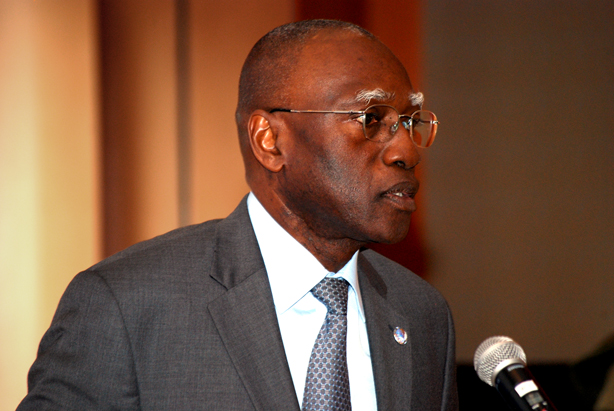
The highlight of the day was the briefing on PKOs by Mr James Cunliffe, Special Assistant to Lieutenant General Gaye. This part of the session afforded Course Members the opportunity to focus on command and control procedures for PKOs, with particular reference to budget-related issues: to put matters in perspective, the current UN budget for PKOs is comparable to that of the New York Police Department. Special attention was also drawn to major challenges of UN missions, such as the unprecedented scale of involvement, the need for robustness, the shortage of airlift enablers (i.e. helicopters), and the gap between needed supplies and available capabilities. The UN is constantly striving to improve its capabilities and open up “new horizons”, in order to optimize the effectiveness of operations. During the very interesting Q&A session, led by Lieutenant General Gaye, there was a great deal of useful discussion on the effects of contributing nations’ caveats regarding operational mandates, UN efforts in fighting corruption in Africa, the position of NGOs during PKOs, and rules of engagement.
In the last session of the day, the group was addressed by the five Military Staff Committee (MSC) representatives from the UN Security Council (UNSC) permanent members (the “P5”). After commenting on their respective national contributions to the UN budget and operational military personnel, the MSC representatives answered a range of questions from Course Members. Major topics discussed included the likelihood of a UN mission to Mali, and the possible role of the P5 in this respect. Questions were also raised regarding the NATO-led Libya campaign, prospects of Chinese or Russian command for UN missions, and possible steps towards a structural reform of the UNSC.
 NATO Defense College