
From 1 to 3 December, the NATO Defense College (NDC) conducted its International Week in Kyiv in cooperation with the National Defence University of Ukraine (NDUU). Focusing on the theme on “NATO’s Eastern Flank in a Contested Environment,” the event underscored the enduring partnership between NATO and Ukraine and NATO’s support through strategic education.


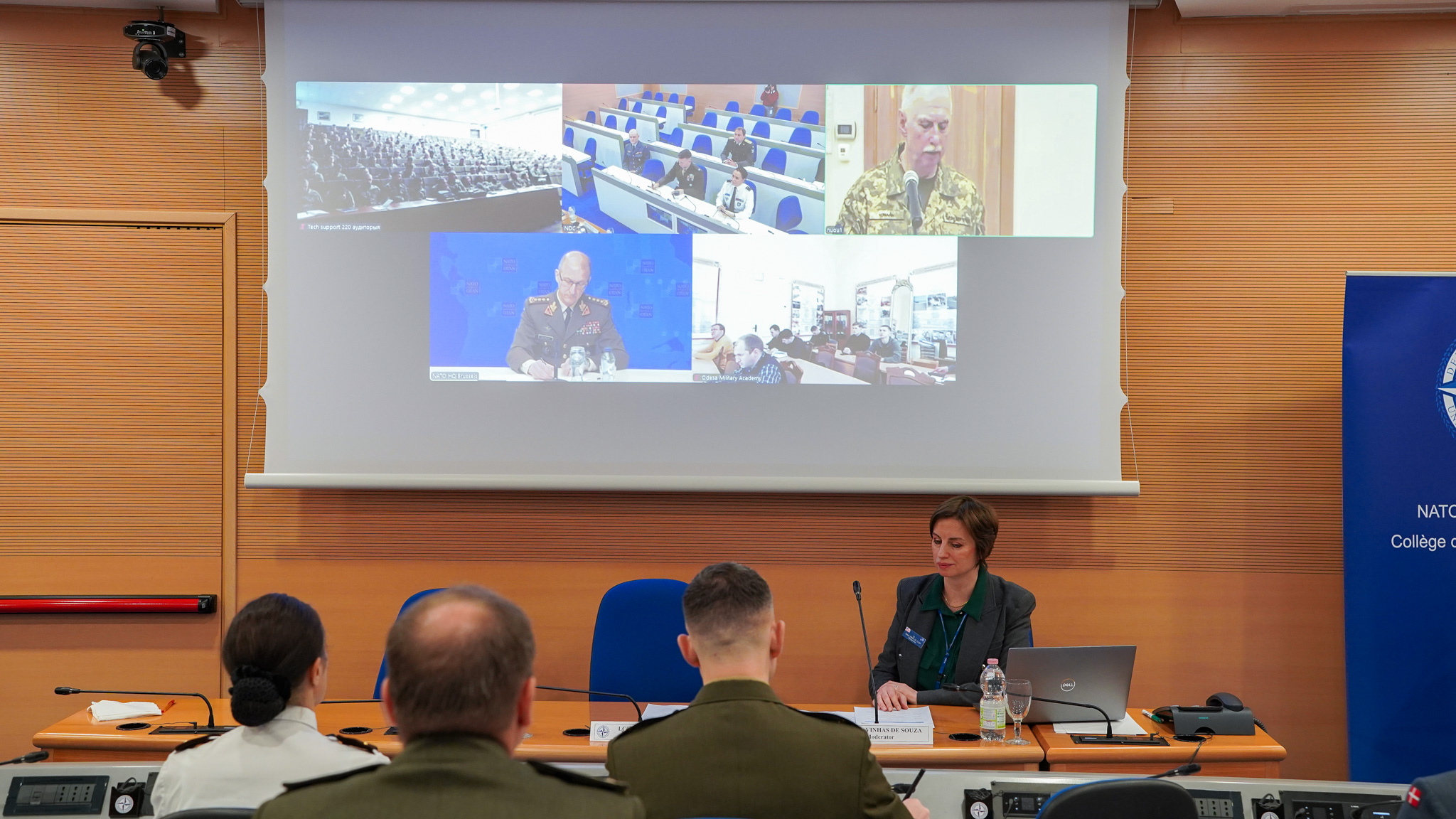
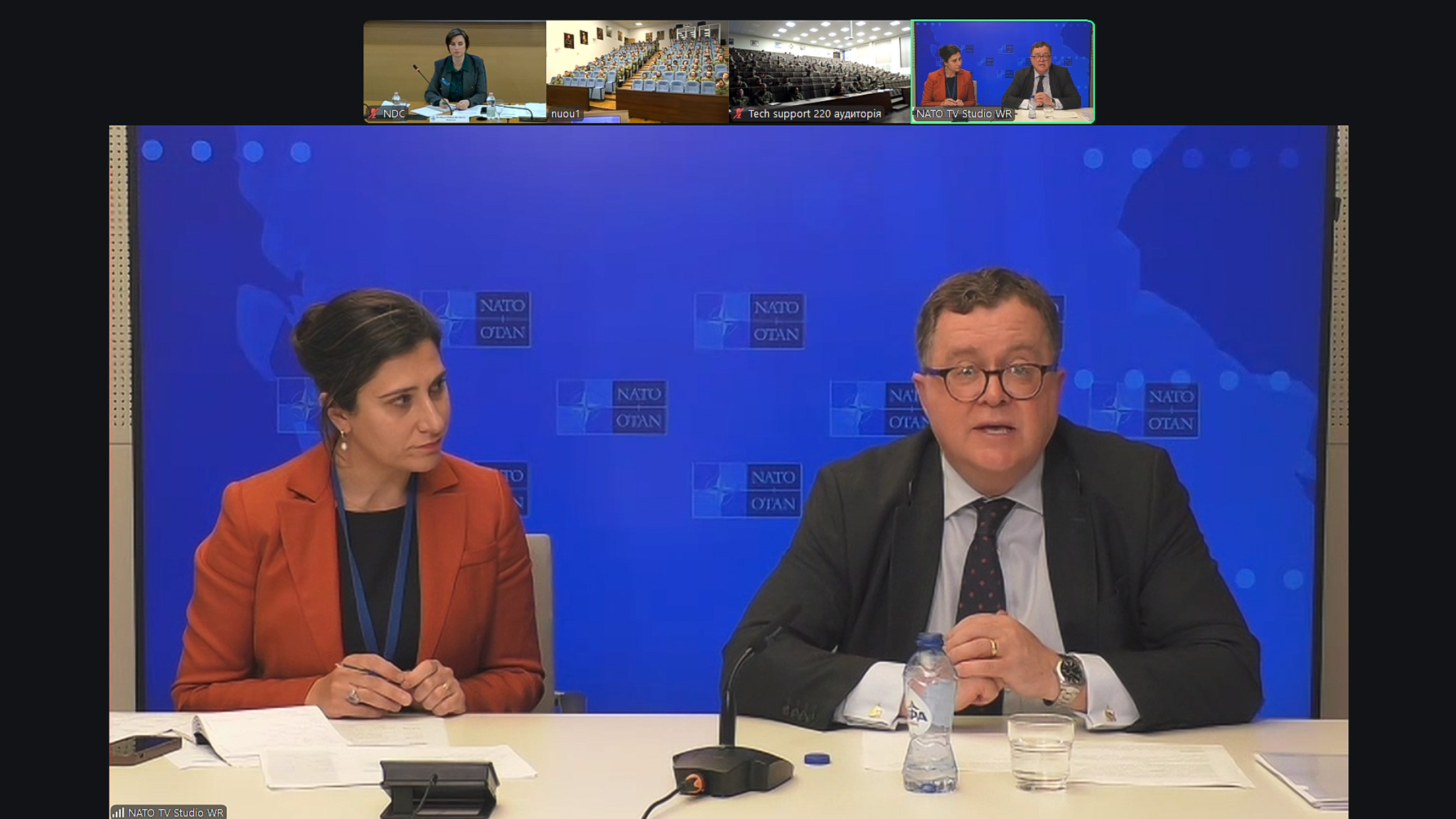
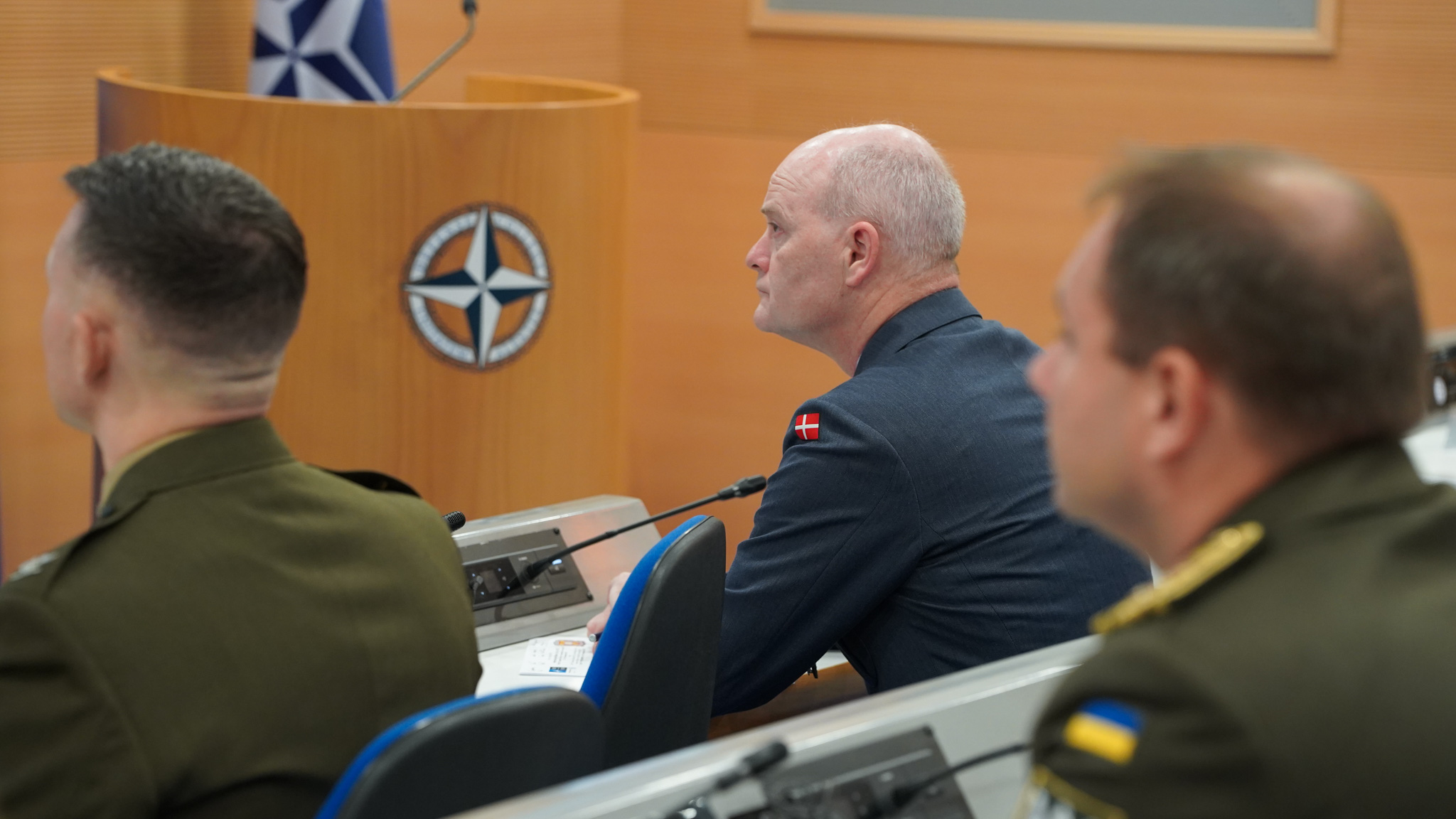
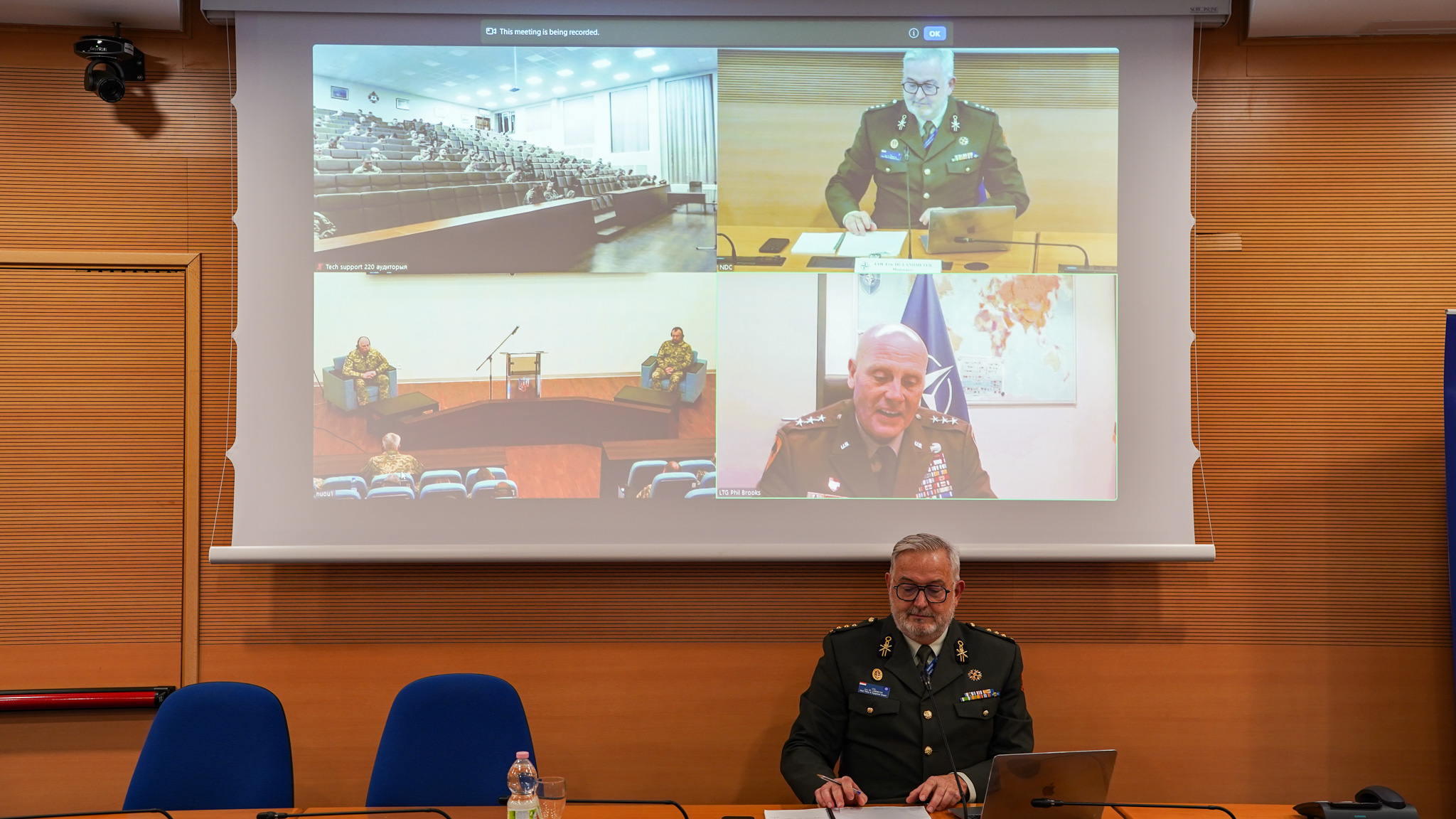
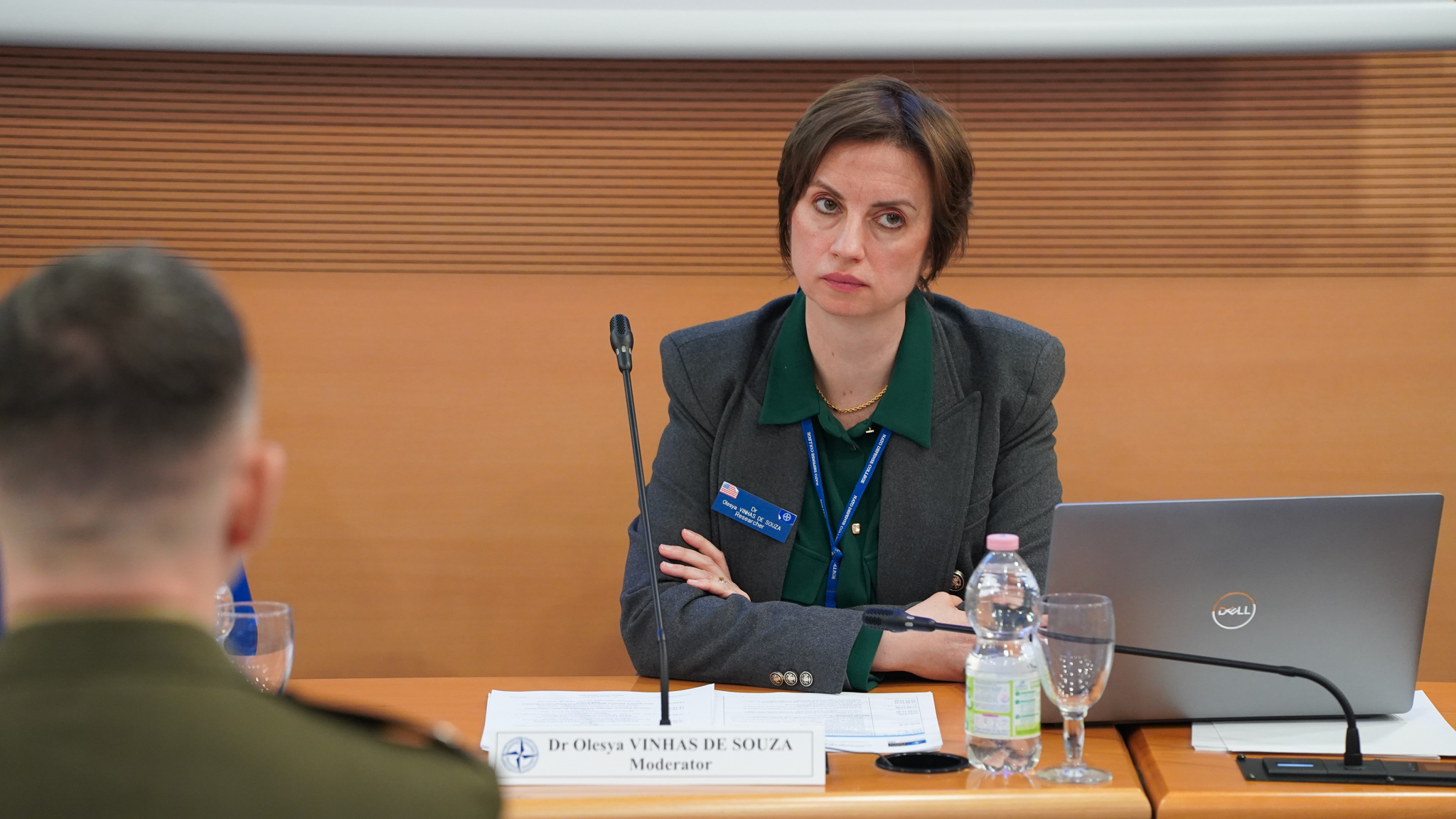
Launched in 2001, “Kyiv Week” is a long-standing joint effort by the NDC and Ukraine’s military authorities to foster intellectual interoperability and advance professional military education. On hold since 2019, the initiative resumed in a hybrid setting in 2024 for the first time since the onset of Russia’s war in Ukraine. The 2025 edition followed the same format, with participants joining from Ukraine, and briefings delivered virtually by representatives from NATO HQ and Commands, European Institutions, the Allies, the private sector and think tanks.
Gathering senior officers and senior civilian officials from Ukrainian defence institutions, the event offered valuable insights into NATO’s evolving strategic and security imperatives. Held under the Chatham House Rule, it provided participants for the opportunity to engage in open discussions and exchange informed views with the speakers.
The event was opened by the Commandants of the NDC and the NDUU, Lieutenant General Max A.L.T. Nielsen and Colonel General Mykhailo Koval, who underscored the enduring importance of the NATO–Ukraine partnership and interoperability. Lieutenant General Remigijus Baltrenas, Director General of the International Military Staff (DGIMS) and Lieutenant General Winston P. Brooks, Deputy Chair of the NATO Military Committee, also addressed the audience during the event.
Participants delved into the Alliance’s structure and its evolving strategic imperatives, particularly in light of Russia’s large-scale invasion of Ukraine. Discussions explored the Alliance’s reinforced deterrence and defence, and its approach to escalation management on the Eastern Flank. Speakers spoke of NATO’s transformation to operate efficiently in multi-domain operations and effectively tackle current and future threats.
Briefings underscored the Alliance’s unwavering commitment to supporting Ukraine. Mr Patrick Turner, NATO’s Senior Representative to Ukraine, provided a comprehensive overview of the current strategic imperatives for both the Alliance and Ukraine.
Participants gained firsthand insights into key initiatives reflecting this continued and steadfast support such as NATO’s Prioritised Ukraine Requirements List (PURL) initiative, the NATO-Ukraine Joint Analysis, Training, and Education Centre (JATEC), the NATO Security Assistance and Training for Ukraine (NSATU), Comprehensive Assistance Package (CAP) for Ukraine, and the Defence Education Enhancement Programme (DEEP). Speakers such as Lieutenant General Curtis Buzzard, Commander NSATU, allowed participant to explore how these mechanisms ensure the delivery of military aid Ukraine needs to defend itself against Russia’s unjustified and unprovoked aggression.
In addition, participants gained valuable insights into how public-private partnerships form a crucial pillar for supporting Ukraine, especially in countering hybrid threats. Mr Nickolas Ott, Director for Cybersecurity and Defence Policy at Microsoft, addressed how the conflict has reshaped the global cyber threat landscape and Microsoft’s ongoing support for the Ukrainian government, civil society, and private sector in addressing these challenges.
The event also shined the spotlight on the importance of partnership building for NATO and its relationship with the European Union (EU). Featuring prominent EU speakers including Mr Andrius Kubilius, European Commissioner for Defence and Space, and Mr Dirk Schubel, Head of Russia Division, EEAS, and former head of the EU Delegations to Belarus and Moldova, discussions emphasized how NATO and the EU work hand-in-hand on security and defence matters, notably in supporting Ukraine and tackling the strategic challenges posed by Russia’s aggressive actions.
The International Week in Kyiv 2025 served as a pivotal platform to discuss the impact of Russia’s long-term threat to the global security environment. This initiative further solidified the strategic dialogue and cooperation between Ukraine and the Alliance, reflecting NATO’s unwavering support through strategic education.
Given the current contested environment, where higher risks of miscalculation and inadvertent escalation underscore the significance of military education and training, the NDC will continue working closely with the NDUU to ensure that its educational offerings prepare future military leadership to effectively deal with current and future strategic challenges.
NDC Public Affairs Office
(Prepared by Ms Chloé Ketels, FRA C)
 NATO Defense College