
On 14 June, Senior Course 144 Course Members explored the current security challenges and opportunities in the South Caucasus and the Black Sea. Taking a closer look into the region’s main sources of instability and conflict, Course Members engaged in animated discussions on possible developments and the role of international players in the South Caucasus.
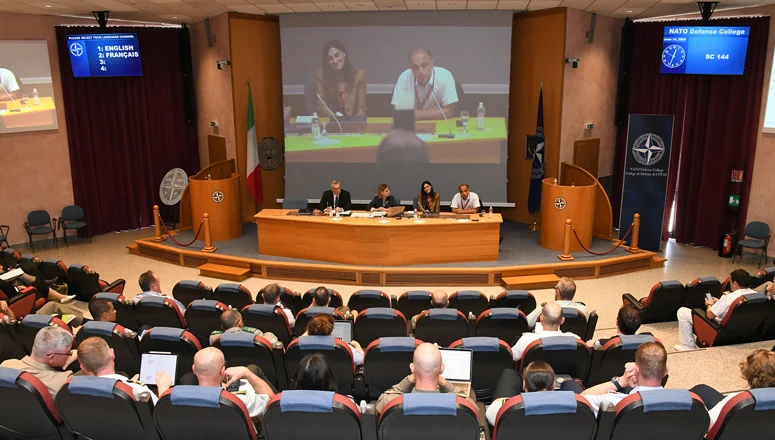
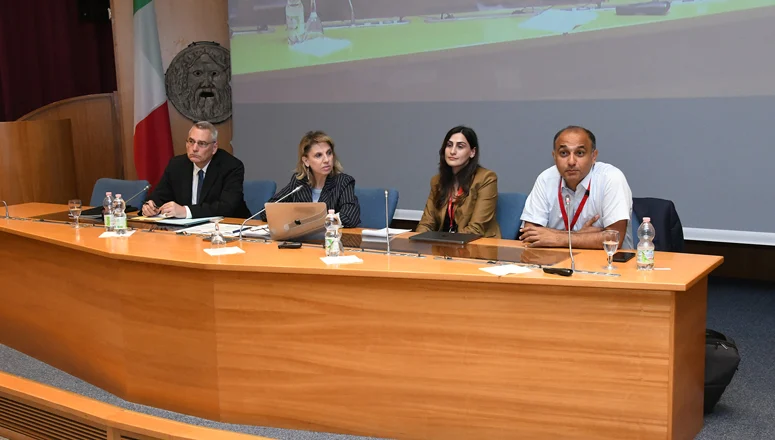
Course Members first received a geopolitical and strategic overview of the topic by guest lecturers Dr Anar Valiyev (AZE), Dr Richard Giragosian (ARM), and Dr Elene Panchulidze (GEO), followed by a Q&A session. The lectures offered insights into the various economic, political, and social challenges the countries of the South Caucasus – Azerbaijan, Armenia and Georgia – are facing as a result of their complex history, providing Course Members with a deeper understanding of the dynamics at play in this region.
Participants then engaged in enriching Committee discussions reviewing the current risks to security and main drivers of instability in the region. They reflected on domestic and regional issues affecting the South Caucasus countries, that are still grappling with the legacies of socialism, and striving to redefine and assert their geopolitical and economic ties, post-independence. The discussions shed light on internal tensions, if not civil unrest, faced by Azerbaijan, Armenia and Georgia, as well as the impact of conflicts both in and outside the Caucasus, most notably the spill-over effects of conflicts in Nagorno-Karabakh, Abkhazia and Ossetia.
These exchanges allowed participants to reflect on how these conflicts have impacted the geopolitical ties of South Caucasus countries with other major players and have paved the way for the presence the United States of America, Türkiye and NATO in the area. Exploring the rivalries that stem from competition for resources and the control of energy supplies, the lectures and discussions that followed also probed into the influence and interests of global and regional powers in the South Caucasus. Reflecting on the role played by the EU and NATO in this area, the discussions also addressed the impact of the war in Ukraine, and potential developments in the region.
Overall, the lectures provided a comprehensive understanding of the South Caucasus’s security landscape, highlighting both the challenges and opportunities for international cooperation and strategic engagement.
NDC Public Affairs Office
(Prepared by Ms Chloé Ketels, FRA C)
 NATO Defense College