
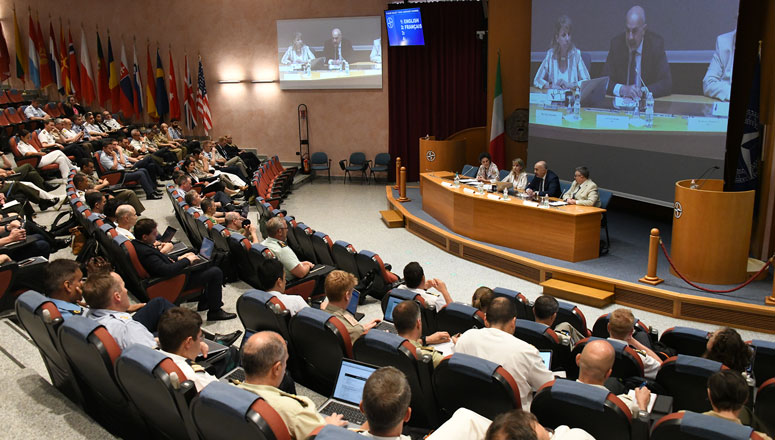
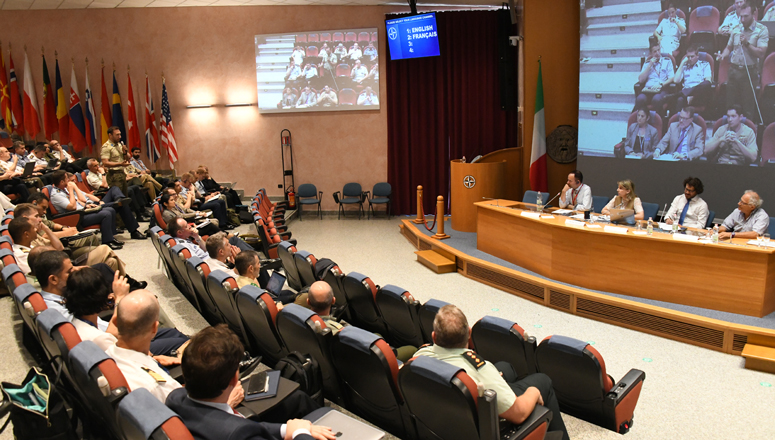
From 11-12 June, Senior Course 144 participated in the Middle East Seminar, attending insightful lectures by subject matter experts, followed by engaging Q&A and brainstorming sessions within Working Groups. This seminar provided Course Members with a deeper understanding of the region’s political, geopolitical, military, and security-related issues, as well as of the current conflicts affecting the area.


Participants discussed the political, social, and economic challenges the region is facing such as rampant corruption, weak governance, high unemployment rates and entrenched criminal networks. Exacerbated by growing ethnic tensions, particularly in Bosnia and Herzegovina, these domestic issues add to the Western Balkan countries’ occasionally strained foreign relations.
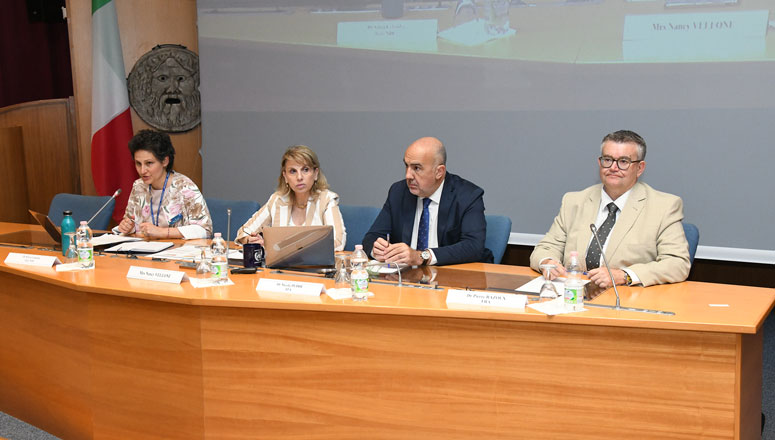
The programme started with an introduction by guest lecturers who provided an overview of the region’s major geopolitical and security challenges, highlighting the geostrategic significance and global security implications. Featuring Dr Pierre Razoux (FMES Institute), Dr Nicola Pedde (Institute for Global Studies), and Dr Silvia Maria Colombo (NDC), the panel focused specifically on Iran and the Arab Gulf States, exploring the key drivers of regional instability and the roles of major regional and international players. There were also reflections on potential future developments and how NATO can best contribute to regional security and stability.
By considering the influence of competing powers, Course Members were able to critically assess the outcomes of Western interventions in the area with regard to stabilization and nation-building efforts. Recognizing both successes and shortcomings of NATO and EU policies, they engaged in discussions about potential future developments, particularly in light of the ongoing war in Ukraine and its potential impact on the region’s stability.
The second day of the seminar focused on the Israeli-Palestinian conflict. The panel, composed of Professor Ilan Greilsammer (Bar-Ilan University of Tel Aviv), Dr Alaa Tartir (Graduate Institute of International and Development Studies), and Dr Anders Persson (Linnaeus University), offered Course Members a comprehensive overview of the conflict and its potential impact on local security and stability. The discussion explored the connections between this conflict and terrorism, as well as violent extremism, allowing lecturers and Course Members to debate on the potential roles of NATO, the EU, and other key international actors in this complex issue.
NDC Public Affairs Office
(Prepared by Ms Chloé Ketels, FRA C)
 NATO Defense College