
From 11 to 15 November, senior leaders from NATO nations and partner countries gathered for the second Generals, Flag Officers and Ambassadors’ Course this year (GFOAC 2024-2) at the NATO Defense College in Rome. With the theme “NATO at 75 – The Changing Security Landscape”, the Course aimed to delve deeper into current political-military issues and concerns affecting the Alliance, to foster mutual understanding, and to promote networking amongst participants.
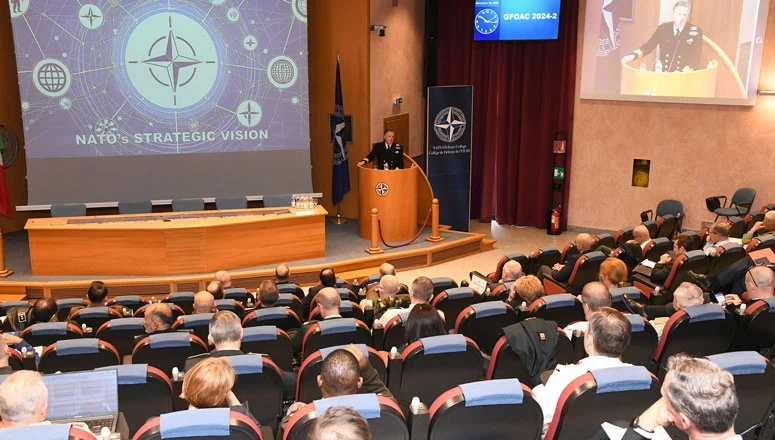
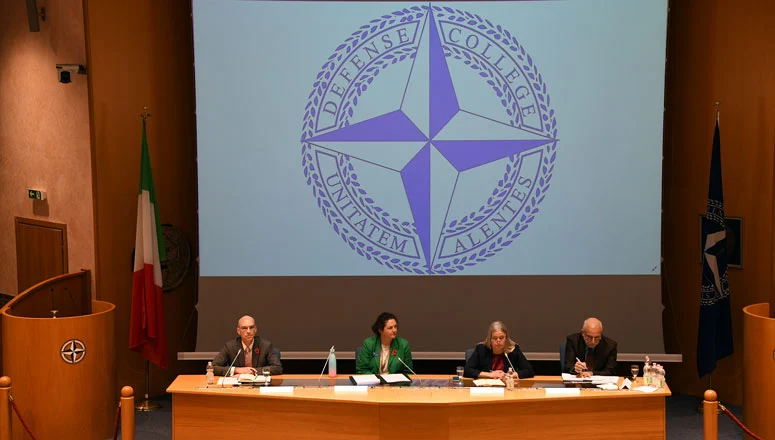
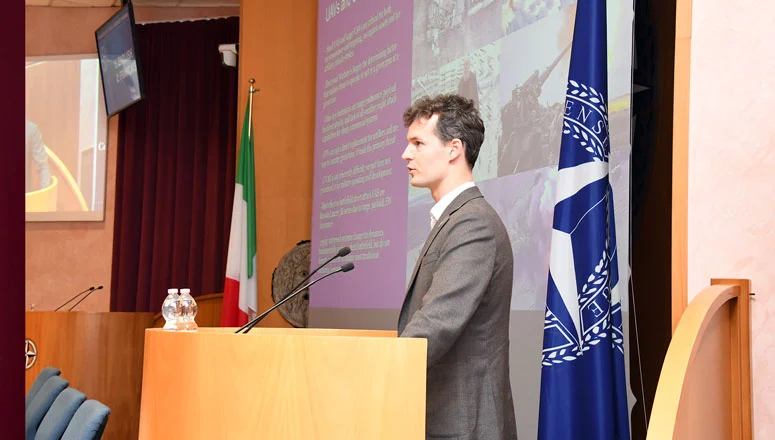
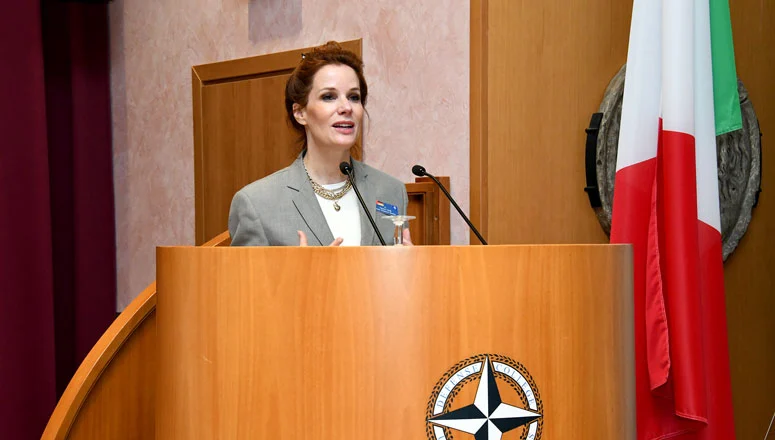
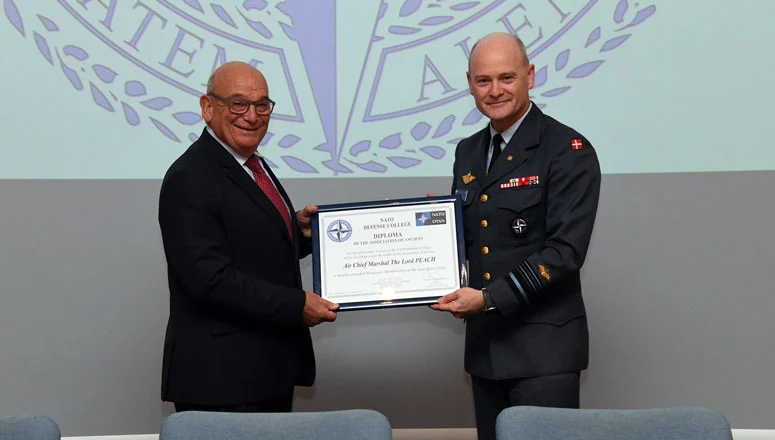
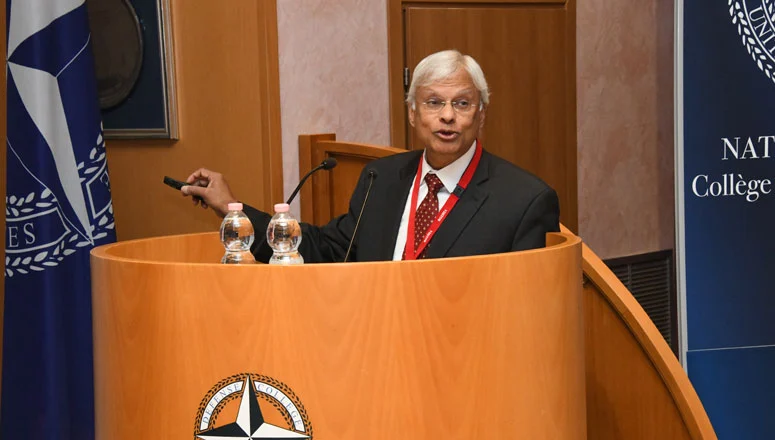
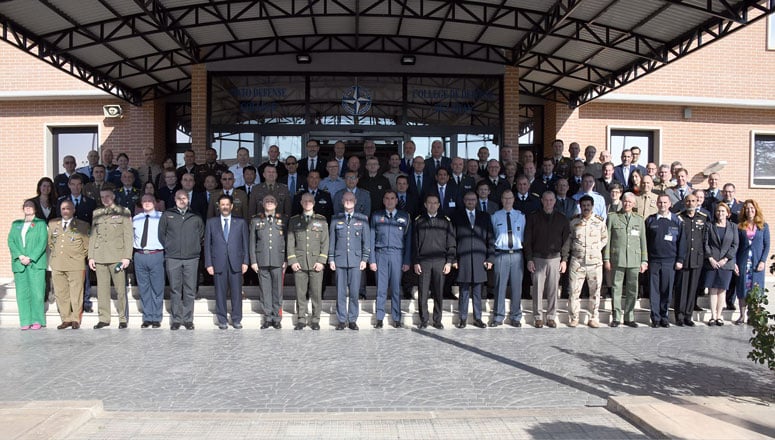
This GFOAC brought together some 80 one-to-three-star generals, flag officers, diplomats and senior civilians from NATO countries, the Partnership for Peace, the Mediterranean Dialogue, the Istanbul Cooperation Initiative and Partners across the Globe. GFOAC serves to give an in-depth picture of NATO’s role in global security while developing meaningful connections. The Course examines shared challenges, aiming to enhance mutual understanding of current politico-military issues impacting the Alliance and to encourage strategic networking. By emphasizing human interoperability and collaboration, it equips NATO and its partners to effectively address future challenges and work toward a secure and resilient future.
The five-day Course analysed NATO’s position and responsibilities in an increasingly complex security environment. It began with an overview of the Washington Summit, reflecting on its outcomes and their implications for NATO. The Course then addressed two critical issues for the Alliance: the importance of the transatlantic bond and the ongoing conflict in Ukraine. Subsequent days moved through themes including innovation in defence and battlefield technology developments. Additionally, the Course covered regional stability in the Middle East and in the Western Balkans, as well as cooperative security – topics of utmost relevance as NATO continues to enhance its global partnerships.
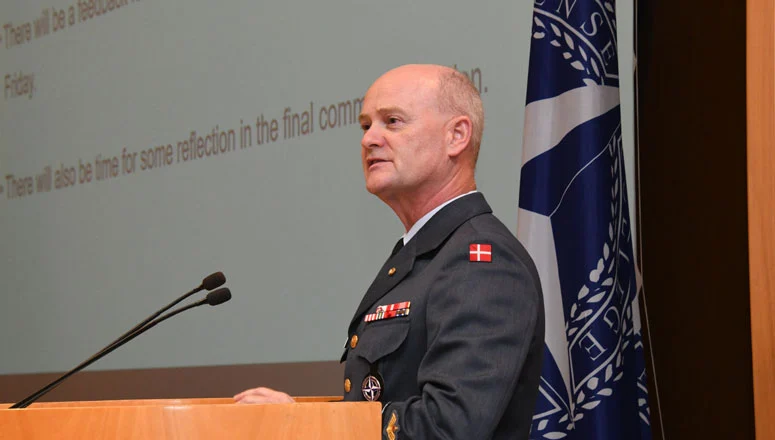
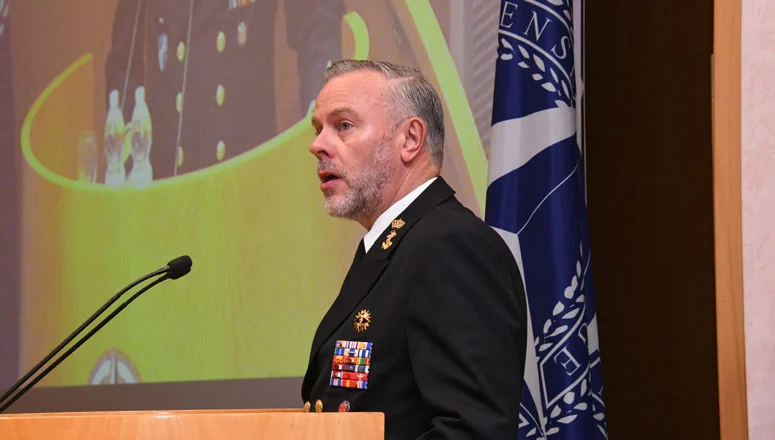
Participants also heard from the Chair of the NATO Military Committee (CMC), Admiral Rob Bauer, who provided insights into NATO’s outlook for the future and its collaboration with the defence industry. “Expect the unexpected” has been the personal mantra of the CMC, and it has certainly proven useful. In his keynote speech, the Admiral pointed out that NATO had undergone transformational change at lightning speed, adapting to a rapidly changing security climate. “Security is not a burden, nor is it a cost; it is an investment and a responsibility for all Allies. Collective defence requires us to be prepared for all scenarios, to expect the unexpected together. Trust is more important than ever, and that is why cooperation and building personal relationships, as we do at the NATO Defense College, are crucial in strengthening the glue that holds the Alliance and partnerships together.”
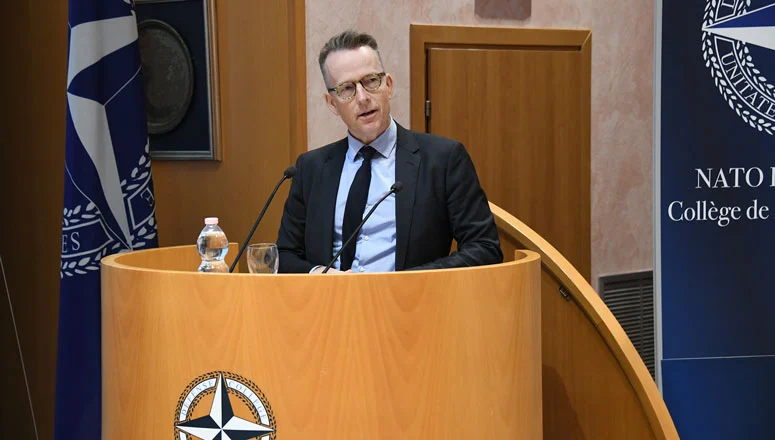
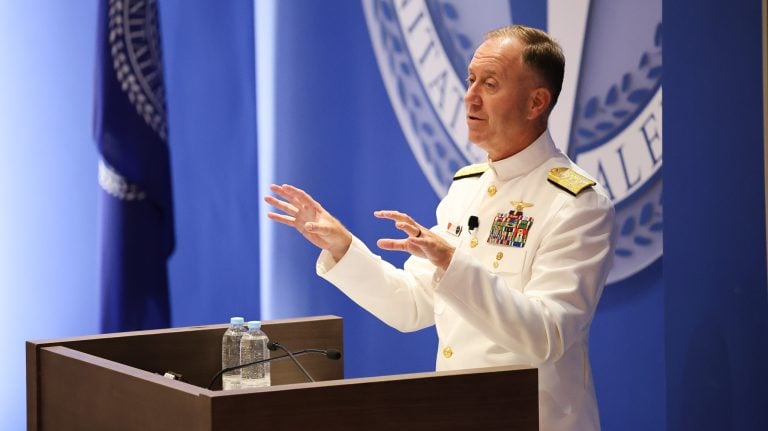
NATO Allied Command Transformation’s Chief of Staff, Vice Admiral Simon Asquith, also addressed Course participants, emphasizing the rapidly evolving nature of warfare, shaped by technological advancements and geopolitical shifts. He stressed the importance of NATO staying ahead by embracing emerging technologies such as artificial intelligence, machine learning and autonomous systems. Outlining NATO’s vision for the future, he underscored the critical need for continuous adaptation and innovation: “Just as Rome was built brick by brick, layer by layer, we must construct our future military capability with the same dedication, intellect and foresight. To do so at the required pace, we must identify and eliminate any barriers which prevent us driving forward.”
Discussions also addressed China and the Indo-Pacific, emphasizing NATO’s growing focus on security challenges beyond Europe. Designed to further mutual understanding and relationships, GFOAC 2024-2 offered a unique opportunity for strategic dialogue among NATO and partner nations. This collaborative effort aligns with NATO’s goal of fostering resilience and collective security as it adapts to today’s shifting geopolitical landscape.
NDC Public Affairs Office
(Prepared by Ms Britt Melinga, NLD C)

 NATO Defense College